Quranic Answer
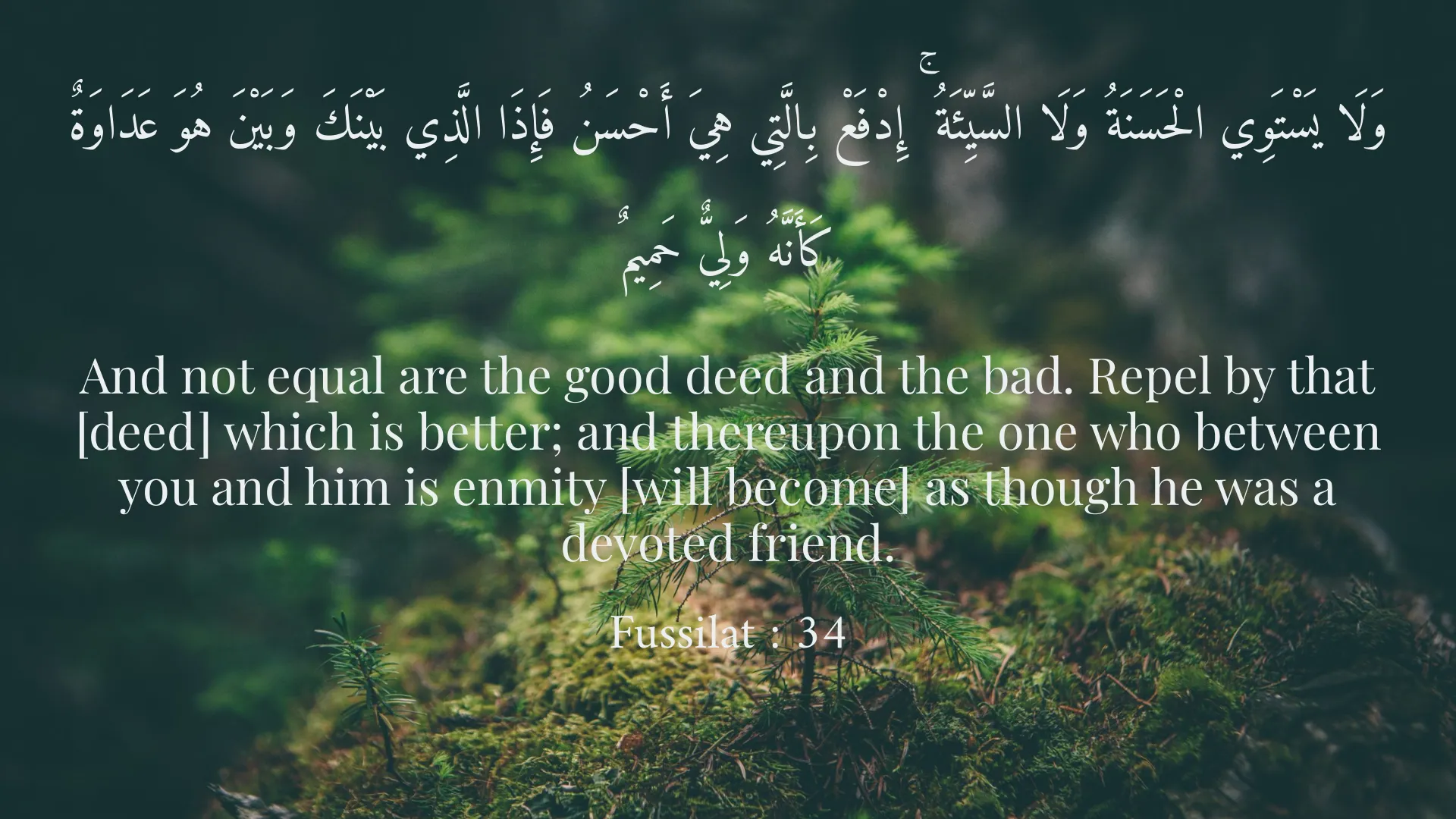
Forgiveness is a profound and complex emotional process that transcends cultural boundaries and is embraced by various faiths and philosophies worldwide. In the context of Islam, the Holy Quran places immense importance on the act of forgiving others and recognizes it as a significant virtue and a hallmark of inner strength. The practice of forgiveness not only contributes to individual peace and well-being but also cultivates harmonious relationships within society. This article aims to delve deeper into the concept of forgiveness as articulated in the Holy Quran, emphasizing its significance, virtues, and the positive impact it has on both the individual and the community. One of the most telling verses on forgiveness in the Quran is found in Surah Fussilat, verse 34: "And not equal are the good deed and the bad. Repel by that [deed] which is better; and thereupon the one who between you and him is enmity [will become] as though he was a devoted friend." This powerful verse calls upon believers to respond to acts of wrongdoing with goodness and kindness, rather than retaliation or anger. The underlying message here is that the true strength of an individual is measured not by their ability to retaliate but by their capacity to respond to negativity with positivity. When one chooses to forgive and act in kindness, they not only elevate themselves but can also transform the nature of their relationship with those who have wronged them. The concept of forgiveness in the Quran is intricately linked to the attributes of Allah (God). Believers are encouraged to emulate divine attributes, including mercy and compassion. By forgiving others, one embodies these divine traits, showcasing an understanding of human fallibility and the capacity to extend grace where it is often undeserved. This is significantly highlighted in Surah Al-Imran, verse 134: "And those who spend in the cause of Allah during ease and hardship and who restrain anger and who pardon the people - and Allah loves the doers of good." Here, Allah not only praises those who engage in acts of charity during both prosperous and difficult times but also emphasizes the importance of controlling anger and practicing forgiveness towards others. This verse serves as a reminder that forgiveness is a fundamental quality of the righteous and that Allah especially loves those who uphold this virtue. Forgiveness is often misconstrued as a sign of weakness; however, the Quranic perspective clearly outlines that it is, in fact, a reflection of strength and resilience. The ability to forgive demonstrates emotional maturity and self-control. In many cases, holding onto anger and resentment can lead to a cycle of negativity that adversely affects one's mental and emotional health, reducing one’s well-being and happiness. Thus, forgiveness emerges as a liberating act that allows individuals to free themselves from the burdens of past grievances, promoting a healthier psychological state. From a psychological perspective, research has shown that forgiveness is linked to numerous health benefits. Individuals who practice forgiveness often experience lower levels of anxiety, depression, and stress. The act of forgiving others fosters a sense of inner peace and enhances emotional well-being. Forgiveness can also lower blood pressure, reduce chronic pain, and ultimately lead to a longer and healthier life. In light of this, one can appreciate the timeless wisdom encapsulated within the Quran – that forgiveness starts as an act of kindness towards others but ultimately benefits oneself. Moreover, the process of forgiveness entails recognizing the imperfection inherent in human beings. Everyone makes mistakes, and recognizing this shared vulnerability can pave the way for greater empathy and understanding. When we forgive others, we acknowledge their humanity and the potential for growth and change. This compassionate understanding helps to foster stronger connections among individuals, transforming animosity into friendships and allowing societal bonds to flourish. Expanding on the virtues of forgiveness, it is crucial to note that forgiveness does not equate to forgetting or condoning wrong actions. Rather, it is about letting go of the negative emotions associated with those actions while maintaining awareness. It allows individuals to move forward without allowing past grievances to dictate their current emotional states. Forgiveness is not an erasure of hurt but a conscious decision to release oneself from lingering negativity. From a communal perspective, the implications of widespread forgiveness can be transformative. In societies where forgiveness becomes a cultural norm, conflict resolution and peaceful coexistence gain precedence over animosity and revenge. Families, communities, and nations can begin to heal and unify through acts of forgiveness, fostering an environment where individuals can thrive together. Such societal healing is crucial in addressing deep-seated grievances and promoting understanding among diverse groups. Furthermore, it is imperative to recognize that forgiveness can be a challenging and gradual process, particularly in the face of significant transgressions. The Quran acknowledges this complexity and emphasizes the importance of sincerity and intention behind the act of forgiveness. The journey towards forgiveness may require time, reflection, and sometimes the assistance of spiritual guidance, but the effort ultimately leads to profound growth and healing. In conclusion, forgiveness is a central tenet within the teachings of the Quran, serving as a testament to the strength, beauty, and greatness of the human spirit. It is an invaluable quality that promotes not only personal peace but also societal harmony. The verses regarding forgiveness underscore the immense power of kindness and the importance of cultivating a forgiving nature, reflecting the divine traits of compassion and mercy. In our tumultuous world filled with conflict, anger, and resentment, embracing forgiveness may be one of the most impactful choices we can make for our own well-being and for the betterment of our relationships and communities. As individuals take on the challenge to forgive, they herald a new era of understanding, tolerance, and love, promoting a brighter future for all.
Related Verses
وَلَا يَسْتَوِي الْحَسَنَةُ وَلَا السَّيِّئَةُ ۚ إِدْفَعْ بِالَّتِي هِيَ أَحْسَنُ فَإِذَا الَّذِي بَيْنَكَ وَبَيْنَ هُوَ عَدَاوَةٌ كَأَنَّهُ وَلِيٌّ حَمِيمٌ
And not equal are the good deed and the bad. Repel by that [deed] which is better; and thereupon the one who between you and him is enmity [will become] as though he was a devoted friend.
Fussilat : 34
وَالَّذِينَ يُنفِقُونَ فِي السَّرَّاء وَالضَّرَّاء وَالْكَاظِمِينَ الْغَيْظَ وَالْعَافِينَ عَنِ النَّاسِ ۗ وَاللَّهُ يُحِبُّ الْمُحْسِنِينَ
And those who spend in the cause of Allah during ease and hardship and who restrain anger and who pardon the people - and Allah loves the doers of good.
Al-Imran : 134
Short Story
One day in a small village, there lived a kind man named Ahmad. He always helped others and remembered that in the Quran, it says that Allah loves the doers of good. One day, one of his neighbors mistakenly insulted him. However, Ahmad, instead of seeking revenge, forgave him and said with a smile, 'We all make mistakes.' His act made his neighbor feel ashamed and apologize to him. From that day on, their relationship changed for the better.