Quranic Answer
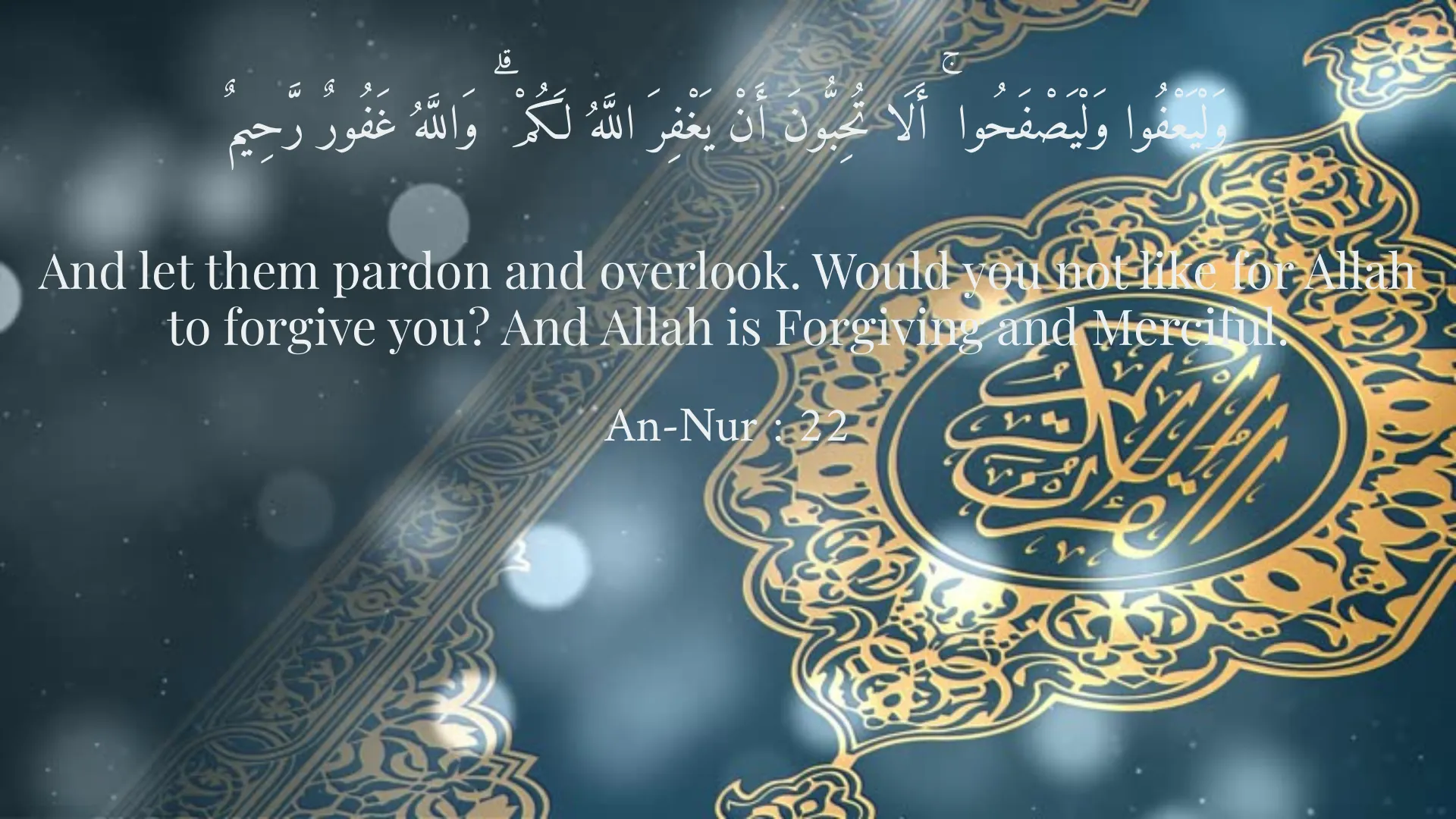
Forgiveness is a profound and pivotal theme in various cultures around the globe. In Islamic culture, particularly, it is often seen as an act of nobility and profound moral strength. The significance of forgiveness is emphasized in the Holy Quran, where it is portrayed not just as an ethical duty but as a powerful tool for personal and communal well-being. The act of forgiving others, especially in the context of our relationships with family and the wider community, reflects a deeper understanding of human nature and compassion. In Surah An-Nur, verse 22 of the Quran, Allah instructs believers not to withhold their charity from their relatives, the needy, and immigrants for His sake. The verse states: "Let not those of virtue among you and wealth swear not to give to their near relatives and the needy and the immigrants in the cause of Allah. And let them pardon and overlook. Would you not like for Allah to forgive you? And Allah is Forgiving and Merciful." This verse is significant as it links the act of forgiving others with the concept of charity, highlighting that offering forgiveness is akin to helping those in need. Furthermore, it underscores a mutual relationship between divine forgiveness and human behavior. The verse encourages believers to practice forgiveness, indicating that those who can forgive will find themselves favored by Allah. Embarking on the journey of forgiving others requires a profound sense of inner strength. This strength springs from a well-managed emotional state, allowing individuals to respond to hurtful situations with grace rather than anger or retribution. Forgiveness is not a sign of weakness; rather, it showcases a person's ability to control their emotions and embrace a higher moral ground. It demands resilience, patience, and the willingness to empathize with those who have wronged us. Such attitudes, cultivated through spiritual practices and self-reflection, are integral to nurturing a forgiving heart. Another powerful verse that delves into the essence of forgiveness and its merits can be found in Surah Aal-E-Imran, verse 134. It states: "And those who spend in the cause of Allah during ease and hardship and who restrain their anger and who pardon the people - and Allah loves the doers of good." Here, Allah emphasizes that forgiveness is closely tied to the act of doing good, even amidst hardship and trials. This sentiment reinforces the idea that to forgive is an act of good deed that enriches an individual's spiritual journey. Those who can manage their anger and extend forgiveness are rewarded with Allah's love, thus creating a reciprocal relationship between human kindness towards others and divine favor. The concept of forgiveness in Islamic culture transcends simple human interaction; it is an essential component of one’s spiritual growth and well-being. By choosing to forgive, individuals liberate themselves from the burdens of resentment and anger. Holding onto grudges only serves to embitter the soul and impede personal growth. Forgiveness, on the other hand, fosters a spirit of compassion and understanding, allowing individuals to build more meaningful and harmonious relationships. Forgiveness does not mean that we condone the wrong deeds of others or ignore the pain they have caused us. Rather, it signifies that we choose to release ourselves from the shackles of negative feelings that can stifle our growth and happiness. When we forgive, we do so not solely for the benefit of the offender but also, and perhaps more importantly, for ourselves. It is a conscious decision to prioritize peace of mind over the burden of past grievances. A related concept in Islamic teachings is that of compassion. True forgiveness can only be achieved through understanding and empathy. This means that we strive to comprehend the context of the actions of others, which can often lead to a more compassionate view of their behavior. It encourages us to look beyond the superficial layer of actions and try to see the underlying emotions and motivations that drive individuals to hurt others. This approach to forgiveness aligns with psychological findings, where forgiving others has been shown to reduce stress and foster emotional well-being. A forgiving heart can contribute to lower blood pressure, reduced anxiety, and greater overall mental health. In a world filled with conflict and pain, the act of forgiveness strengthens bonds between individuals, promotes communal harmony, and paves the way for personal peace. Community ties in Islam also emphasize the importance of fostering relationships built on compassion and understanding. Believers are encouraged to create a supportive environment where forgiveness is actively practiced, thus nurturing a culture of care and empathy. When individuals witness acts of forgiveness within their communities, it inspires them to act similarly, creating a ripple effect that extends far beyond individual relationships. In conclusion, forgiveness holds a significant place in Islamic culture, serving as both a moral and spiritual imperative. The verses of the Quran remind us that forgiveness is not only a desirable trait but that it offers substantial rewards, both in this life and the hereafter. Through the acts of forgiving others, we not only cleanse our own hearts but also contribute to a world that emphasizes understanding, love, and compassion. Ultimately, it is through forgiveness that individuals can attain deeper emotional strength, greater empathy, and a more fulfilling life, marked by peace and serenity.
Related Verses
وَلْيَعْفُوا وَلْيَصْفَحُوا ۚ أَلَا تُحِبُّونَ أَنْ يَغْفِرَ اللَّهُ لَكُمْ ۗ وَاللَّهُ غَفُورٌ رَّحِيمٌ
And let them pardon and overlook. Would you not like for Allah to forgive you? And Allah is Forgiving and Merciful.
An-Nur : 22
وَالَّذِينَ يُنفِقُونَ فِي السَّرَّاءِ وَالضَّرَّاءِ وَالْكَاظِمِينَ الْغَيْظَ وَالْعَافِينَ عَنِ النَّاسِ ۗ وَاللَّهُ يُحِبُّ الْمُحْسِنِينَ
And those who spend in the cause of Allah during ease and hardship and who restrain their anger and who pardon the people - and Allah loves the doers of good.
Aal-E-Imran : 134
Short Story
One day, Adel was thinking about how some of his friends had upset him. He felt anger and hurt in his heart. However, when he reflected on the Quran and its verses, he realized that to find peace, he must forgive them. He decided to soften his heart and return to his friends with kindness. Ultimately, Adel felt a sense of well-being and formed deeper friendships through this act.