Quranic Answer
In the Holy Quran, a profound emphasis is placed on the concepts of intention (niyyah) and action (amal) as two fundamental components of faith (iman) and the practices of believers. These principles are not merely abstract ideas but are pivotal in shaping the character and destiny of individuals striving for righteousness. This article delves into the relationship between intention and action as depicted in the Quran, while analyzing two significant verses that encapsulate this theme. The relationship between intention and action is expressed in numerous Islamic teachings. Good intention alone is not sufficient; it must be coupled with action. This is a key principle that underlines the Islamic faith. As highlighted in Surah Al-Baqarah, verse 177, Almighty Allah states: "Righteousness is not just about facing towards the east or the west, rather, a righteous person is one who believes in Allah, the Last Day, the angels, the Book, and the prophets, and gives his wealth, out of love for Him, to relatives, orphans, the needy, travelers, and beggars." This verse reflects the multifaceted nature of righteousness. It underscores that faith is a holistic concept, encompassing belief in the unseen, acknowledgment of prophetic guidance, and the social responsibility to uplift those in need. The core message here is that mere acknowledgment of faith and good intentions cannot be deemed as sufficient; they must manifest through righteous deeds. A person’s faith is not validated merely by rituals but is equally evidenced through tangible actions that embody love for Allah and compassion for creation. The requirement for action in conjunction with intention is further highlighted in Surah Al-Imran, verse 92, where Allah states: "You will never attain good until you spend from that which you love." This statement profoundly speaks to the intrinsic connection between material sacrifice and spiritual gain. The necessity to give from our wealth, which holds significance to us, signifies a level of commitment that transcends mere intention. It suggests that real faith is active rather than passive; it engages the individual in acts of kindness, charity, and social justice. It prompts believers to reflect on what they hold dear and encourages them to share their blessings, thus reinforcing communal ties and fostering a sense of unity. The power of good intentions is undeniable, yet these intentions must be translated into effective actions. If one's good intentions remain as mere thoughts or feelings, without corresponding actions, they can neither lead to divine satisfaction nor contribute to success in life. Intention sets the stage for action; it is the spark igniting the flame of benevolence. However, a flame without fuel will dwindle and die. Moreover, the Quranic perspective encourages believers to act consistently and diligently, converting their good intentions into meaningful efforts. The essence of this teaching lies in the recognition that every action should be undertaken with the right intention, as encompassed in the concept of 'ihsan'—excellence in action. This means executing every deed with devotion and the pursuit of deepening one's connection with Allah. Prophet Muhammad (peace be upon him) reiterated this notion through his teachings. He stated: "Actions are judged by intentions, and everyone will get what was intended." This prophetic saying serves as a reminder of the symbiotic relationship between intention and actions in Islam. Intentions are the roots from which the actions grow, and thus the purity of one’s intentions directly influences the quality and outcome of the actions taken. This connection implies that for a believer to achieve success, there must be clarity of intention filtered through the lens of righteous action. Furthermore, the impact of converting intentions into action extends beyond personal fulfillment. It has broader societal implications that can contribute to the betterment of humanity. When individuals are motivated by genuine good intentions and backed by compassionate actions, they create a ripple effect that can positively transform communities and societies. Acts of kindness, generosity, and support for the vulnerable can cultivate an environment of trust, love, and mutual assistance among people. In an age where intentions are often measured against worldly standards of success, reflecting on the Islamic paradigm encourages believers to aspire for righteousness that pleases Allah. It prompts them to ask whether their good intentions manifest as actions that empower others and fulfill communal obligations. This introspective approach necessitates self-awareness and mindfulness, urging for continuous personal growth as both an individual and a member of society. Ultimately, bridging good intentions with positive actions is a lifestyle that requires conscious effort and commitment. It calls for a consistent examination of one's motives, values, and the impact of one’s actions on oneself and others. By actively living with this intention-action philosophy, believers can cultivate a meaningful existence that not only attains divine favor but also contributes to a more just and compassionate world. In summary, the holy teachings of the Quran beautifully portray the inseparable links between intention and action. Faith is a dynamic interplay between what one believes and how one translates that belief into actionable deeds. The verses from Surah Al-Baqarah and Surah Al-Imran serve as reminders that while good intentions are commendable, they must culminate in actions that reflect one’s faith and commitment to serving humanity. Thus, a believer is encouraged to move from mere intention to proactive engagement, fulfilling one’s role as a responsible member of society and a devoted servant of Allah.
Related Verses
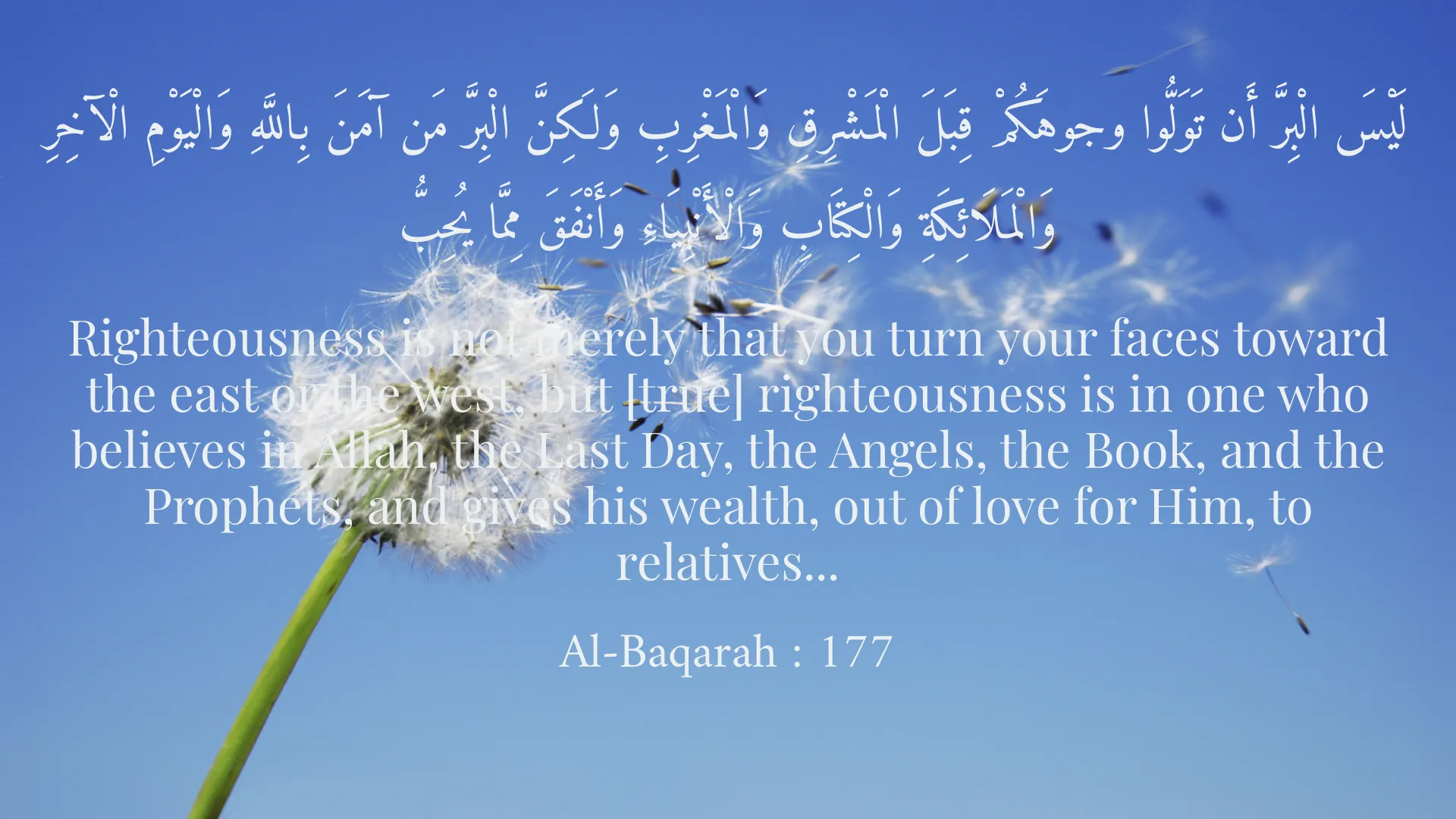
لَيْسَ الْبِرَّ أَن تَوَلُّوا وجوهَكُمْ قِبَلَ الْمَشْرِقِ وَالْمَغْرِبِ وَلَكِنَّ الْبِرَّ مَن آمَنَ بِاللَّهِ وَالْيَوْمِ الْآخِرِ وَالْمَلَائِكَةِ وَالْكِتَابِ وَالْأَنْبِيَاءِ وَأَنْفَقَ مِمَّا يُحِبُّ
Righteousness is not merely that you turn your faces toward the east or the west, but [true] righteousness is in one who believes in Allah, the Last Day, the Angels, the Book, and the Prophets, and gives his wealth, out of love for Him, to relatives...
Al-Baqarah : 177
لَن تَنَالُوا الْبِرَّ حَتَّى تُنفِقُوا مِمَّا تُحِبُّونَ
You will never attain [true] righteousness until you spend from that which you love.
Al-Imran : 92
Short Story
One day, a young man named Siraj had a good intention to help others but always shelved it due to fear of inadequacy. One day, he encountered Quranic verses that inspired him and he decided to assist an orphan from his neighborhood. Siraj not only had a good intention but acted on it, treating the orphan with love and kindness. Soon, he realized how much his life had changed and he felt happiness.