Quranic Answer
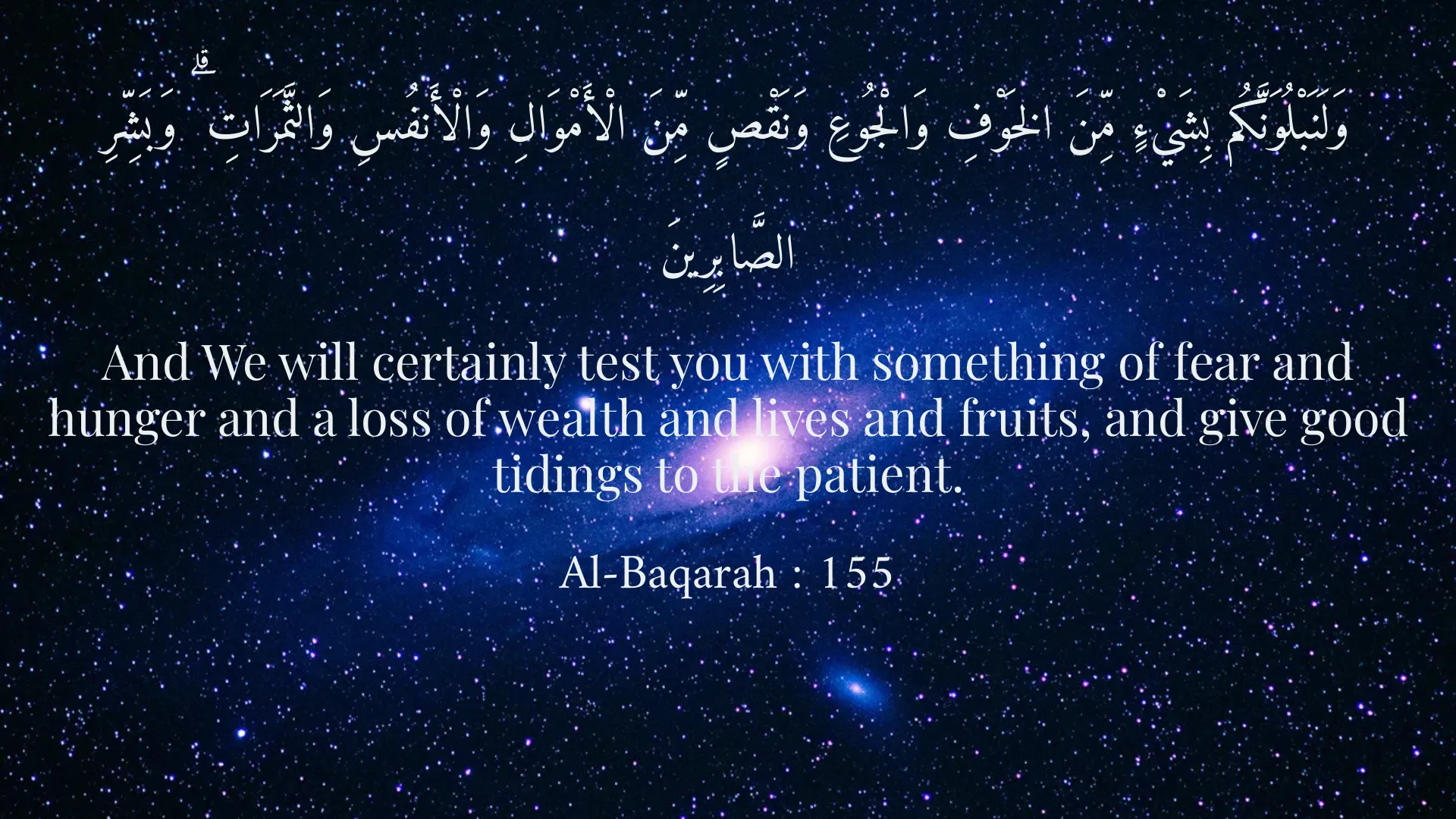
In the Holy Quran, wealth and worldly blessings are presented as tests from Allah. This fundamental concept not only emphasizes the impermanence of material possessions but also serves as a reminder of the deeper spiritual obligations that accompany them. The Quran often portrays life's blessings, including wealth, as a dual-edged sword: a means of provision and comfort, yet simultaneously, a potential source of distraction that can divert one from the true purpose of existence. This fundamental idea is exemplified in Surah Al-Baqarah, verse 155, where Allah states, 'And We will certainly test you with something of fear and hunger and loss of wealth and lives and fruits, and give good tidings to the patient.' This verse encapsulates an important lesson in faith, patience, and the understanding that material wealth can, in fact, serve as a significant test for one's belief and resilience. The Quran acknowledges that wealth and prosperity can produce a sense of security and satisfaction; however, it also warns that attachment to these material blessings can overshadow deeper spiritual pursuits. Individuals are challenged to navigate the complex relationship between worldly affluence and spiritual humility. In Surah Al-Imran, verse 14, Allah expresses, 'Beautified for people is the love of that which they desire – of women and sons, heaped-up sums of gold and silver, fine branded horses, and tilled land.' This verse highlights the allure of worldly possessions and passions, yet it serves as a cautionary tale, inviting believers to consider whether these desires contribute positively to their spiritual journeys or mislead them into placing undue importance on transient things. Wealth, when rightly and truthfully earned, may indeed be seen as a sign of God's grace. It allows individuals the means to fulfill their responsibilities, provide for their families, support their communities, and engage in acts of charity—an essential component of Islamic teaching. However, a significant lesson woven throughout the fabric of Islamic teachings is the importance of maintaining humility and gratitude in the midst of prosperity. Wealth should not foster a sense of superiority, entitlement, or pride among individuals; rather, it should inspire gratitude for Allah's blessings and motivate one to use these resources for good. The notion that worldly wealth is not the ultimate goal is fundamental to Islamic teachings. The Quran emphasizes that true reward is not found in material possessions. Instead, it lies in one's actions, intentions, and moral integrity. Wealth may be momentarily pleasurable, but the acquisition of virtue and righteousness will have everlasting implications, manifesting as spiritual fulfillment that transcends this life and extends into the Hereafter. Thus, the journey of a believer is marked by a continuous struggle to align one's material pursuits with spiritual principles, ensuring that wealth does not become a barrier to the path of faith. In the broader context of life, the Quran presents wealth as a test of character. It serves to reveal the true nature of an individual—whether they are sincere and appreciative of their blessings or whether they allow greed and materialism to cloud their judgment and behavior. In a world dominated by consumerism and the quest for status derived from material accumulation, Muslims are challenged to rise above societal pressures and remember the importance of ethical considerations when it comes to wealth. Moreover, the concept of accountability plays a pivotal role in understanding wealth as a test from Allah. In various verses, the Holy Quran reminds believers that they will be held accountable for how they acquire, spend, and share their wealth. This knowledge serves as a powerful motivator to utilize one's resources ethically and responsibly. It encourages individuals to engage in philanthropy, support charitable causes, and uplift those in need, reinforcing the Islamic teachings of generosity and compassion. Undoubtedly, this accountability extends beyond mere financial transactions—every action, whether in the acquiring of wealth or in its usage, leaves an impact. Therefore, wealth can serve as both a blessing and a burden, depending on how individuals approach it. Wealth should not only be viewed through the prism of ownership but also in terms of its potential to effect change in the world around us. This test of wealth is particularly relevant in today's society, as many individuals are influenced by societal expectations and materialistic ideals. The Quran serves as a beacon of guidance amidst these challenges, continually reminding believers to prioritize their spiritual connection with Allah over the fleeting nature of worldly possessions. By doing so, they can cultivate a nurturing relationship with wealth—recognizing it as a tool that can assist in fulfilling their obligations to themselves and their communities. In conclusion, the Quran presents wealth and worldly blessings as both a trial and a grace from Allah. The relationship between individuals and their material possessions is complex and colored by the believer's faith and actions. While wealth should be treated with gratitude and humility, it is vital to remember that the ultimate measure of success is one’s character, intentions, and connection to Allah. True fulfillment comes not from the accumulation of wealth but from the meaningful and ethical use of resources, acts of compassion, and spiritual growth that ultimately draw one closer to Allah. As such, the believer’s journey involves a delicate balance of gratitude, responsibility, and accountability with respect to the blessings bestowed upon them in this world.
Related Verses
وَلَنَبْلُوَنَّكُم بِشَيْءٍ مِّنَ الخَوْفِ وَالْجُوعِ وَنَقْصٍ مِّنَ الْأَمْوَالِ وَالْأَنفُسِ وَالثَّمَرَاتِ ۗ وَبَشِّرِ الصَّابِرِينَ
And We will certainly test you with something of fear and hunger and a loss of wealth and lives and fruits, and give good tidings to the patient.
Al-Baqarah : 155
زُيِّنَ لِلنَّاسِ حُبُّ الشَّهَوَاتِ مِنَ النِّسَاءِ وَالأَبْنَاءِ وَالْقَنَاطِيرِ الْمُقَنَّطَرَةِ من الذهب والفضة، وَالْخَيْلِ الْمُسَوَّمَةِ وَالْحَرْثِ الْمُزْرَعَةِ.
Beautified for people is the love of that which they desire - of women and sons, heaped-up sums of gold and silver, fine branded horses, and tilled land.
Al-Imran : 14
Short Story
One day, a wealthy man was traveling and entered a village. There, he met a poor man who had nothing but a single blade of grass in his hand. The wealthy man thought to himself, 'Why should this man endure such hardship?' The poor man replied, 'I have a happy life because I am grateful for God’s blessings, and it doesn't matter to me how much wealth I have. True wealth is in the heart, not in the pocket.' These words from the humble heart gave the wealthy man a chance to reflect on the nature of wealth and true values.