Quranic Answer
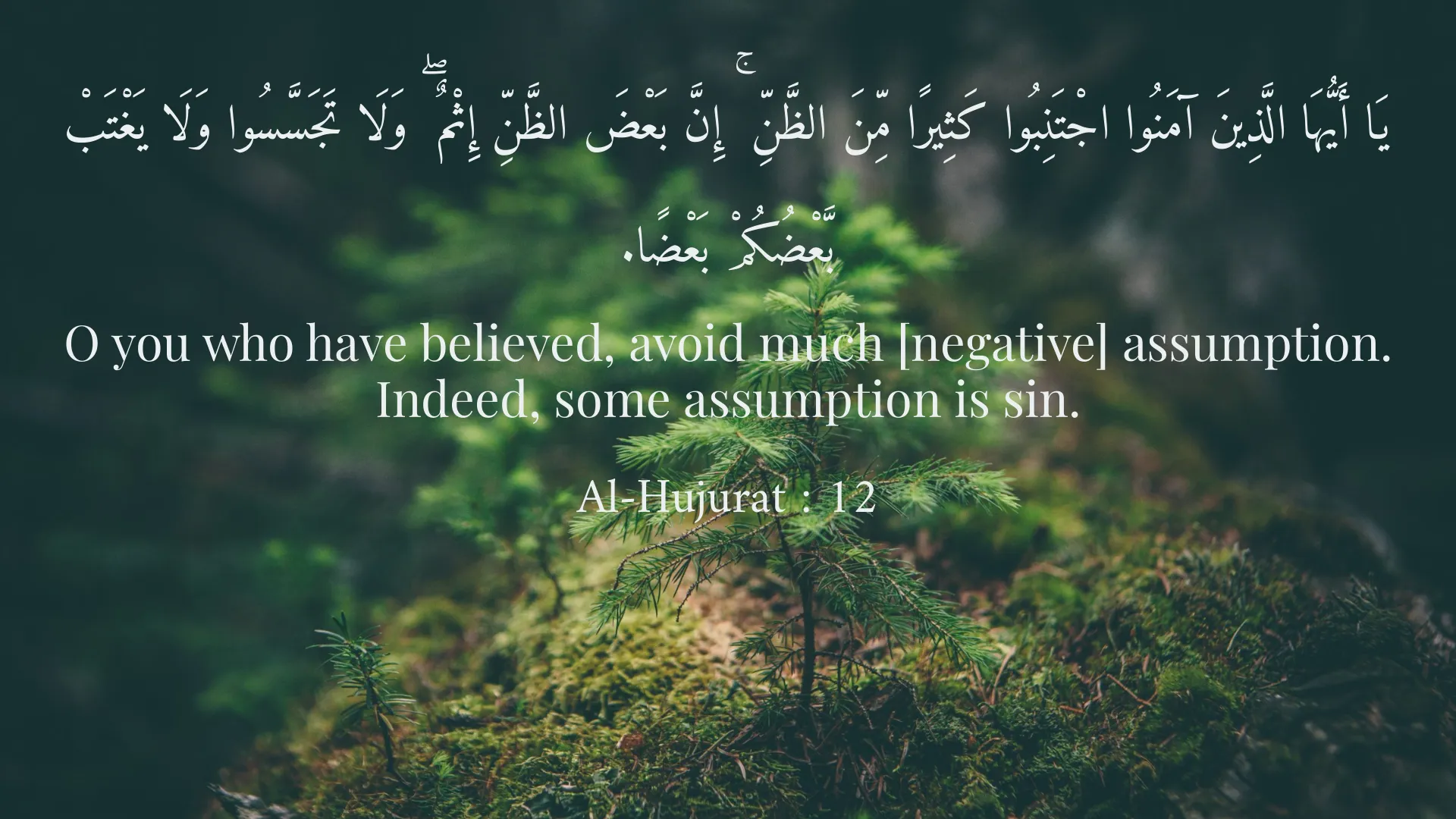
The Holy Quran, a divine guide for humanity, is revered for its profound teachings that address various aspects of human life, including the importance of judgment and decision-making. One of the critical emphases in the Quran is the necessity of careful judgment and the avoidance of hasty conclusions. This principle is particularly highlighted in Surah Al-Hujurat, verse 12, where Allah advises believers to steer clear of excessive conjecture, stating that some conjecture is a sin. This verse underscores the essential criteria that our decisions and judgments should be grounded in truth and credible information, rather than impulsive or superficial impressions. ### The Essence of Sound Judgment In our daily lives, we are frequently faced with situations that require us to make decisions. However, the tendency to make hasty judgments can lead to a cascade of negative consequences. Misunderstandings can arise from premature conclusions, leading to the spreading of rumors that can tarnish reputations and damage relationships. A careless assessment can foster discord and disrupt the fabric of community and trust among individuals. For instance, if an individual is judged solely based on a specific behavior or action that might stem from personal struggles or circumstances unknown to others, it may not only create undue distress for that person but could also lead to a breakdown in social connections. Making rash decisions not only impacts the individual being judged but can also ripple through the community, perpetuating cycles of negativity and division. This can often lead to a hostile environment, where assumptions replace understanding, and compassion is overlooked in favor of judgment. Addressing the importance of perspective, it becomes vital that we recognize the complexity of human experiences; that behind every action, there may be underlying reasons that necessitate a more profound inquiry into the circumstances surrounding an individual. Just as the Quran teaches us to be meticulous in our judgments, it also encourages us to seek understanding rather than to simply react. ### The Quran's Warning Against Hasty Judgment The Quran's teachings are not merely recommendations but serve as injunctions aimed at protecting the moral and ethical standing of individuals and society. In Surah An-Nur, verse 19, Allah warns that those who falsely attribute baseness and evil will face significant punishment. This evocation highlights the severe repercussions that stem from misjudgments and rash assertions. It indicates that sound, strong judgments are not merely preferable; they are necessary for the well-being of individuals and communities. Hasty judgments can undoubtedly mislead individuals onto paths that stray from truth and righteousness. ### Hasty Judgments in Contemporary Society In our contemporary society, where information spreads rapidly through digital platforms and social media, the propensity for hasty judgments has only intensified. The immediacy of news and opinions shared online often overshadows deeper analysis and understanding. Topics that require thoughtful consideration may be reduced to 280 characters or a quick post, leading to distorted narratives and furthering division among groups. Notably, social media can create echo chambers, where individuals are not only endorsing quick judgments but also reinforcing biases without seeking out diverse perspectives. This phenomenon places a heavy burden on society, fostering conflict and miscommunication. As believers, we are reminded that engaging in conjecture or superficial analysis can lead to grave outcomes, thus reinforcing the necessity of diligence in our judgments. ### The Role of Empathy and Understanding When confronted with situations prompting judgment, it is essential to approach them with empathy and an earnest desire to understand the broader context. Asking questions and encouraging open dialogue can illuminate areas of misunderstanding or misinterpretation. Learning about the backgrounds and experiences of others enriches our perspective and helps to cultivate compassion and tolerance. Such a practice aligns with Quranic teachings, urging believers to seek knowledge and truth before arriving at conclusions. ### Building a Culture of Thoughtfulness As we endeavor to align our actions with the teachings of the Quran concerning judgment, it becomes pertinent to cultivate a culture that values thoughtful decision-making. This involves not only self-reflection before passing judgment but also encouraging those around us—including family, friends, and community members—to engage in similar practices. Education and awareness about the importance of sound judgments should permeate our interactions and be integrated into discussions within families, educational institutions, and community gatherings. ### Conclusion In conclusion, sound judgment is a cornerstone of ethical living and harmonious relationships, as outlined in the Holy Quran. By adhering to the principles presented in Surah Al-Hujurat and Surah An-Nur, we can foster a society that prioritizes understanding over judgment and truth over conjecture. Recognizing the significance of our judgments and reflecting on the consequences of hasty decisions can guide us in cultivating a more compassionate, informed, and interconnected world. Embracing a careful approach to judgments not only aligns with divine guidance but also lays the foundation for mutual respect, understanding, and lasting bonds within our communities.
Related Verses
يَا أَيُّهَا الَّذِينَ آمَنُوا اجْتَنِبُوا كَثِيرًا مِّنَ الظَّنِّ ۚ إِنَّ بَعْضَ الظَّنِّ إِثْمٌ ۖ وَلَا تَجَسَّسُوا وَلَا يَغْتَبْ بَّعْضُكُمْ بَعْضًا.
O you who have believed, avoid much [negative] assumption. Indeed, some assumption is sin.
Al-Hujurat : 12
إِنَّ الَّذِينَ يُحِبُّونَ أَن تَشِيعَ الفَاحِشَةُ فِي الَّذِينَ آمَنُوا لَهُم عَذَابٌ أَلِيمٌ فِي الدُّنْيَا وَالْآخِرَةِ.
Indeed, those who like to see scandal spread among those who have believed will have a painful punishment in this world and the Hereafter.
An-Nur : 19
Short Story
One day, a man named Mahdi had a misunderstanding with one of his neighbors. Due to his hasty behavior and quick judgment, he told his friends that the neighbor was very grumpy. However, he soon realized that the neighbor's control over circumstances was due to personal struggles in his life. After this incident, Mahdi decided to think more before judging. He approached his neighbor and apologized. This experience taught him that one should never make judgments based on superficial impressions.