Quranic Answer
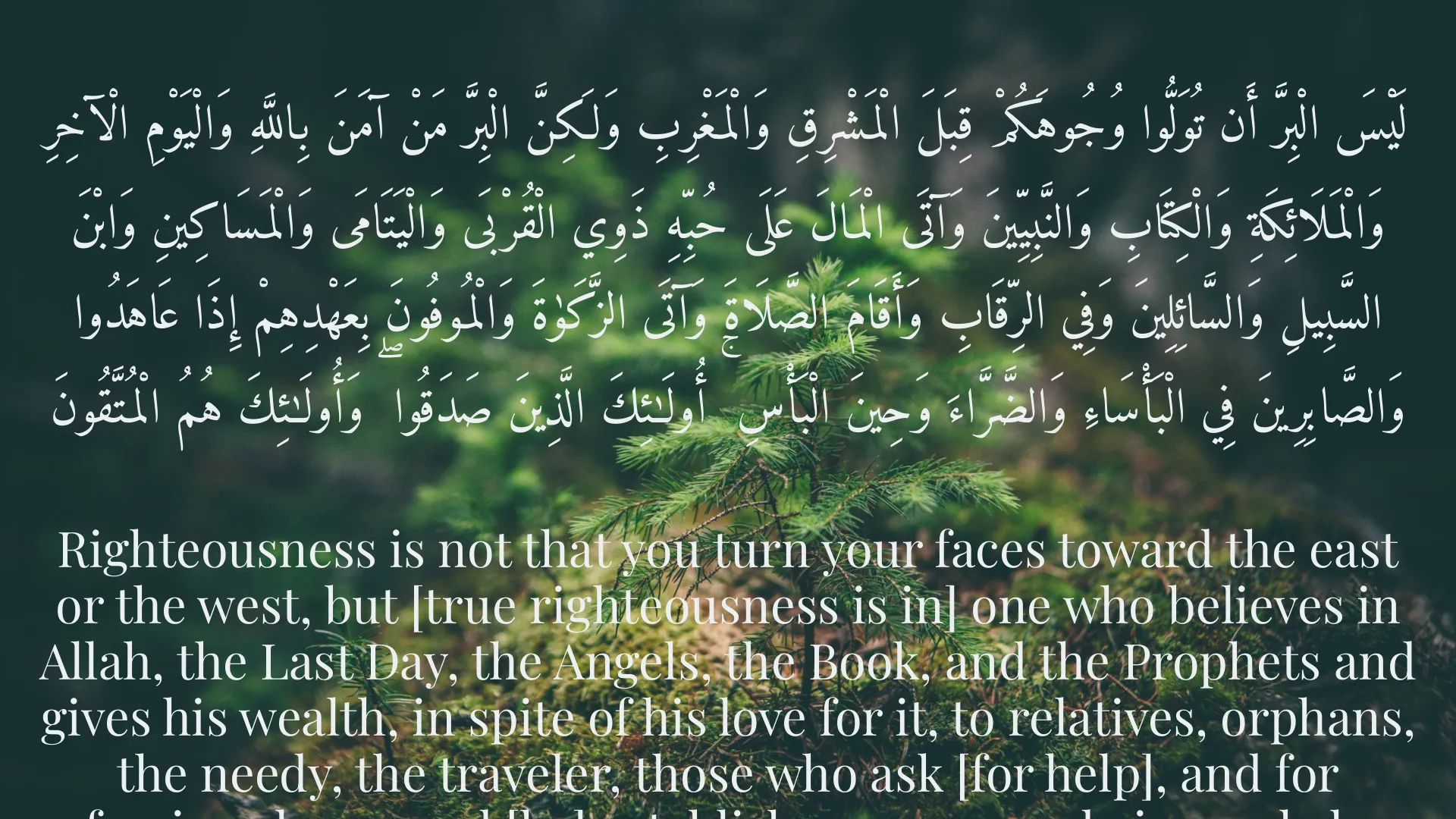
The significance of intention is a recurring theme in the Islamic faith, particularly emphasized within the pages of the Holy Quran. The Quran, regarded as the literal word of God, serves as a crucial guide for Muslims on how to live their lives. One of the core principles that the Quran addresses is the notion of divine intention, especially regarding actions and deeds. Sincere intention enriches every act, transforming mundane tasks into meaningful endeavors that align with spiritual well-being and divine acceptance. In Surah Al-Baqarah, verse 177, Allah states, "It is not righteousness that you turn your faces towards the East or the West, but righteousness is in one who believes in Allah, the Last Day, the Angels, the Book, and the Prophets and gives his wealth, in spite of love for it, to relatives, orphans, the needy, the traveler, those who ask [for help], and for freeing slaves; [and who] establishes prayer and gives zakah; [and who] fulfills their promise when they promise; and [who] are patient in poverty and hardship and during battle. Those are the ones who have been true, and it is those who are the righteous." This verse encapsulates the essence of what it means to be righteous in the eyes of Allah — it is not merely about outward actions but rather, it is anchored in genuine belief and faith. The notion that one must pair good actions with faith highlights the importance of the intention behind those actions. Simply performing good deeds without the right intention can lead to a dilution of their true value. It signifies a call for Muslims to engage in self-reflection — are they helping others out of sincere compassion and the desire to please Allah, or are their actions driven by worldly desires such as recognition, respect, or personal gain? Furthermore, in Surah Al-Imran, verse 92, Allah provides clear guidance when He states, "You will not attain good until you spend from that which you love." This verse is a powerful reminder of the sacrifices often required in the pursuit of genuine goodness and righteousness. It emphasizes that true generosity stems from what we hold dear — be it our wealth, time, or other resources — and calls for a willingness to part with these cherished possessions for the betterment of others. This illustrates that the depth of one’s love is often tested through the willingness to give and assist those in need. When we reflect on these verses and the principle of divine intention, it becomes evident why having a pure intention is not only important but essential. For an act of charity or kindness to carry weight in the sight of Allah, it must be performed with a heart sincerely seeking the pleasure of the Creator. This calls for vigilance in one’s own heart and mind, as it is easy to become distracted by personal aspirations while engaging in acts of charity. This aligns perfectly with the teachings of the Prophet Muhammad (peace be upon him), who said, "Actions are judged by intentions, and each person will get what they intended" (Sahih Bukhari). Thus, the emphasis on intention serves as an intrinsic part of Islamic teachings. Intention filters our actions through a lens of spirituality. It compels believers to continually reassess their motivations. The why behind our actions can make a significant difference. If one contributes to a charity with the desire for acknowledgment or praise, the reward may be promptly received in the form of social affirmations, but such a deed will not yield eternal rewards in the eyes of Allah. Hence, it's about nurturing a sincere heart committed solely to the welfare of others. Another profound aspect of having a divine intention is found in its ripple effect on society. Individuals who approach their actions with the intent to please Allah not only uplift their own spirits but also inspire those around them. When good deeds are performed with an intention rooted in faith and sincere compassion, they resonate deeply within our communities, encouraging collective responsibility towards helping the less fortunate. It creates a culture of service and benevolence, reinforcing communal bonds through shared values. Moreover, the idea of divine intention pushes us to think beyond individual acts of charity. It encourages systemic change — the implementation of sustainable solutions to societal issues. When individuals and organizations align their intentions with a greater purpose, they can effectively tackle poverty, injustice, and inequality on a larger scale. Schools, hospitals, and community programs established with the intention of serving others can transform entire communities. In conclusion, the emphasis on intention in the Holy Quran illustrates a comprehensive framework within which actions are perceived. Acts of kindness and generosity are undoubtedly significant, but their true essence lies in the intention behind them. This elevated approach not only enriches individual believers but, when embraced collectively, contributes to the spiritual elevation of communities at large. The understanding that pleasing Allah is the ultimate goal of every good deed empowers Muslims to act with purpose and sincerity. Through aligning our intentions with the teachings of the Quran and following the example of the Prophet Muhammad, we can ensure that each action bears the weight of divine approval and ultimately leads us toward a path of righteousness and fulfillment. Therefore, let us strive to cultivate intentions in our hearts that seek only the pleasure of Allah in all that we do.
Related Verses
لَيْسَ الْبِرَّ أَن تُوَلُّوا وُجُوهَكُمْ قِبَلَ الْمَشْرِقِ وَالْمَغْرِبِ وَلَكِنَّ الْبِرَّ مَنْ آمَنَ بِاللَّهِ وَالْيَوْمِ الْآخِرِ وَالْمَلَائِكَةِ وَالْكِتَابِ وَالنَّبِيِّينَ وَآتَى الْمَالَ عَلَى حُبِّهِ ذَوِي الْقُرْبَى وَالْيَتَامَى وَالْمَسَاكِينِ وَابْنَ السَّبِيلِ وَالسَّائِلِينَ وَفِي الرِّقَابِ وَأَقَامَ الصَّلَاةَ وَآتَى الزَّكَوٰةَ وَالْمُوفُونَ بِعَهْدِهِمْ إِذَا عَاهَدُوا وَالصَّابِرِينَ فِي الْبَأْسَاءِ وَالضَّرَّاءَ وَحِينَ الْبَأْسِ ۚ أُولَـٰئِكَ الَّذِينَ صَدَقُوا ۖ وَأُولَـٰئِكَ هُمُ الْمُتَّقُونَ
Righteousness is not that you turn your faces toward the east or the west, but [true righteousness is in] one who believes in Allah, the Last Day, the Angels, the Book, and the Prophets and gives his wealth, in spite of his love for it, to relatives, orphans, the needy, the traveler, those who ask [for help], and for freeing slaves; and [he] establishes prayer and gives zakah; [those who fulfill their promise when they promise] and when they are patient in poverty and hardship and during battle. Those are the ones who have been true, and it is those who are the righteous.
Al-Baqarah : 177
لَن تَنَالُوا الْبِرَّ حَتَّى تُنفِقُوا مِمَّا تُحِبُّونَ ۗ وَمَا تُنفِقُوا مِن شَيْءٍ فَإِنَّ اللَّهَ بِهِۦ عَلِيمٌ
Never will you attain the good until you spend from that which you love. And whatever you spend - indeed, Allah is Knowing of it.
Al-Imran : 92
Short Story
One day a man was sitting in the market and witnessed a woman begging. He thought to himself, "Why not help her?" But then a thought crossed his mind: "Am I helping her out of mere pity, or do I have a divine intention?" With this thought, he decided to find a stronger reason as his motivation before offering help. When he approached the woman, he said, "I will help you, but with the intention of pleasing God." With this action, he felt a sense of peace and contentment.