Quranic Answer
Joking and humor are natural facets of human social life. These traits serve several purposes, including helping individuals to bond, express creativity, and create a joyful atmosphere. Humor can be a tool for relieving tension and breaking down barriers. However, despite its benign intentions, it is essential to recognize that not all forms of humor are harmless. The Quran and the Sunnah of the Prophet Muhammad (PBUH) establish clear guidelines for humor and social interactions, emphasizing the need for respect and consideration in all forms of communication. In the Holy Quran, Allah provides significant insights on human behavior and social interactions. In Surah Al-Hujurat, verse 11, Allah states: 'O you who have believed, avoid much [negative] assumption. Indeed, some assumption is sin. And do not spy or backbite each other. And would one of you like to eat the flesh of his brother while he is dead?' This powerful verse offers important principles for believers regarding their relationships and interactions with others. It cautions against making negative assumptions about others, a common thread in inappropriate humor that can lead to misunderstandings and conflicts. This verse also underlines the importance of avoiding backbiting and spying, reinforcing that any form of communication that harms another person is erroneous and sinful. The essence of this Quranic guidance is rooted in an ethical framework that advocates for respectful communication. When joking or using humor, individuals need to engage in ways that uplift and connect with others rather than isolate or embarrass them. Humor should not create an environment where belittling or mocking others becomes the norm. Any joke that leads to the hurt or humiliation of others is not only inappropriate but could also be seen as a violation of the moral and ethical guidelines laid down in the Quran. Moreover, the Hadith, which comprises the sayings and actions of the Prophet Muhammad (PBUH), emphasizes the importance of maintaining respect and dignity in communication. The Prophet (PBUH) is depicted as someone who never insulted anyone in his speech, even in jest. This aspect of the Prophet’s character exemplifies the ideal approach to humor; he conveyed messages and induced laughter without compromising respect or dignity. One of the well-known sayings of the Prophet (PBUH) conveys this principle so succinctly: 'The best among you are those who have the best manners and character.' Such teachings underline that morality and propriety should govern our interactions, including those colored by humor. Additionally, humor can indeed be morally constructive and beneficial when used correctly. Humor, when aligned with the guidelines laid out in Islamic teachings, can foster unity, create smiles, and encourage joy among people. However, folk tales and comical stories that denigrate others or generate ill-will cannot be justified within this framework. This observation raises moral questions regarding the intent behind humor: is it to uplift or belittle? An important consideration must be made about where the focus lies in one's jokes and what legacy or impression it leaves on the community. Moreover, it becomes critical to ensure that those we joke about are not marginalized or demeaned in the process. In contexts where social issues, such as race, gender, religion, or class, are involved, careful attention is necessary. Many social movements have arisen largely because humor was used inappropriately to reinforce stereotypes or offend different groups. These offensive forms of humor often lead to division rather than solidarity. Hence, understanding the delicate balance of what constitutes appropriate humor is essential in today’s diverse global landscape. Furthermore, the emotional impact of words and jokes should never be underestimated. Particularly in a time where social media can amplify our messages to a wide audience in a split second, the potential harm caused by a poorly thought-out joke can be significant. Therefore, individuals must cultivate an awareness and mindfulness about the possible ramifications of their humor. As stated earlier, any form of humor that harms others or wounds their feelings is not just undesirable but can lead to sinful outcomes. In conclusion, humor is indeed a powerful tool in our social interactions, capable of building connections and nourishing relationships. However, it is imperative to ground our humor in the ethical principles outlined in the Quran and the teachings of the Prophet Muhammad (PBUH). Engaging in humor should not come at the expense of others’ dignity or well-being; rather, it needs to be a source of joy without inflicting emotional pain or disrespect. Ultimately, inappropriate joking that causes distress to others can rightly be considered sinful within an Islamic framework. In fostering a culture of humor that complements our spiritual aspirations, we adhere to the important tenets of respect, empathy, and understanding that enrich our communities and lay the groundwork for a considerate society.
Related Verses
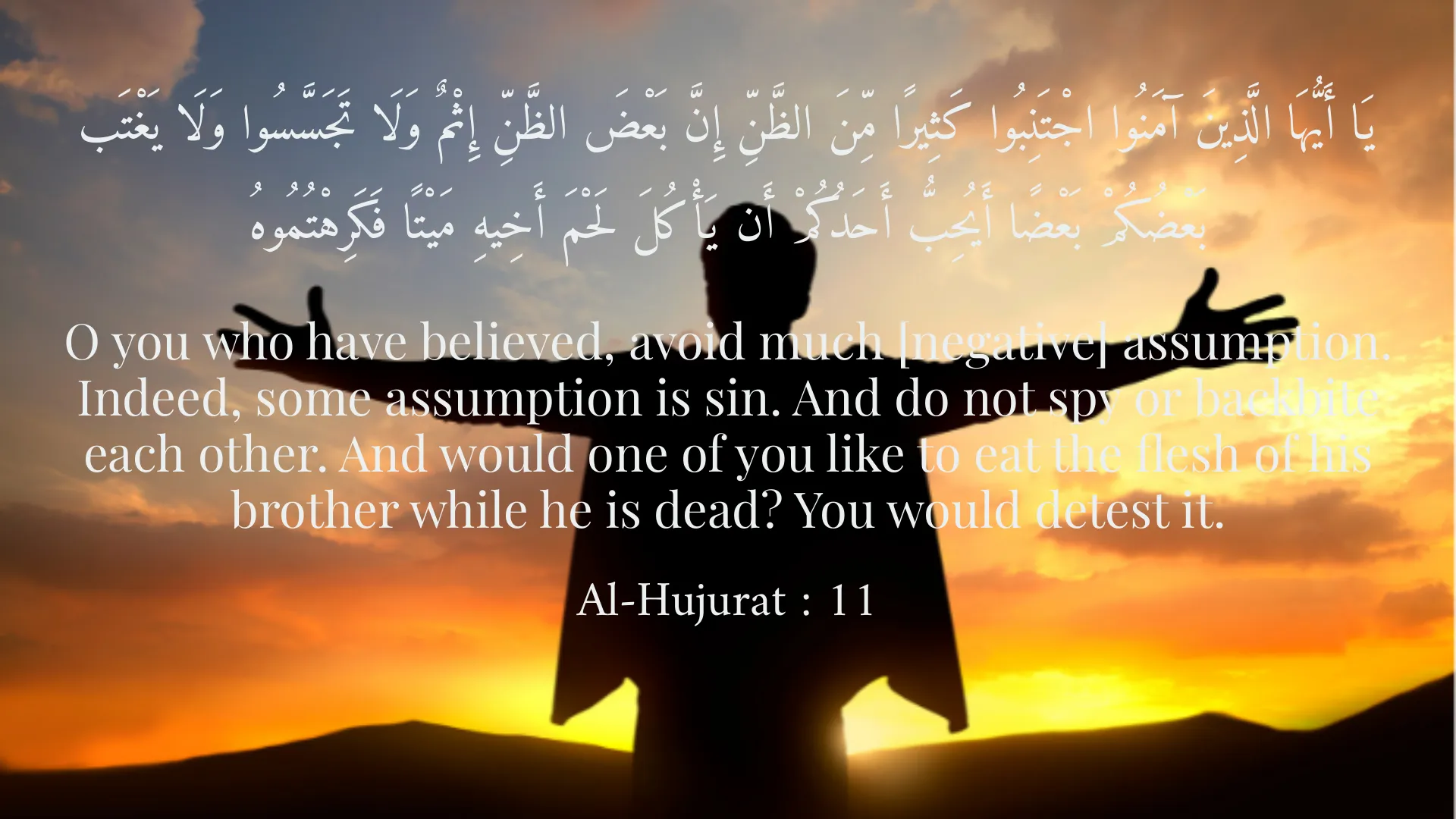
يَا أَيُّهَا الَّذِينَ آمَنُوا اجْتَنِبُوا كَثِيرًا مِّنَ الظَّنِّ إِنَّ بَعْضَ الظَّنِّ إِثْمٌ وَلَا تَجَسَّسُوا وَلَا يَغْتَب بَعْضُكُمْ بَعْضًا أَيُحِبُّ أَحَدُكُمْ أَن يَأْكُلَ لَحْمَ أَخِيهِ مَيْتًا فَكَرِهْتُمُوهُ
O you who have believed, avoid much [negative] assumption. Indeed, some assumption is sin. And do not spy or backbite each other. And would one of you like to eat the flesh of his brother while he is dead? You would detest it.
Al-Hujurat : 11
Short Story
Once in a neighborhood, there was a man named Hasan, renowned for his sense of humor. He always aimed to amuse others with his jokes. However, one day, while joking in the company of friends, one of his friends was deeply hurt. Hasan couldn't forgive himself and apologized to him. He learned that every joke, as a form of humor, should be considerate and should not hurt others.