Quranic Answer
Jealousy, a human emotion, is often regarded as a natural response to the perceived success or advantages of others. However, in the context of the Holy Quran, jealousy is portrayed not merely as an emotion but as a significant moral flaw that can hinder one's spiritual growth and relationship with God. It is described as a negative trait arising from weak faith and a sense of disbelief. In exploring the teachings of the Quran regarding jealousy, one can better understand why it is discouraged and the alternatives that believers are encouraged to adopt in its place. The Quran, being a guide for humanity, particularly emphasizes the importance of maintaining a strong and unwavering faith. Jealousy often stems from insecurity and discontent, both of which can divert an individual away from the righteous path laid out by God. Instead of cultivating faith and trust in God's wisdom and provisions, jealousy fosters a mentality of comparison, judgment, and ultimately, resentment. In Surah Al-Baqarah, verse 109 emphasizes this point poignantly: 'And many of the People of the Book wish they could turn you back to disbelief after you have believed, out of envy from themselves after it has become clear to them the truth.' This verse highlights that jealousy arises not from genuine concern or goodwill but from a place of ignorance and disbelief. When believers display jealousy, they inadvertently signal their discontent with God's distribution of blessings. This attitude can lead to various forms of wrongdoing, including spreading negativity, gossip, and even malicious actions against those who are envied. The Quran, therefore, counsels believers to restrain their jealousy and focus instead on personal development and spiritual enrichment. Recognizing that each individual's path is designed by God allows believers to cultivate a sense of gratitude rather than envy. This perspective fosters a community where individuals uplift one another instead of tearing each other down. Furthermore, Surah Al-Hujurat, verse 11 delivers a clear directive to believers regarding their interactions with one another: 'O you who have believed, let not a people ridicule [another] people; perhaps they may be better than them. And do not insult one another and do not call each other by [offensive] nicknames.' This verse challenges the notion of rivalry and competition, which often fuels jealousy among individuals. Instead, it promotes an environment of mutual respect and understanding, advocating for an atmosphere where encouragement and support replace scorn and ridicule. Jealousy not only impacts interpersonal relationships but poses a significant threat to one’s self-confidence and mental well-being. Individuals consumed by jealousy often struggle with feelings of inadequacy and unworthiness. This emotional state can result in a cycle of negativity that affects their social connections and mental health. When one allows jealousy to dominate their thoughts and feelings, they become disconnected from their true selves and their purpose in life. Alternatively, the Quran encourages believers to develop positive attributes such as kindness, empathy, and support for one another. When individuals embrace these values, they create bonds built on trust and peaceful coexistence. True faith in God empowers believers to rejoice in the successes of others, recognizing that each person's journey is unique and preordained. Adopting such a mindset not only benefits individual believers but fosters a cohesive and harmonious community. Instead of looking upon others with envious eyes, believers are encouraged to celebrate the achievements and blessings of those around them, thereby creating a supportive environment where everyone can thrive spiritually, emotionally, and socially. In conclusion, jealousy is depicted in the Holy Quran as a detrimental trait linked to weak faith and disbelief. It serves as a barrier to spiritual advancement, promoting negativity and division among individuals. The Quran’s teachings highlight the need for believers to resist this emotion and instead cultivate positive qualities that enhance their connections with God and each other. By focusing on faith and embracing an attitude of gratitude and support, believers can steer clear of the pitfalls of jealousy and instead contribute to a more compassionate and loving society. The fight against jealousy is not merely a personal endeavor but a collective effort that strengthens the spiritual fabric of the community, urging all to uplift one another in faith and existence.
Related Verses
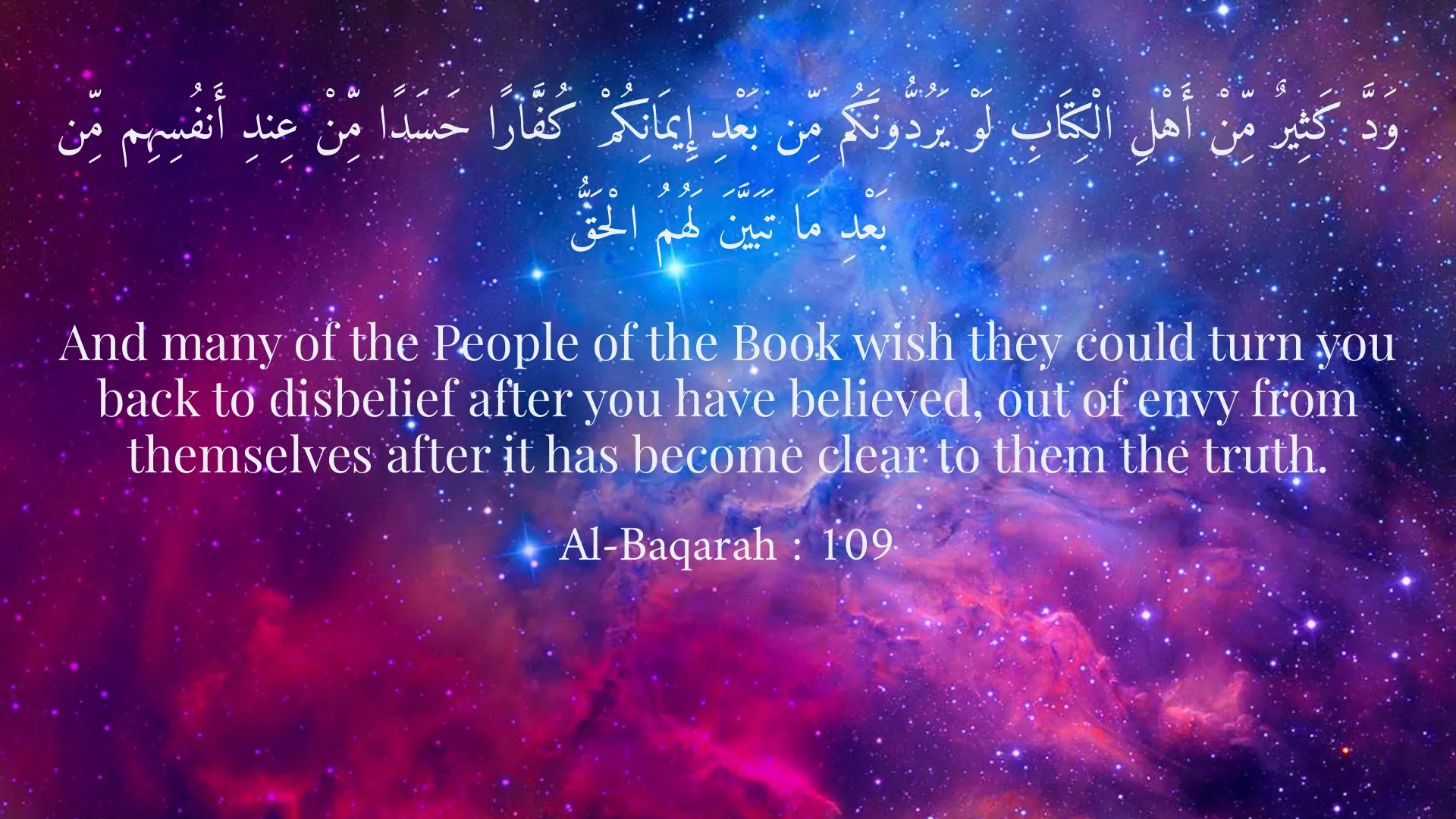
وَدَّ كَثِيرٌ مِّنْ أَهْلِ الْكِتَابِ لَوْ يَرُدُّونَكُم مِّن بَعْدِ إِيمَانِكُمْ كُفَّارًا حَسَدًا مِّنْ عِندِ أَنفُسِهِم مِّن بَعْدِ مَا تَبَيَّنَ لَهُمُ الْحَقُّ
And many of the People of the Book wish they could turn you back to disbelief after you have believed, out of envy from themselves after it has become clear to them the truth.
Al-Baqarah : 109
يَا أَيُّهَا الَّذِينَ آمَنُوا لَا يَسْخَرْ قَوْمٌ مِّن قَوْمٍ عَسَى أَن يَكُونُوا خَيْرًا مِّنْهُمْ وَلَا تَلْمِزُوا أَنفُسَكُمْ وَلَا تَنَابَزُوا بِالْأَلْقَابِ
O you who have believed, let not a people ridicule [another] people; perhaps they may be better than them. And do not insult one another.
Al-Hujurat : 11
Short Story
Once upon a time in a city, there lived a man named Hassan who harbored jealousy towards the blessings of others. One day he said to his friend, 'Why am I so unfortunate?' His friend smiled and said, 'Hassan, instead of being jealous, why not be grateful for your own blessings?' Hassan thought of a verse from the Quran and realized that jealousy only brought him pain, and he should focus more on the blessings in his life. From that day onwards, Hassan decided to only see the good and pray for others. Over time, his life transformed and he cast jealousy out of his heart.