Quranic Answer
In the Holy Quran, special emphasis is placed on the conduct of human beings and their interactions, particularly regarding the sensitive and significant topic of judgment. This theme resonates profoundly within the framework of Islamic teachings, where assessing the actions and character of others holds considerable weight. In contemporary society, especially within Islamic communities, the act of judging others has been a persistent focus, eliciting substantial discourse among scholars and laypeople alike. When we engage in conversations that revolve around the concept of judgment, it is imperative to distinguish between fair judgment and the more problematic phenomenon of prejudging. Predominantly, the notion of prejudging entails forming opinions or making decisions about individuals based on superficial appearances, hearsay, or incomplete information rather than relying on factual understanding. The Quran, as a comprehensive guide for humanity, urges followers to refrain from such erroneous conclusions. One of the most poignant references regarding judgment in the Quran can be found in Surah Al-Hujurat, specifically in verse 12. This verse states: 'O you who have believed, avoid much [negative] assumption. Indeed, some assumption is sin.' This clear and direct instruction highlights the perils of making hasty judgments about others. By cautioning against negative assumptions, the Quran warns that such behavior can culminate in greater sins, affecting not only the individuals being judged but also the moral fabric of society as a whole. In this context, the term 'sin' transcends the personal guilt of the individual, addressing the communal repercussions that misguided judgments can provoke. The concept of judgment arising in the heart is another significant aspect mentioned in various Quranic texts. It can lead individuals down a slippery slope toward sin, as harboring negative thoughts about others can skew one’s perspective and lead to harmful behaviors. The Quran encourages believers to exercise restraint and to constantly assess their intentions, imploring them to focus on the dignity and humanity of others rather than allowing prejudgment and bias to cloud their judgment. Consider the pivotal role of context and intention in making decisions about others. In Islam, individuals are urged to analyze situations holistically, respecting the nuances of each person’s circumstances. This careful consideration seeks to foster understanding and compassion rather than division and contempt. The Quran emphasizes that one must strive for empathetic engagement; to understand others through the lens of their experiences without resorting to judgments based on superficial markers. Moving beyond Surah Al-Hujurat, the Quran further articulates the dangers of unjust judgment in Surah Al-Baqarah, verse 188, where it states: 'And do not consume one another's wealth unjustly or send it [in bribery] to the rulers.' This verse intricately links the act of judgment with the ethics of wealth and power. It highlights that incorrect or hasty judgments not only tarnish interpersonal relations but can also lead to significant injustices, including the violation of individuals' rights and the moral degradation of society. The act of unjustly consuming another’s wealth or engaging in corrupt practices not only signifies moral failure but illustrates a profound breach of social contracts. Thus, the Quran's teachings on judgment encapsulate the necessary adherence to justice and equality. Furthermore, this verse elucidates the consequences that unjust judgments can have on social dynamics and how they can foster an environment where inequality and exploitation flourish. The connection between judgment and societal injustice is clear—irrational judgments can lead to significant harm, inevitably unjustly affecting those who may already be vulnerable. By presenting these ideas, the Quran not only emphasizes caution in making judgments but also calls for introspection. Believers are encouraged to assess their thoughts and attitudes towards others, ensuring that their perceptions are grounded in compassion and understanding. Individuals must consider their own biases and preconceived notions, seeking to eliminate any judgment that derives from misunderstanding or a lack of knowledge. This approach aligns with the broader Islamic ethos of promoting justice and fairness while nurturing a sense of community based on mutual respect. Moreover, the teachings in the Quran extend beyond mere prohibition of negative assumptions; they call upon individuals to actively promote kindness and understanding in their interactions. The ideal Islamic community is one where support and empathy replace conflicted judgments, fostering environments of trust and solidarity instead of suspicion and division. This transformation starts with personal introspection and a commitment to ethical behavior, which inherently involve refraining from forming prejudiced judgments about others. As members of a collective society, we cannot ignore the significant impact our judgments can wield, both positive and negative. We should aspire to be agents of positive change, utilizing the guidance found within the Quran to navigate our relationships with grace and fairness. By embodying these principles, we strive to create communities where individuals are valued not for superficial traits but for their inherent dignity as human beings. In conclusion, judgment is a deeply intricate issue that permeates various aspects of the human experience. The teachings within the Holy Quran serve as a guiding light, illuminating the path towards just and compassionate interactions with others. By heeding its wise counsel regarding presumption, assumption, and the ethics of judgment, individuals can foster an atmosphere of understanding, respect, and love within their communities. Embracing these values not only entails the personal commitment to equitable judgment but also involves a broader societal responsibility: to challenge systems of prejudice and injustice. By doing so, we can adhere to the Quran's timeless teachings and strive to embody the principles of justice, equity, and compassion that lie at the very heart of Islam.
Related Verses
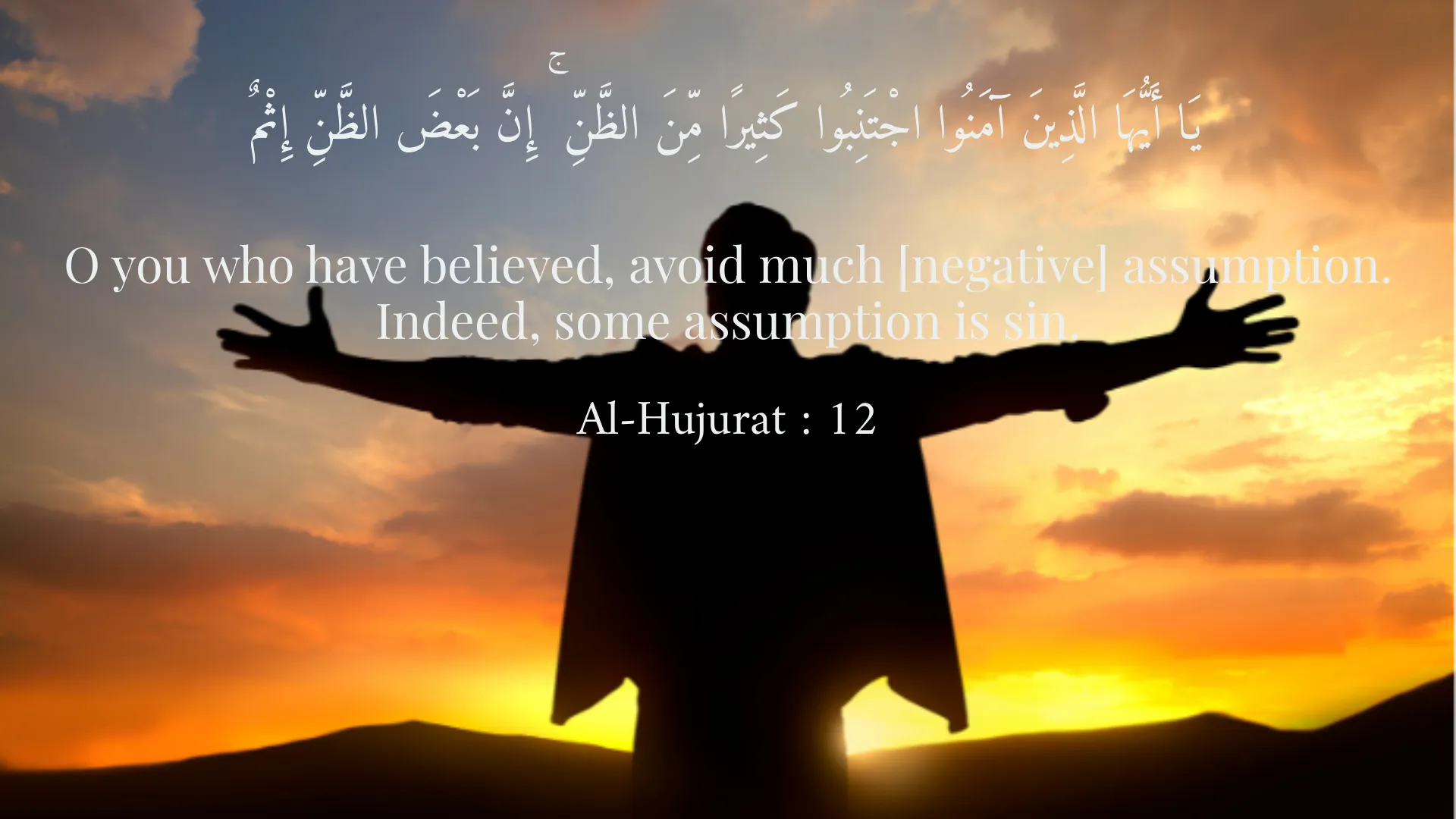
يَا أَيُّهَا الَّذِينَ آمَنُوا اجْتَنِبُوا كَثِيرًا مِّنَ الظَّنِّ ۚ إِنَّ بَعْضَ الظَّنِّ إِثْمٌ
O you who have believed, avoid much [negative] assumption. Indeed, some assumption is sin.
Al-Hujurat : 12
وَلَا تَأْكُلُوا أَمْوَالَكُمْ بَيْنَكُم بِالْبَاطِلِ وَلَا تَدْلُوا بِهَا إِلَى الْحُكَّامِ لِتَأْكُلُوا فَرِيقًا مِّنْ أَمْوَالِ النَّاسِ بِإِثْمٍ وَأَنتُمْ تَعْلَمُونَ
And do not consume one another's wealth unjustly or send it [in bribery] to the rulers, while you know [that it is unlawful].
Al-Baqarah : 188
Short Story
One day, two friends were having a conversation. One of them was always judging others and labeling everyone he saw. His friend decided to remind him that this was not right and said, 'You don’t know what’s going on in others’ hearts. It’s better to look at them with love instead of judgment.' His friend's words had a profound effect on him, and he realized that judging not only was morally wrong but could also harm relationships.