Quranic Answer
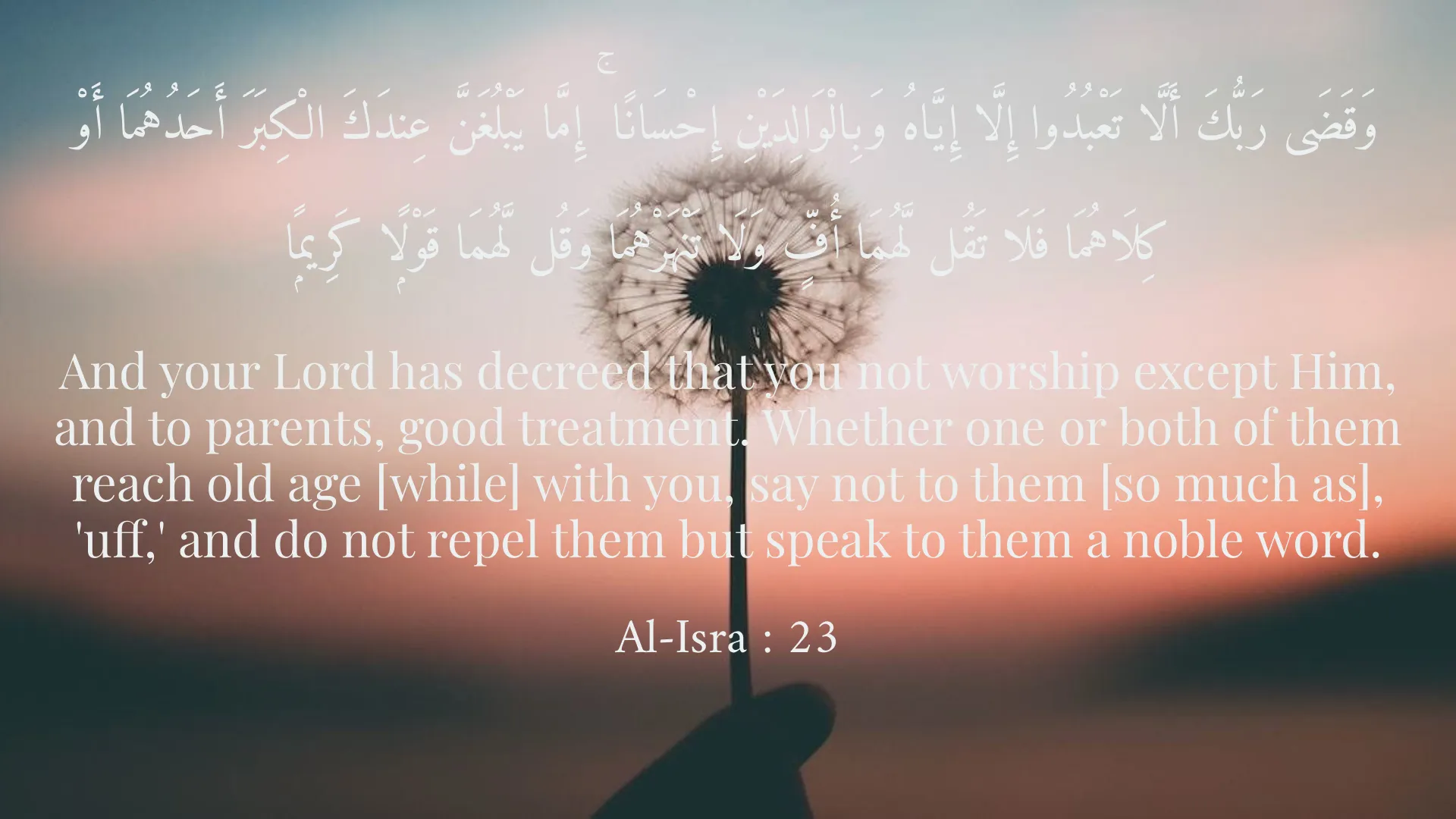
In the Holy Quran, kindness to parents is introduced as a major and highly virtuous act, underscoring the profound significance that such treatment holds within Islamic teachings. This emphasis on parental kindness is not merely a suggestion but is depicted as a duty that every Muslim is expected to fulfill. The Quran addresses this essential virtue repeatedly, illustrating its importance in a multitude of verses. The concept is not only pivotal for individual familial relationships but is also integral to the broader fabric of societal harmony and morality within the Islamic framework. One of the most notable references to the importance of this act can be found in Surah Al-Isra, verse 23: 'And your Lord has decreed that you shall not worship except Him, and to parents, good treatment.' This powerful verse serves as a testament to the elevated status of kindness to parents, placing it directly alongside the fundamental act of worshiping Allah. The arrangement of this verse indicates that while worshiping the one true God is paramount, showing love and respect for one's parents is equally vital. The Quran consistently reiterates the interconnectedness of one's relationship with Allah and their treatment of others, especially parents. Exploring the spiritual ramifications of kindness towards parents reveals its dual nature as both a moral obligation and a means of drawing closer to Allah. In a complex world where individuals encounter innumerable challenges, nurturing a loving relationship with parents becomes a refuge and a source of strength. While the Quran does not explicitly state that kindness to parents serves as a complete expiation for one’s sins, it does articulate that those who treat their parents with reverence and compassion will be awarded immense rewards. The concept of rewarding kindness serves not only to motivate believers but also to instill deeper spiritual convictions. In this way, acts of kindness towards parents can be viewed as a step towards achieving spiritual purification and accountability. The narratives of the Quran further illustrate the rewards associated with good conduct towards parents. In Surah Luqman, verse 14, believers are reminded of their obligations towards both their parents and the gratitude owed to them. This verse also highlights the sacrifices that parents make during their lifetimes, often in silence, to provide and care for their children. By recognizing these sacrifices, Muslims are encouraged not only to show kindness but also to express gratitude, thus enriching familial bonds and fostering an atmosphere of mutual respect. Moreover, individual acts of kindness have a ripple effect, influencing the dynamics within families and the community at large. Societal benefits can emerge when children treat their parents with kindness, as they are likely to carry these values forward in their own parenting. This generational transmission of values and virtues creates a more compassionate society where respect for elders becomes the norm. The returns of kindness extend beyond the immediate family; communities flourish where families are strong, and interpersonal respect is upheld. Furthermore, kindness towards parents in Islam is regarded as a means of attracting Allah's pleasure. The act of loving one’s parents can serve to soothe the spirit, leading to tranquility and fulfillment in life. This is especially significant in contemporary society, where myriad external pressures can lead to emotional turmoil. Engaging in acts of kindness, whether through simple gestures of affection, offering assistance, or spending quality time, can foster not only familial happiness but also personal well-being. Islamic teachings recognize that the relationship with one’s parents may not always be straightforward. In situations where parents may not exhibit kindness in return, the emphasis on maintaining respect and kindness remains unchanged. The teachings reflect the notion that righteousness and good conduct stem from individual choices, independent of reciprocity. Upholding kindness in the face of adversity embodies the true Islamic spirit, emphasizing the importance of moral character over situational circumstances. As Muslims navigate their daily lives, the encouragement to interact with parents through kindness and respect serves as a blessed path. It acts as a reminder of the significance of family ties while appealing to believers to create harmonious relationships based on love and understanding. Such practices not only lead to Allah's satisfaction but also yield spiritual peace, establishing a dual benefit that strengthens both the individual and the family unit. In summary, the act of being kind to parents in Islam is a multifaceted virtue deeply embedded within the Holy Quran. The consistent directives from Allah emphasize that kindness to parents is not merely an option but a critical obligation for Muslims. This emphasis underscores the belief that the present life is enriched by honoring one's parents, and such acts pave the way for obtaining divine favor and forgiveness. Ultimately, fostering a culture of kindness towards parents contributes positively to individual spirituality and the collective morale of society. As we reflect on our own interactions with our parents and the broader implications of our behavior, it becomes clear that kindness resonates through generations, shaping both our personal destinies and those of communities at large.
Related Verses
وَقَضَى رَبُّكَ أَلَّا تَعْبُدُوا إِلَّا إِيَّاهُ وَبِالْوَالِدَيْنِ إِحْسَانًا ۚ إِمَّا يَبْلُغَنَّ عِندَكَ الْكِبَرَ أَحَدُهُمَا أَوْ كِلَاهُمَا فَلَا تَقُل لَّهُمَا أُفٍّ وَلَا تَنْهَرْهُمَا وَقُل لَّهُمَا قَوْلًۭا كَرِيمًۭا
And your Lord has decreed that you not worship except Him, and to parents, good treatment. Whether one or both of them reach old age [while] with you, say not to them [so much as], 'uff,' and do not repel them but speak to them a noble word.
Al-Isra : 23
وَوَصَّيْنَا الْإِنْسَانَ بِوَالِدَيْهِ ۚ أَنِ اشْكُرْ لِي وَلِوَالِدَيْكَ إِلَيَّ الْمَصِيرُ
And We have enjoined upon man [care] for his parents. But if they endeavor to make you associate with Me that of which you have no knowledge, do not obey them. To Me is your return, and I will inform you about what you used to do.
Luqman : 14
قُلْ إِن كَانَ آبَاؤُكُمْ وَأَبْنَاؤُكُمْ وَإِخْوَانُكُمْ وَأَزْوَاجُكُمْ وَعَشِيرَتُكُمْ وَأَمْوَالٌ اقْتَرَفْتُمُوهَا وَتِجَارَةٌ تَخْشَوْنَ كَسَادَهَا وَمَسَاكِنُ تَرْضَوْنَهَا أَحَبَّ إِلَيْكُمْ مِّنَ اللَّهِ وَرَسُولِهِ وَجِهَادٍ فِي سَبِيلِهِ فَتَرَبَّصُوا حَتَّى يَأْتِيَ اللَّهُ بِأَمْرِهِ ۚ وَاللَّهُ لَا يَهْدِي الْقَوْمَ الْفَاسِقِينَ
Say, 'If your fathers, your sons, your brothers, your wives, your relatives, the wealth which you have obtained, and the commerce in which you fear decline, and the dwellings in which you delight are more beloved to you than Allah and His Messenger and jihad in His cause, then wait until Allah executes His command. And Allah does not guide the defiantly disobedient people.'
At-Tawbah : 24
Short Story
Once upon a time in a village, there was a young man named Sasan who always respected his parents and responded positively to their requests. One day, his mother fell ill, and Sasan dedicated all his time to caring for her. After a while, his mother recovered, and Sasan noticed that he felt better himself. He realized that showing love and kindness to his parents not only made them happy but also cleansed him of his sins.