Quranic Answer
The Holy Quran, the central religious text of Islam, explicitly emphasizes the importance of knowledge and encourages believers to seek it as a fundamental aspect of their Islamic faith. This advocacy for education and understanding is a core component of Islamic teachings, and its implications extend into both spiritual and worldly realms. Knowledge, according to the Quran, is not merely an accumulation of facts, but a profound undertaking that connects believers with their Creator, shapes their ethos, and enables them to contribute meaningfully to society. One of the most compelling instances of this call to pursue knowledge is found in Surah Al-Alaq, which contains the initial verses revealed to the Prophet Muhammad (PBUH). In these verses—"Read in the name of your Lord who created, created man from a clinging substance" (Al-Alaq 1-2)—the very first divine command to humanity is to read and engage with knowledge. This demonstrates the significance of literacy and education in Islam from the onset of its revelation. The act of reading, in this context, serves as a metaphor for learning in a broader sense, urging followers to absorb and understand the knowledge that is available to them. Moreover, the Quran suggests that knowledge is a means of elevating oneself within a community and before God. In Surah Az-Zumar, verse 9, Allah articulates the distinction between the knowledgeable and the ignorant, saying: "Are those who know equal to those who do not know?" This rhetorical question highlights the respect and high status afforded to scholars and those who pursue knowledge. It suggests that knowledge is not only a tool for personal enrichment, but also plays a critical role in guiding one’s actions and decisions in existence. The relationship between knowledge and ethical behavior is a recurring theme in Islamic teachings. Furthermore, in Surah Al-Mujadila, verse 11, the Quran states: "Allah will raise those who have believed among you and those who were given knowledge by degrees." Here, the verse expresses that individuals who dedicate themselves to gaining knowledge will receive, in the eyes of Allah, a higher status compared to those who do not. This connection between belief, knowledge, and divine elevation signifies that the pursuit of knowledge is indispensable for spiritual growth and fulfillment in Islam. Additionally, it fosters an environment where individuals are incentivized to learn and teach, thus creating a culture of respect for intellectual endeavors. Knowledge in Islam serves not just to enrich the minds of individuals, but it is also regarded as a tool for understanding the universe and the signs of Allah. The Quran frequently encourages the contemplation of the natural world as a source of knowledge. The act of learning is not confined to religious studies; it is meant to extend into science, philosophy, and the arts, echoing the Quranic injunction for Muslims to seek knowledge wherever it may be found. This inclusive approach emphasizes the holistic vision of education in Islam and the perception that all branches of knowledge can lead toward a greater understanding of God's creation. Islamic history is replete with instances where the pursuit of knowledge was heralded and institutionalized. The Golden Age of Islam witnessed unprecedented advancements in various fields such as mathematics, medicine, astronomy, and philosophy. The establishment of universities where scholars of different backgrounds came together to explore and exchange ideas has had a lasting impact on contemporary educational structures and methodologies. The meticulous work of Muslim scholars has laid the groundwork for many disciplines, showcasing the crucial importance of education in Islamic civilization. Contributions from notable Islamic scholars like Al-Khwarizmi in mathematics and Ibn Sina in medicine illustrate how serious the pursuit of knowledge was regarded. Their works remain integral to academic curricula worldwide, demonstrating the enduring legacy of Islamic intellectual traditions. In addition to accumulating knowledge, the Quran also underlines the importance of wisdom and understanding. In Surah Al-Baqarah, verse 269, it states: "He grants wisdom to whom He wills, and whoever has been given wisdom has certainly been given a great good." Here, wisdom is seen as a divine gift that is superior to mere knowledge. The distinction between knowledge and wisdom accentuates that the acquisition and application of knowledge must be paired with moral understanding and ethical considerations. The emphasis on knowledge in the Quran extends to practical aspects of daily life. The teachings encourage believers to become lifelong learners, fostering curiosity and a thirst for understanding in all aspects of human existence. This approach is aligned with the teachings of The Prophet Muhammad (PBUH), who stated, "Seeking knowledge is an obligation upon every Muslim." Such affirmations strengthen the value of education within Islamic teachings and signal that the pursuit of knowledge is a lifelong endeavor, essential for personal development and fulfillment of one’s responsibilities within society. In conclusion, the Holy Quran underscores the pursuit of knowledge as a noble and essential component of faith, elevating its status within the spiritual and temporal realms. The Quranic teachings advocate an inclusive understanding of knowledge that spans across disciplines and integrates moral and ethical considerations. The ramifications of these teachings manifest in both historical and modern contexts, illustrating how education and knowledge can cultivate individuals who are aware of their duties towards themselves, others, and Allah. Through its exhortations for learning, the Quran remains a beacon of guidance for Muslims in their quest for enlightenment, growth, and understanding, affirming that the pursuit of knowledge is both a spiritual path and a moral obligation.
Related Verses
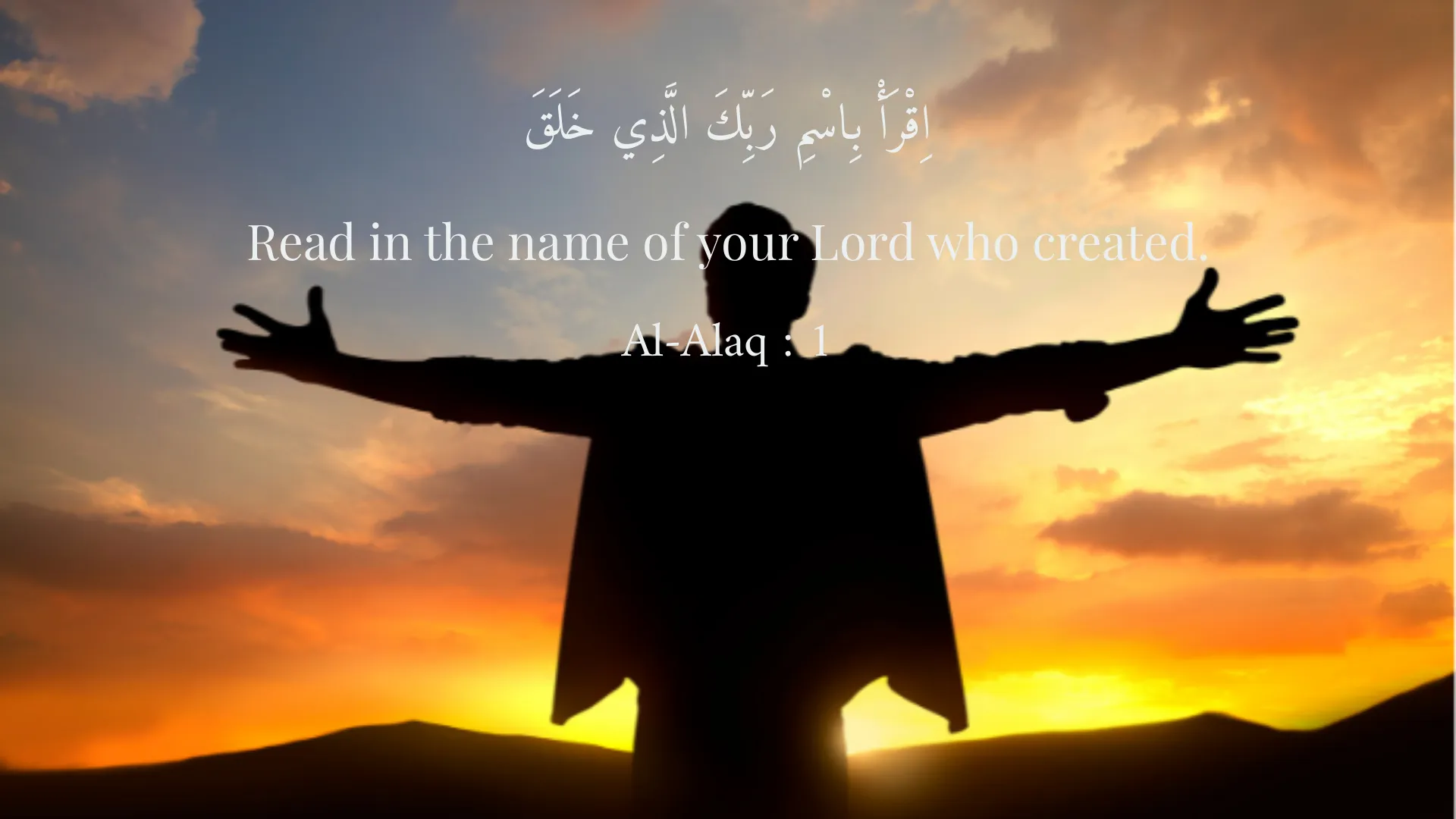
اِقْرَأْ بِاسْمِ رَبِّكَ الَّذِي خَلَقَ
Read in the name of your Lord who created.
Al-Alaq : 1
أَمَّنْ هُوَ قَانِتٌ آنَاءَ اللَّيْلِ سَاجِدًا وَقَائِمًا يَحْذَرُ الْآخِرَةَ وَيَرْجُو رَحْمَةَ رَبِّهِ
Is one who is devout during the night, prostrating and standing, fearing the Hereafter and hoping for the mercy of his Lord, [is he like one who does not]?
Az-Zumar : 9
يَرْتَفِعْ اللَّهُ الَّذِينَ آمَنُوا مِنكُمْ وَالَّذِينَ أُوتُوا الْعِلْمَ دَرَجَاتٍ
Allah will raise those who have believed among you and those who were given knowledge by degrees.
Al-Mujadila : 11
Short Story
Once upon a time, there was a scholar who was highly respected among the people. He always said, 'Knowledge is light, and seeking it is a form of worship.' One day, a student asked him, 'How can we acquire knowledge?' He replied, 'With diligence and perseverance, you will attain knowledge. The Quran emphasizes the search for knowledge, and that acquiring it brings you closer to the truth.' This statement stayed with the student for years and made him one of the greatest scholars of his time.