Quranic Answer
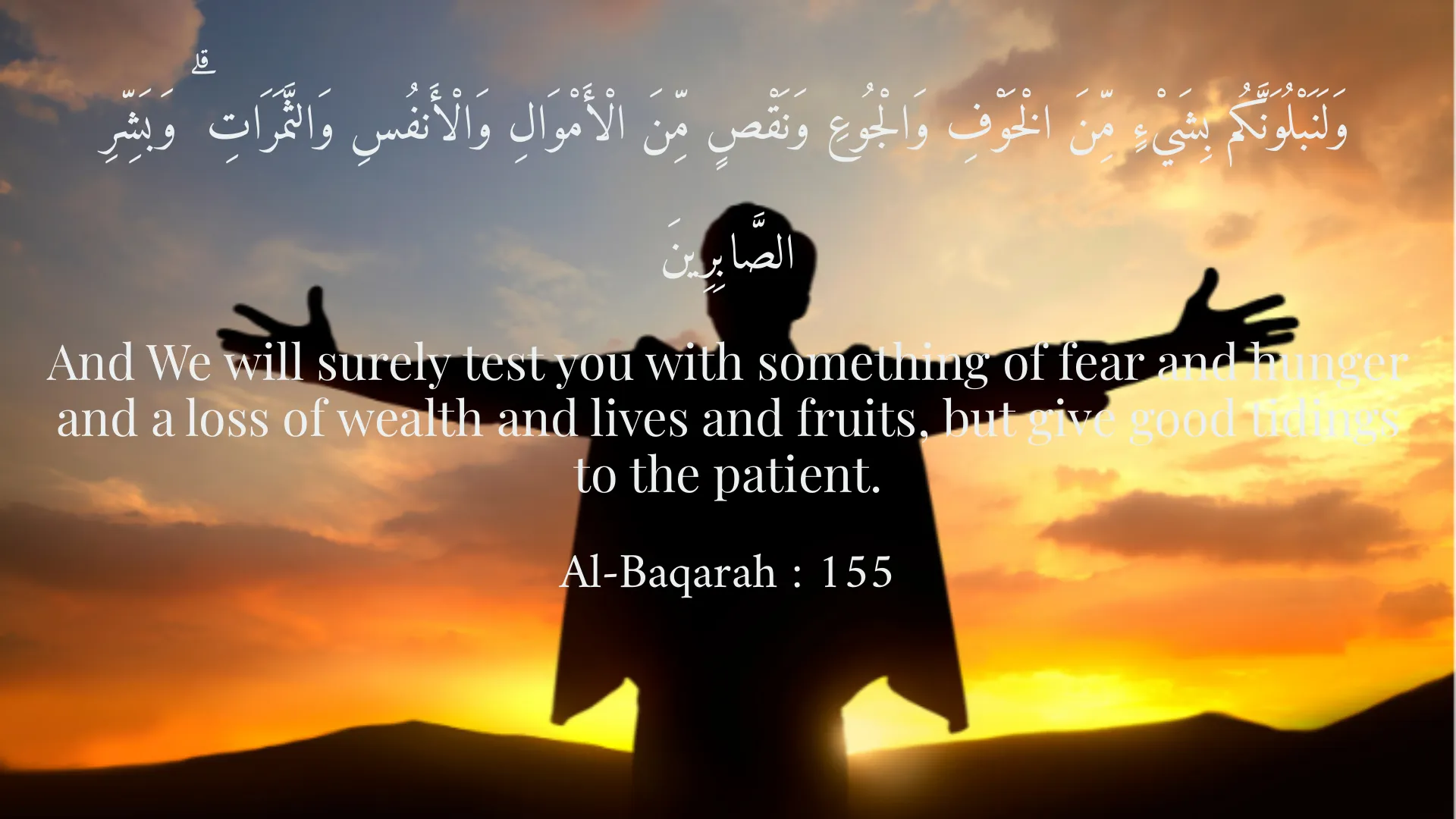
The question of whether life is fair often arises in the course of our existence, and the answer significantly depends on various factors, including the realities of life and our religious teachings. For those who adhere to the teachings of Islam, the Quran serves as a primary guide, providing insights into the nature of life, its challenges, and our responses to them. The Quran clearly articulates that life in this world is a test and trial, emphasizing that our experiences are designed to foster growth, patience, and ultimately, faith. In Surah Al-Baqarah, verse 155, Allah states: 'And We will surely test you with something of fear and hunger and a loss of wealth and lives and fruits, but give good tidings to the patient.' This verse illustrates a key concept in Islamic teachings: that fear, hunger, and loss are integral to the human experience. These challenges reveal that life is not always easy, and the path may often be laden with difficulties. A critical aspect of this divine testing is understanding the rationale behind it. Allah tests us as a means of gauging our faith and patience. The trials we encounter may lead us to question the fairness of life; however, through the lens of Islamic belief, these challenges carry profound significance. They are not merely obstacles; rather, they prepare us for maturity and resilience as we navigate through existence. Moreover, in Surah Aal-Imran, verse 186, Allah states: 'Certainly, your wealth and your children are but a trial, and Allah has with Him a great reward.' This verse adds another layer to the understanding of life’s tests. Our wealth and familial bonds, which we often view as blessings, are classified as trials in the Quran. This perspective forces us to reflect on our relationship with material possessions and relationships. The transient nature of wealth and the fragility of life underscore that these elements, while significant, do not constitute the essence of our existence. It may seem at times that life is not fair, especially when we face calamities, loss, or difficulties in our relationships. However, if we accept and understand that these experiences are trials from Allah, we may affirm that life, in its entirety, has a purpose. From an Islamic viewpoint, these experiences serve as opportunities for growth and introspection. Adversities can propel us to deepen our understanding of Allah's teachings, engage in acts of worship, and cultivate a stronger sense of community. The rights and privileges that we enjoy are often accompanied by responsibilities. Islamic teachings encourage us to approach life's trials as moments of reflection. Patience (sabr) and gratitude (shukr) are consistently emphasized within the Quran as essential virtues. Difficulties and adversities can act as catalysts for personal development, shaping our character and integrity. Through trials, we learn to appreciate the blessings we often take for granted. The Quran repeatedly reassures believers that patience in the face of adversity is not only commendable but necessary for success in life. In Surah Al-Baqarah, verse 249, Allah tells us: 'And how many a small company has overcome a large company by permission of Allah. And Allah is with the patient.' It further reinforces the idea that success in overcoming trials is directly linked to our perseverance and reliance on Allah. Thus, the apparent unfairness of life transforms when viewed through the lens of patience and trust in Allah. Life's inequities challenge us to reconsider our perspectives: what we perceive as unfair may, in fact, be part of the divine wisdom that guides us toward a greater purpose. The Quran invites us to see beyond the immediate pain and suffering to the potential for spiritual elevation that lies within each challenge. Moreover, life's tribulations serve as a means of connecting with others. When we face adversity, opportunities arise for empathy and support within our communities. Islamic teachings encourage individuals to reach out, provide assistance, and foster compassionate relationships. Every act of kindness and support during hard times strengthens the bonds of humanity. Building a network of support not only aids those who are struggling but also cultivates a culture of resilience and care within society. In essence, the teachings of the Quran provide a framework for understanding life as a series of tests, with Allah’s wisdom embedded in every challenge. Recognizing the trials of life as part of a larger plan helps individuals navigate their journeys with faith and perseverance. In acknowledging that life may not always be fair, we also learn the profound lessons of patience, gratitude, and the pursuit of personal growth through adversity. In conclusion, the notion of fairness in life is a complex and multifaceted issue. From an Islamic perspective, life’s trials and tribulations are divine tests designed to refine our character, strengthen our faith, and cultivate virtues such as patience and gratitude. While we may encounter moments that feel unjust, the Quran assures us that every challenge serves a purpose in the grand tapestry of human experience. Ultimately, it is in our responses to these challenges that we discover the essence of our humanity and the potential for true fulfillment in this life and the hereafter.
Related Verses
وَلَنَبْلُوَنَّكُم بِشَيْءٍ مِّنَ الْخَوْفِ وَالْجُوعِ وَنَقْصٍ مِّنَ الْأَمْوَالِ وَالْأَنفُسِ وَالثَّمَرَاتِ ۗ وَبَشِّرِ الصَّابِرِينَ
And We will surely test you with something of fear and hunger and a loss of wealth and lives and fruits, but give good tidings to the patient.
Al-Baqarah : 155
إِنَّمَا أَموالُكُمْ وَأَولادُكُمْ فِتْنَةٌ ۖ وَأَنَّ اللَّهَ عَندَهُ أَجْرٌ عَظِيمٌ
Certainly, your wealth and your children are but a trial, and Allah has with Him a great reward.
Aal-Imran : 186
Short Story
One day, a man named Hasan was sitting with his friends and discussing the fairness of life. He said to them, 'Why is life not always just? Some live happily while others struggle?' One of his friends replied, 'Hasan, life is a test. Allah places our wealth and children as trials for us. We must be patient and overcome challenges.' Hasan returned home pondering these words and remembered the Quranic verses that indicate hardships and struggles can ultimately lead to spiritual growth and perfection.