Quranic Answer
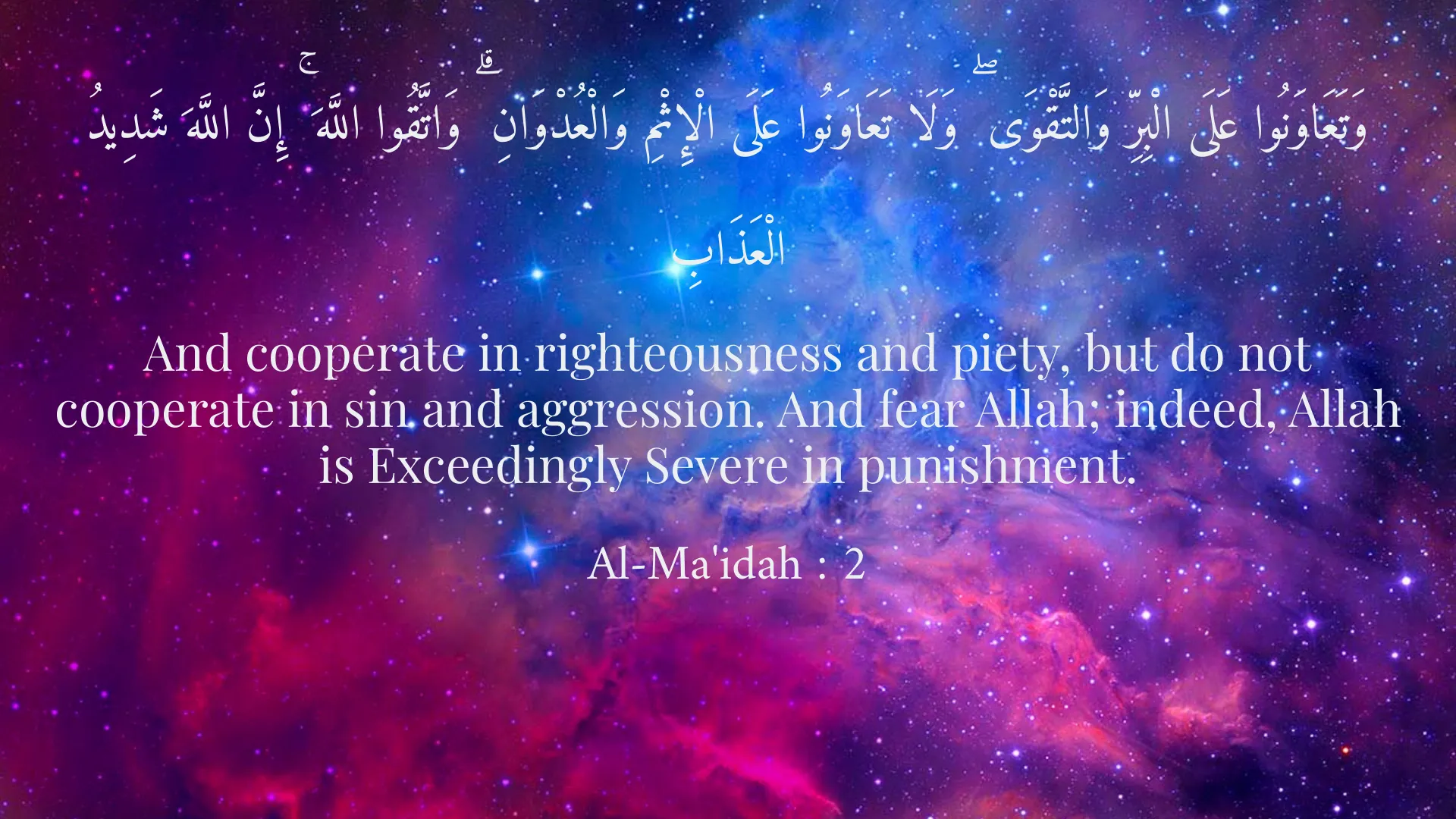
The Holy Quran, revered as the word of God by Muslims, establishes a foundational framework for morality and social interaction, emphasizing the importance of helping one another. This concept is vividly expressed in various verses throughout the Quran, highlighting not just the significance of individual faith but also the critical role of community and cooperation among human beings. Understanding these teachings offers profound insights into the ethical responsibilities that Muslims have towards one another, advocating for an inherent sense of unity and collective moral responsibility. One of the notable verses that encapsulate this message is found in Surah Al-Ma'idah, verse 2. It states: ‘And cooperate in righteousness and piety.’ This verse is a powerful reminder that collaboration in doing good is not merely encouraged, but is essential. The Quran calls upon individuals to create a society characterized by righteousness, where helping others becomes a collective endeavor. The term 'righteousness' is a broad concept that encompasses various virtuous actions, including charity, compassion, and mutual assistance during crises. In this light, failing to assist others in their times of need is viewed as a moral failing. It is seen as neglecting one's duty not just to the individual in distress, but to the community as a whole. The implications are significant—both from a moral standpoint and within the context of social justice. When individuals turn a blind eye to the suffering of others, they not only distance themselves from God's commands but also undermine the social fabric that binds humanity together. Furthermore, another compelling directive is found in Surah Al-Imran, verse 104, which states: ‘And let there be [arising] from you a nation inviting to [all that is] good.’ This call-to-action propels believers to establish a community that actively promotes goodness and rejects evil. It emphasizes the necessity for collective action among Muslims, urging them to form groups that encourage charitable actions and support. The idea is that individuals should not only help when asked but also take an initiative to create an environment where good deeds are the norm. The collective spirit of inviting others to goodness not only benefits those in need but also spiritually enriches the contributor, reinforcing the belief that through community effort, profound changes can be achieved. The Quran does not merely view altruism as an admirable quality; it positions it as a fundamental characteristic of true faith. In Surah Al-Baqarah, verse 177, it asserts: ‘Righteousness is not that you turn your faces toward the east or the west, but [true] righteousness is in one who believes in Allah, the Last Day, the Angels, the Book, and the Prophets.’ This verse serves to clarify that the essence of righteousness extends beyond ritualistic practices and outward displays of faith. Instead, it encompasses an inner belief coupled with outward manifestations of that belief through acts of kindness and charity. This profound connection between faith and ethical conduct implies that neglecting to help others can be viewed not only as a social transgression but also as a spiritual shortcoming. Indeed, in Islam, the concept of faith (Iman) is deeply intertwined with action (Amal), suggesting that one’s belief is incomplete without embodying its principles through tangible deeds. Thus, those who fail to extend a helping hand during critical times are likely to face spiritual repercussions, highlighting the necessity of active engagement in charitable acts as a demonstration of true belief. Moreover, community support extends beyond spiritual and moral obligations. It is also a pragmatic approach towards creating a caring society that values every individual. In a world where individualism often overshadows communal values, the Quranic teachings provide a blueprint for solidarity and mutual support, promoting a more interconnected and compassionate society. The need for humanitarian support becomes even more poignant in times of crisis, such as natural disasters, armed conflicts, or economic hardships, where collective action can make a significant difference in the lives of those in distress. In addition to this, helping one another deepens bonds within the community, fostering trust, empathy, and an understanding of shared humanity. When individuals come together to assist others, they build stronger networks of support that can withstand future challenges. This not only enhances the social fabric but also cultivates a culture of generosity and responsibility, where everyone feels valued and empowered to contribute. In conclusion, the Quran's emphasis on helping one another serves as a powerful guiding principle that lays the foundation for moral conduct and social responsibilities. The directives in Surah Al-Ma'idah, Surah Al-Imran, and Surah Al-Baqarah underscore the integral relationship between faith and action, illustrating that true righteousness is manifested through selfless service to others. As Muslims are encouraged to engage in collective efforts promoting goodness, the resulting societal impacts are profound—leading to a more compassionate, just, and cohesive community. The call for mutual aid is not only a religious obligation but also a fundamental ingredient in nurturing a society where every individual thrives, underscoring the importance of solidarity in our shared human experience.
Related Verses
وَتَعَاوَنُوا عَلَى الْبِرِّ وَالتَّقْوَى ۖ وَلَا تَعَاوَنُوا عَلَى الْإِثْمِ وَالْعُدْوَانِ ۗ وَاتَّقُوا اللَّهَ ۚ إِنَّ اللَّهَ شَدِيدُ الْعَذَابِ
And cooperate in righteousness and piety, but do not cooperate in sin and aggression. And fear Allah; indeed, Allah is Exceedingly Severe in punishment.
Al-Ma'idah : 2
وَلْتَكُن مِّنكُمْ أُمَّةٌ يَدْعُونَ إِلَى الْخَيْرِ وَيَأْمُرُونَ بِالْمَعْرُوفِ وَيَنْهَوْنَ عَنِ الْمُنْكَرِ ۚ وَأُولَـٰئِكَ هُمُ الْمُفْلِحُونَ
And let there be [arising] from you a nation inviting to [all that is] good and advising what is right and forbidding what is wrong. And those will be the successful.
Al-Imran : 104
لَيسَ الْبِرَّ أَن تُوَلُّوا وُجُوهَكُمْ قِبَلَ الْمَشْرِقِ وَالْمَغْرِبِ وَلَكِنَّ الْبِرَّ مَن آمَنَ بِاللَّهِ وَالْيَوْمِ الْآخِرِ وَالْمَلَائِكَةِ وَالْكِتَابِ وَالنَّبِيِّينَ
Righteousness is not that you turn your faces toward the east or the west, but [true] righteousness is in one who believes in Allah, the Last Day, the Angels, the Book, and the Prophets.
Al-Baqarah : 177
Short Story
One day, a man sat by a river watching the flow of the water. Suddenly, he noticed a person drowning. He felt he should help, but hesitated due to his inner doubts. Finally, he told himself, 'If I don’t help, can I live with the guilt?' And with courage, he ran towards the drowning person and saved his life. That moment, and his good deed, not only saved the life of the drowning man but also brought joy to his own soul.