Quranic Answer
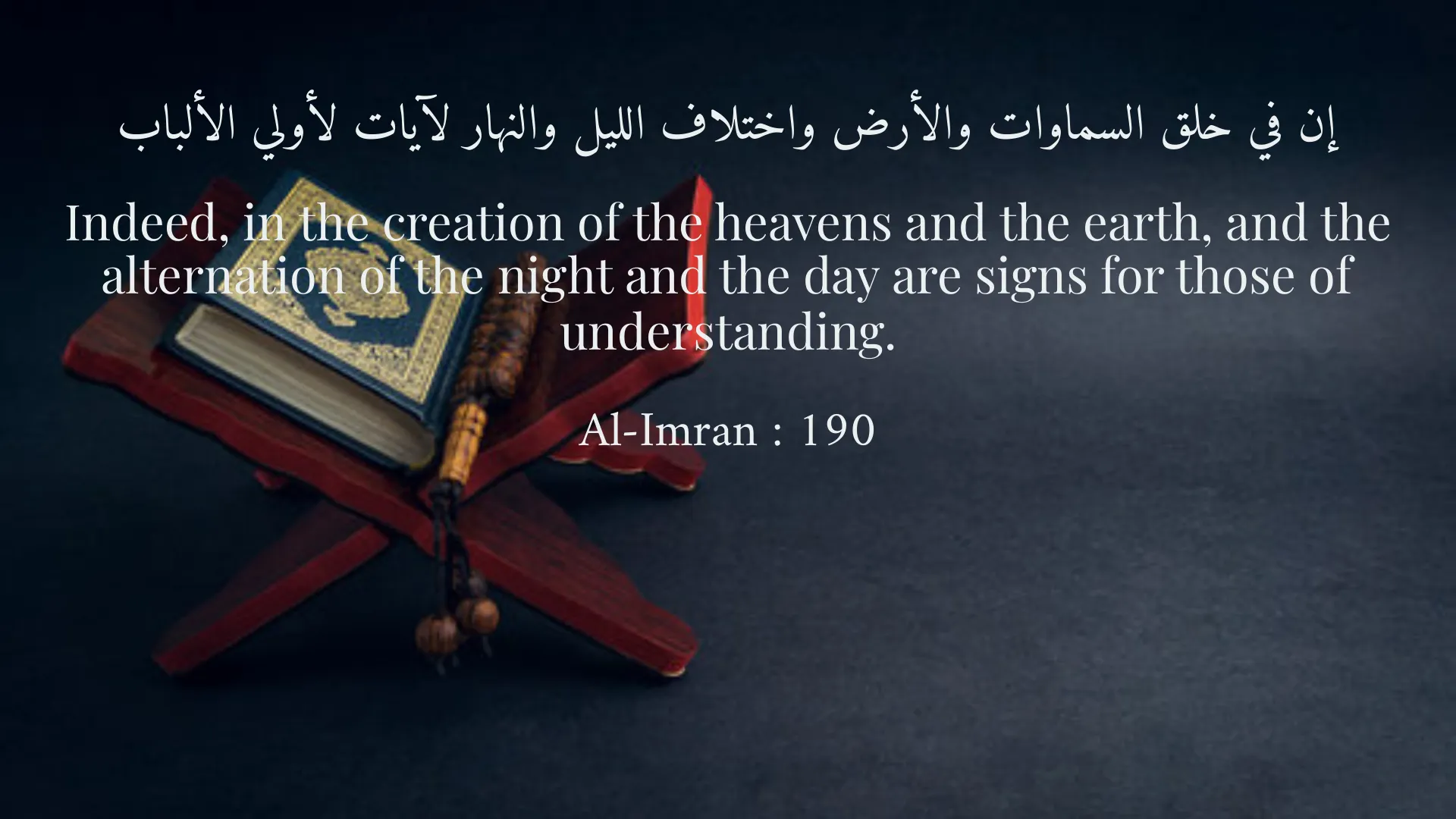
Reflecting on the verses of the Quran is emphasized as a form of worship and closeness to Allah in Islam. The Holy Quran serves as a cornerstone for guidance and enlightenment for humanity, providing invaluable insights into the nature of existence, the purpose of human life, and the characteristics of the Creator. Contemplating over its verses is not merely an academic exercise; it is a profound spiritual practice that invites individuals to deepen their understanding of God, His commandments, and the wisdom embedded in the divine text. One of the significant exhortations regarding contemplation is illustrated in Surah Al-Imran, verse 190, where it states: 'Indeed, in the creation of the heavens and the earth, and the alternation of the night and the day are signs for those of understanding.' This Quranic verse invites believers to reflect on the natural phenomena surrounding them as signs of Allah's existence and power. The intricate designs found in the universe—from the vastness of outer space to the wonders of earthly life—serve as daily reminders of Allah's greatness. Each sunrise and sunset is a reaffirmation of His authority over day and night, which should encourage individuals to incorporate reflection into their daily lives as a form of remembrance of their Creator. Moreover, reflection on the Quranic verses is not just about understanding the message but also about internalizing it to motivate righteous actions. In verse 29 of Surah Muhammad, Allah poses a rhetorical question: 'Has not Allah made their faith steadfast? He is indeed the Possessor of Noble Splendor.' This verse underscores another layer of contemplation—recognizing the strength and stability that comes from faith in Allah. Comprehending this stabilizing force encourages believers to engage fully in their worship, establishing a more profound connection to the Almighty. The notion that Allah supports those who seek Him with sincerity becomes a source of strength and comfort, promoting a life anchored in faith and resilience. In addition to these Quranic verses, the Sunnah, or teachings of the Prophet Muhammad (peace be upon him), provides further insight into the significance of contemplation. The Prophet Muhammad was known to frequently meditate on the verses of the Quran, demonstrating through his actions the importance of reflecting upon Allah's signs. His practice exemplifies the essentiality of pondering the divine message, urging followers to not just recite but also understand the implications of the words revealed to them. In doing so, believers are encouraged to apply the Quranic teachings within their lives actively. The Prophet's ultimate goal was not just to convey the message of Islam but to ensure that it was comprehended and implemented in practice to achieve a right relationship with Allah. Furthermore, the act of reflecting upon the Quran is often correlated with achieving piety and righteousness. The more one contemplates the verses, the more one is likely to grasp the ethical and moral frameworks laid out in the Quran. Such understanding can influence a person's behavior positively, leading them to embody the values of honesty, compassion, justice, and humility. Consequently, this reflection fosters a greater awareness of one's actions, encouraging a continuous effort towards self-improvement as one strives to align with the moral standards espoused in the Quran. In a broader context, the Quran serves as an invitation to humanity to engage with the sacred text. The Quran is deemed 'Huda,' meaning guidance, for those who are mindful and open to reflect upon its verses. Believers are challenged to develop a habit of regular contemplation that subsequently allows them to grow in their understanding and love for Allah. This continuous reflection can cultivate a connection that transcends superficial engagement with religious texts, steering towards a relationship grounded in love, fear, and reverence for Allah. Moreover, the impact of Quranic reflection extends beyond the individual. When individuals take it upon themselves to ponder over the Quran and then act upon its teachings, they become agents of positive change within their communities. Their understanding of compassion, justice, and support for one another fosters a collective environment where not only do individuals thrive spiritually, but whole communities can aspire to a higher standard of morality based on divine principles. This transformative nature of Quranic reflection serves to unify individuals under shared beliefs and values, creating an environment enriched with faith-based actions. In conclusion, the act of reflecting on the verses of the Quran is not solely an academic pursuit; it is a vital form of worship that cultivates a sincere and intimate relationship with Allah. From the Quranic verses that highlight the grandeur of creation to the lived example of the Prophet Muhammad (peace be upon him), it is clear that contemplation holds significant importance in Islam. Engaging deeply with the Quran leads to a better understanding of worship, fortifies one's faith, and encourages ethical living—elements that are vital for attaining a closer relationship with Allah. Thus, believers are called to embrace and practice reflection regularly, recognizing its profound implications for their spiritual journey and collective well-being.
Related Verses
إن في خلق السماوات والأرض واختلاف الليل والنهار لآيات لأولي الألباب
Indeed, in the creation of the heavens and the earth, and the alternation of the night and the day are signs for those of understanding.
Al-Imran : 190
ألم يكن قد أعزهم الله؟ إنه ذو جلال كريم.
Has not Allah made their faith steadfast? He is indeed the Possessor of Noble Splendor.
Muhammad : 29
Short Story
One day, a devoted young man named Sohrab found himself pondering deeply during the quiet of the night. He was unsure about seeking the true meaning of life in the world. Sohrab decided to turn to the Quran and read its verses. After hours of reading and reflecting on the verses, he found a special calmness and realized that reflecting on the Quranic verses was not only an act of worship but led him to deeper truths in his life. From that day on, Sohrab made it a habit to ponder the verses of Allah every night before bed, and this genuinely transformed his life.