Quranic Answer
The Holy Quran, the central religious text of Islam, serves as a profound source of guidance for Muslims in all aspects of life. Among the myriad themes presented within its verses are the concepts of reflection and reasoning; two essential elements that not only enhance one's understanding of faith but also deepen the relationship between an individual and their Creator. Through various verses, the Quran urges its followers to contemplate their existence, the world around them, and the signs of Allah. In this article, we will explore the Quranic emphasis on reflection and reasoning by examining specific verses and their implications, illustrating how these concepts are indispensable to the spiritual and intellectual development of a believer. The importance of reflection is first made clear in Surah Al-Imran. In verse 191, Allah asks, "Do they not reflect upon themselves?" This rhetorical question encourages individuals to engage in self-examination, prompting them to assess their lives in the context of their faith. It is a powerful reminder that a Muslim's journey begins with deep introspection. By advocating for self-reflection, the Quran places a premium on personal responsibility, suggesting that one must understand their existence and relationship to the divine in order to find true purpose in life. Moreover, reflection is not limited to a mere consideration of oneself; it extends to a deeper contemplation of the universe and the signs of God. The phrase "Do they not reflect upon themselves?" prompts believers to investigate their role within the world while recognizing the signs of Allah in nature and creation. This larger perspective invites Muslims to appreciate their surroundings and notice the intricate design present in both the micro and macro aspects of existence, leading to a heightened awareness of their faith and the power of their Creator. Building upon this foundation, the Quran places an equally strong emphasis on knowledge and reasoning. In Surah Al-Mu'minun, verse 80, it states, "And He it is who gives life and causes death, and to Him belongs the creation and the decree." This verse highlights the significance of intellect and reasoning in understanding both life and death, as well as the broader concept of creation. Here Allah encourages His followers to utilize their cognitive faculties to comprehend the dynamics of existence, life, and the laws governing the universe. The notion that reason is integral to faith is a common thread throughout the Quran. It presents a holistic approach to spirituality, whereby believers are not simply expected to accept dogma at face value but to investigate, question, and seek understanding. By doing so, followers of Islam can cultivate a more profound and informed relationship with Allah. Those who engage with the Quran intellectually are better equipped to discern truth from falsehood as they analyze, study, and reflect upon the divine words. In Surah Yunus, verse 101, the Quran once again reiterates the importance of reflection, stating, "Say, ‘Look at what is in the heavens and the earth.’ And the signs are not of any avail to a people who do not believe." This verse calls upon believers to observe and learn from the signs of God's creation and encourages a connection between belief and awareness of the world. Thus, the Quranic invitation to reflect on natural phenomena, as well as divine signs, underscores the pivotal role of reasoning in the development of faith. The act of reflection can be transformative for believers. It enables them to move beyond superficial adherence to faith, allowing for a more profound understanding of spiritual tenets. This understanding is not only critical for personal development but also essential for societal progress. By fostering a culture of intellectual engagement and contemplation, Muslims can contribute to a more informed and compassionate community, one that values inquiry and critical thinking in conjunction with faith. One of the remarkable aspects of the Quran's encouragement for reflection and reasoning is its universality. The Quran does not restrict its teachings solely to believers; rather, it invites people from all walks of life to ponder and seek knowledge. This open invitation supports an inclusive approach to understanding the divine and emphasizes humanity's collective responsibility to foster wisdom and discernment. In a world that often prioritizes information over understanding, the Quran serves as a timely reminder of the essential nature of reflection and reasoning. By actively engaging with the Quran's teachings, believers can cultivate both spiritual depth and intellectual rigor, ultimately allowing them to navigate life's challenges with insight and clarity. Furthermore, the integration of reflection and reasoning into the practice of faith helps to dispel misconceptions and prejudices about Islam. Knowledge and understanding foster tolerance, compassion, and empathy among individuals, which are crucial in building harmonious relationships within diverse societies. When Muslims actively engage with their community and contribute positively to conversations about faith, it helps to create a more nuanced understanding of Islam – one that is informed by reflection and critical thought, rather than stereotypes or misinformation. Ultimately, the Holy Quran emphasizes that reflection and reasoning are central not only to individual spiritual growth but also to collective progress. By continuously reflecting upon their own lives, the signs of Allah, and the teachings of Islam, believers can deepen their understanding of their faith, cultivate empathy towards others, and actively contribute to the moral and ethical advancement of their communities. In conclusion, the Quran's insistence on reflection and reasoning serves as an invitation for believers to engage actively with their faith. By encouraging self-examination, intellectual inquiry, and contemplation of God's signs, the Quran teaches that reflection and reasoning are not merely commendable activities but essential practices for spiritual growth. By nurturing these qualities, Muslims can develop a deeper connection with Allah and contribute positively to society, fostering a community grounded in knowledge, tolerance, and compassion. Through reflection and reasoning, believers can truly embody the collective values of Islam, enhancing their personal lives while contributing to a better world.
Related Verses
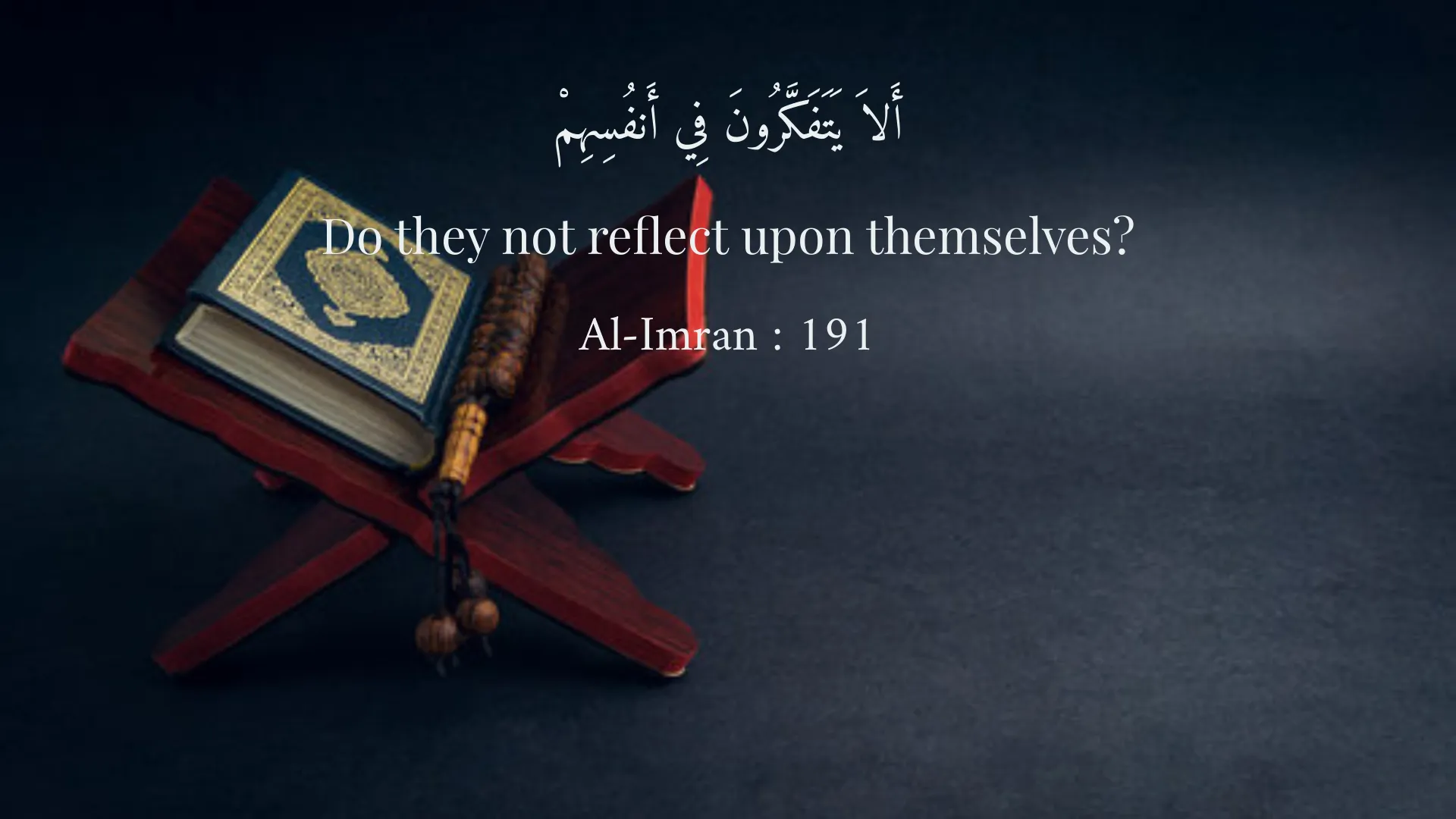
أَلاَ يَتَفَكَّرُونَ فِي أَنفُسِهِمْ
Do they not reflect upon themselves?
Al-Imran : 191
وَهُوَ الَّذِي يُحْيِي وَيُمِيتُ وَلَهُ الْخَلْقُ وَالْأَمْرُ
And He it is who gives life and causes death, and to Him belongs the creation and the decree.
Al-Mu'minun : 80
أفلا ينظرون إلى السماء فوقهم
Do they not look to the heaven above them?
Yunus : 101
Short Story
One day, a young man named Sajjad was searching for the meaning of life. He had lost hope in his faith and did not know why he existed in this world. He decided to turn to the Quran. While reciting verses, he made up his mind to think more deeply. Every day, Sajjad spent an hour reflecting on the Quran's verses. Eventually, he realized that reflection and reasoning were some of the most important treasures of his life. Now, he lives each day with greater peace and continually contemplates the signs of God and creation.