Quranic Answer
Silence Against the Sins of Others: A Responsibility Emphasized in the Quran The Quran, the holy book of Islam, serves as a guide for Muslims around the world, highlighting the importance of morality and ethical conduct within society. One of the significant themes that emerge from the Quran is the emphasis on the necessity of addressing wrongdoings within a community. Silence against the sins of others is frequently criticized in the Quran, especially when viewed through the lens of enjoining good and forbidding what is wrong. This article explores the teachings of the Quran regarding the importance of actively opposing wrongdoing and fostering a culture of accountability, while also reflecting on the collective and individual responsibilities of Muslims in this regard. The Quran explicitly addresses the collective responsibility of the Muslim community to promote good and prevent evil. In Surah Al-Imran, verse 104, Allah commands the believers to select individuals among themselves who will guide towards goodness and prevent wrongdoing. The verse states: "Let there be among you a group that calls to goodness, enjoins what is right, and forbids what is wrong. And those will be the successful." This instruction illustrates a proactive approach in society, where believers are encouraged to take initiative in leading others towards virtuous behavior while deterring them from malicious actions. At its core, the practice of enjoining good and forbidding wrong is not merely a communal endeavor but, critically, a personal responsibility for each Muslim. Everyone is called upon to act, reflecting the notion that each individual is accountable for their behavior and the moral climate of the community they inhabit. Islamic teachings underscore that remaining silent in the face of hidden sins or transgressions can contribute to the diffusion of immorality and corruption. The Quran warns that such silence effectively supports wrongdoing and creates an environment that fosters evil. Hence, the emphasis on speaking out against sins is imperative for both the health of society and the individual’s spiritual obligations. Notably, the Quran also provides examples from the lives of prophets who exemplified the importance of taking a stance against wrongdoing. In Surah Al-Ma'idah, verse 78, it is stated: "Those who disbelieved among the Children of Israel were cursed by the tongue of David and Jesus, the son of Mary. That was because they disobeyed and were transgressing." The actions of the prophets serve as a template for Muslims, highlighting the necessity of confronting and denouncing sins without hesitation. Prophets are presented as diligent leaders who fearlessly articulated truth and guidance, directly challenging societal norms when necessary. The ramifications of silence can be dire, not only damaging the foundations of community integrity but also risking one's moral standing before Allah. It is essential for believers to understand that turning a blind eye to sins does not simply shield them from discomfort; rather, it may perpetuate harm and spiritual decay within the community. Furthermore, neglecting the duty to speak out against wrongdoing creates an atmosphere where immorality becomes normalized and accepted, ultimately leading to larger societal issues. Consequently, the teachings of the Quran call upon every Muslim to adopt an active role in advocating for righteousness. This responsibility can take various forms: offering gentle admonishments to friends and family, engaging in community outreach programs, or advocating for justice in broader societal contexts. It is essential that Muslims approach these responsibilities with compassion and understanding, keeping in mind the importance of saving others from potential harm rather than merely condemning individuals. Moreover, engaging in societal reform and encouraging ethical behavior can have profound effects beyond the immediate community. When Muslims actively work together to oppose sin and promote good, they foster an environment of accountability. This communal effort not only strengthens the bonds between individuals but also uplifts the entire society, creating a ripple effect that can reach far beyond local borders. While there may be various justifications for remaining silent—fear of backlash, concern for personal safety, or simply discomfort—such excuses are ultimately incompatible with the ideals presented in the Quran. The obligation to enjoin good and forbid what is wrong transcends individual reservations and reflects a deeper commitment to faith and righteousness. Silence where action is required can dilute one’s own spiritual integrity and leave communities vulnerable to the encroachment of immorality. Furthermore, the repercussions of silence extend beyond this temporal world; they resonate in the hereafter. In the teachings of Islam, individuals will be held accountable for their actions, including any inaction in instances where they could have intervened. The Quran provides ample warnings about the consequences of failing to uphold righteousness, suggesting that silence in the face of sin can lead to devastating outcomes not only for those who commit the offenses but also for those who witnessed the wrongdoing and chose inaction. In conclusion, the Quran reinforces the critical nature of actively opposing wrongdoing, conveying that silence against the sins of others is a significant moral failing. By enjoining good and forbidding what is wrong, Muslims fulfill their obligations as members of the ummah and contribute positively to society. Through collective efforts to deter evil, a stronger, more ethically sound community emerges, benefiting individuals and society as a whole. Ultimately, addressing sins and encouraging righteousness is not only beneficial for the here and now but also plays a crucial role in the spiritual responsibility of each believer, with profound implications for their afterlife. The path forward lies in embracing this duty with sincerity and compassion, striving to foster a culture of accountability and moral integrity.
Related Verses
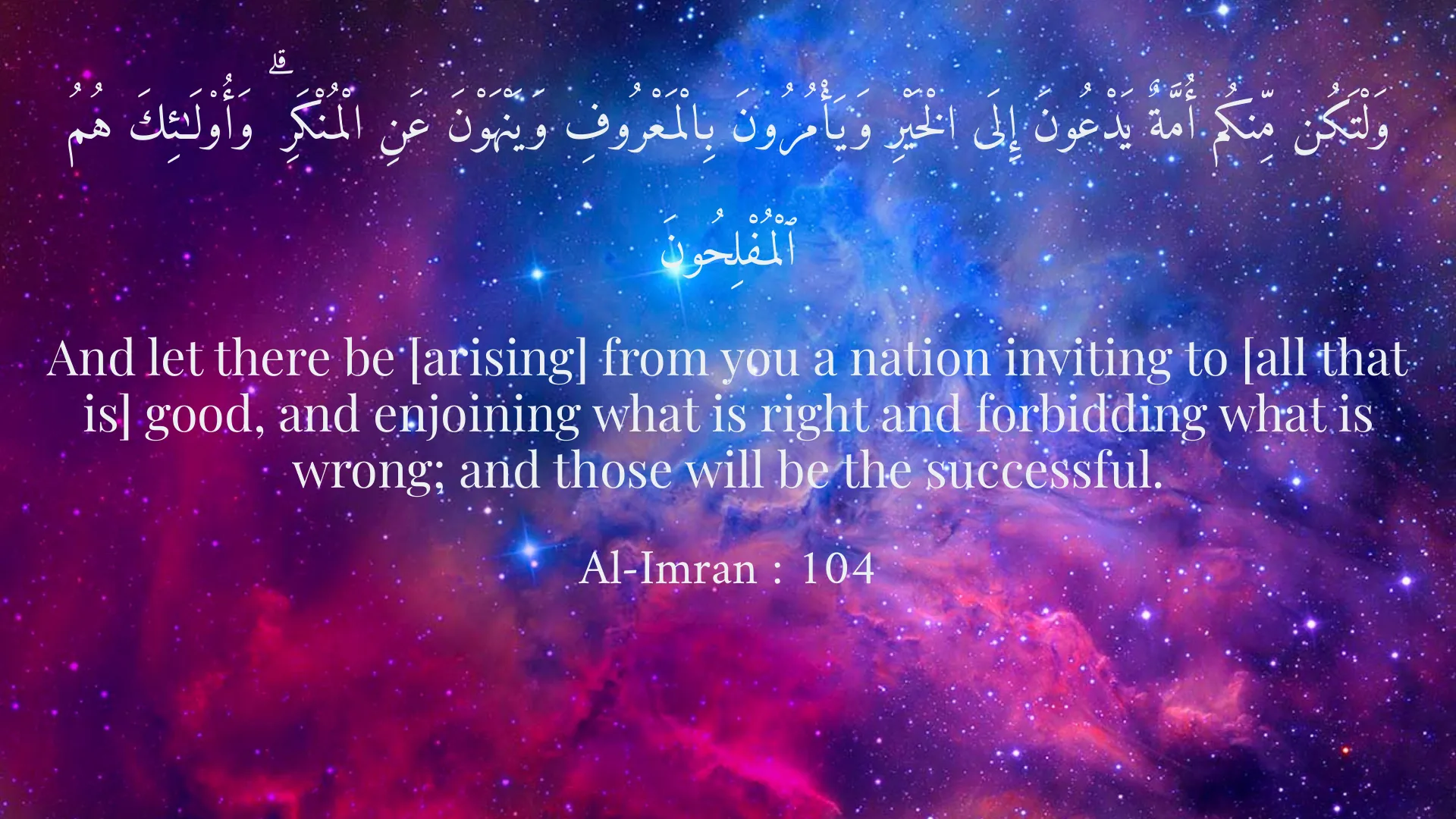
وَلْتَكُن مِّنكُم أُمَّةٌ يَدْعُونَ إِلَى الْخَيْرِ وَيَأْمُرُونَ بِالْمَعْرُوفِ وَيَنْهَوْنَ عَنِ الْمُنْكَرِ ۗ وَأُو۟لَـٰئِكَ هُمُ ٱلْمُفْلِحُونَ
And let there be [arising] from you a nation inviting to [all that is] good, and enjoining what is right and forbidding what is wrong; and those will be the successful.
Al-Imran : 104
لَّمْ يُؤْمَنُوا بِمَا أُنزِلَ إِلَيْكَ ۖ قُلْ كَفَىٰ بِاللَّهِ شَهِيدًۭا بَيْنِي وَبَيْنَكُمْ ۖ وَمَن عِندَهُ عِلْمُ الْكِتَابِ
Those who disbelieve in the signs of Allah – their punishment is severe. Say, 'Sufficient is Allah as Witness between me and you, and whoever has knowledge of the Scripture.'
Al-Ma'idah : 78
Short Story
One day, two friends were sitting in a park discussing the characteristics of a true Muslim. One of them said to the other, 'If we see someone committing a sin, what does our silence mean?' The other friend replied, 'Surely we must remind him that he is doing something wrong. The Quran states that we should enjoin one another to good and forbid what is harmful.' They decided to embrace this responsibility in their lives.