Quranic Answer
From the profound teachings of the Holy Quran, silence in the face of oppression and injustice is by no means a neutral or passive stance. Rather, in many instances, it can be interpreted as a form of tacit approval and endorsement of the oppressor, carrying significant negative and detrimental consequences. Islam is a religion of justice, and the establishment of equity and fairness is considered one of the primary objectives of the prophets' missions. Oppression (zulm), defined as placing something in an improper place or transgressing divine limits, is vehemently condemned in the Quran. Allah never approves of it for His servants and does not love the oppressors. This clear religion holds every Muslim accountable not only to refrain from oppression themselves but also to stand against it to the best of their ability and defend the oppressed. One of the most fundamental and crucial ethical and social principles in Islam is 'Amr bil Ma'ruf wa Nahi anil Munkar' (Enjoining Good and Forbidding Evil). This principle is not merely an ethical recommendation but a religious and social obligation placed upon all Muslims. Enjoining good means inviting people to virtues and what Allah and sound reason command, while forbidding evil means preventing wickedness and what Allah and reason deem reprehensible. Within this framework, oppression and tyranny are unequivocally among the greatest evils, and combating them is considered one of the most important manifestations of forbidding evil. The Holy Quran states in Surah Al-Imran, verse 104: "And let there be among you a group that invites to goodness, enjoins what is right, and forbids what is wrong. And it is they who are the successful." Silence in the face of injustice is precisely the opposite of this divine command; instead of forbidding evil, it is a form of overlooking and accepting it, which can contribute to the perpetuation and spread of oppression. An individual who remains silent in the face of oppression, even if not directly participating in it, by their silence leaves the field open for the oppressor to continue their tyranny without fear or apprehension. This silence conveys a message to the oppressor that their actions are unchallenged and that they can repeat their deeds without facing resistance. In this way, silence, in a sense, empowers the oppressor and makes them bolder in their wrongdoings. On the other hand, the silence of those witnessing oppression weakens the spirit of resistance in the oppressed and leaves them feeling alone and helpless against the oppressor. In this situation, the oppressed person feels unsupported, which can compel them to surrender. The Holy Quran explicitly warns against inclining towards oppressors. In Surah Hud, verse 113, we read: "And do not incline toward those who do wrong, lest you be touched by the Fire. And you have no protectors other than Allah, nor will you be helped." This verse not only prohibits direct collaboration with oppressors but also forbids any 'inclination' or 'reliance' upon them. Silence can be an instance of such inclination and reliance, because through silence, one indirectly contributes to the oppressor's survival and the continuation of their oppression. In fact, this silence is considered a form of indifference towards what Allah deems ugly and reprehensible, and this indifference can be a manifestation of forgetting divine values. The duty to establish justice and fairness, even if it is against oneself, parents, or relatives, is another emphasis in the Quran. In Surah An-Nisa, verse 135, it states: "O you who have believed, be persistently firm in justice, witnesses for Allah, even if it be against yourselves or parents and relatives..." This verse demonstrates that seeking justice and bearing witness to the truth, even in the most difficult circumstances and against the closest individuals, is a believer's duty. Silence in the face of oppression means neglecting this vital responsibility. The consequences of silence in the face of oppression are not limited to the individual sphere; they have broad societal implications. A society where silence against tyranny becomes commonplace gradually transforms into a dead and lifeless community where ethical and human values decline. In such an environment, the well-being and welfare of society vanish, and corruption and degradation take root. In the Holy Quran, Allah recounts the stories of nations that were afflicted by divine punishment due to their failure to forbid evil and their indifference towards oppression. These narratives serve as a serious warning to communities that disregard their responsibility to establish justice. It should be noted, however, that acting against oppression requires wisdom, prudence, and consideration of one's capabilities. Islam never obliges anyone to do something beyond their capacity. Sometimes, direct confrontation might lead to a greater injustice, but this does not mean absolute silence. In such circumstances, there are other ways to express disapproval, such as expressing heartfelt disapproval, enlightening others with gentle and wise words, striving to mitigate the effects of oppression on the oppressed, or helping the oppressed through legal and peaceful channels. The important thing is that a spirit of indifference and contentment with oppression should not develop within a person, and one should always be thinking of a way to counter it. Ultimately, complete silence and indifference in the face of oppression, even if the person themselves is not directly the oppressor, is, from the Quranic perspective, considered assisting the oppressor and shirking divine and social responsibility, which can have severe consequences both in this world and the hereafter. Therefore, it can be said that silence in the face of oppression, given its consequences and Quranic teachings, is a form of complicity and tacit approval that creates an environment for the spread of oppression, and thus, is itself considered a manifestation of injustice and secondary oppression.
Related Verses
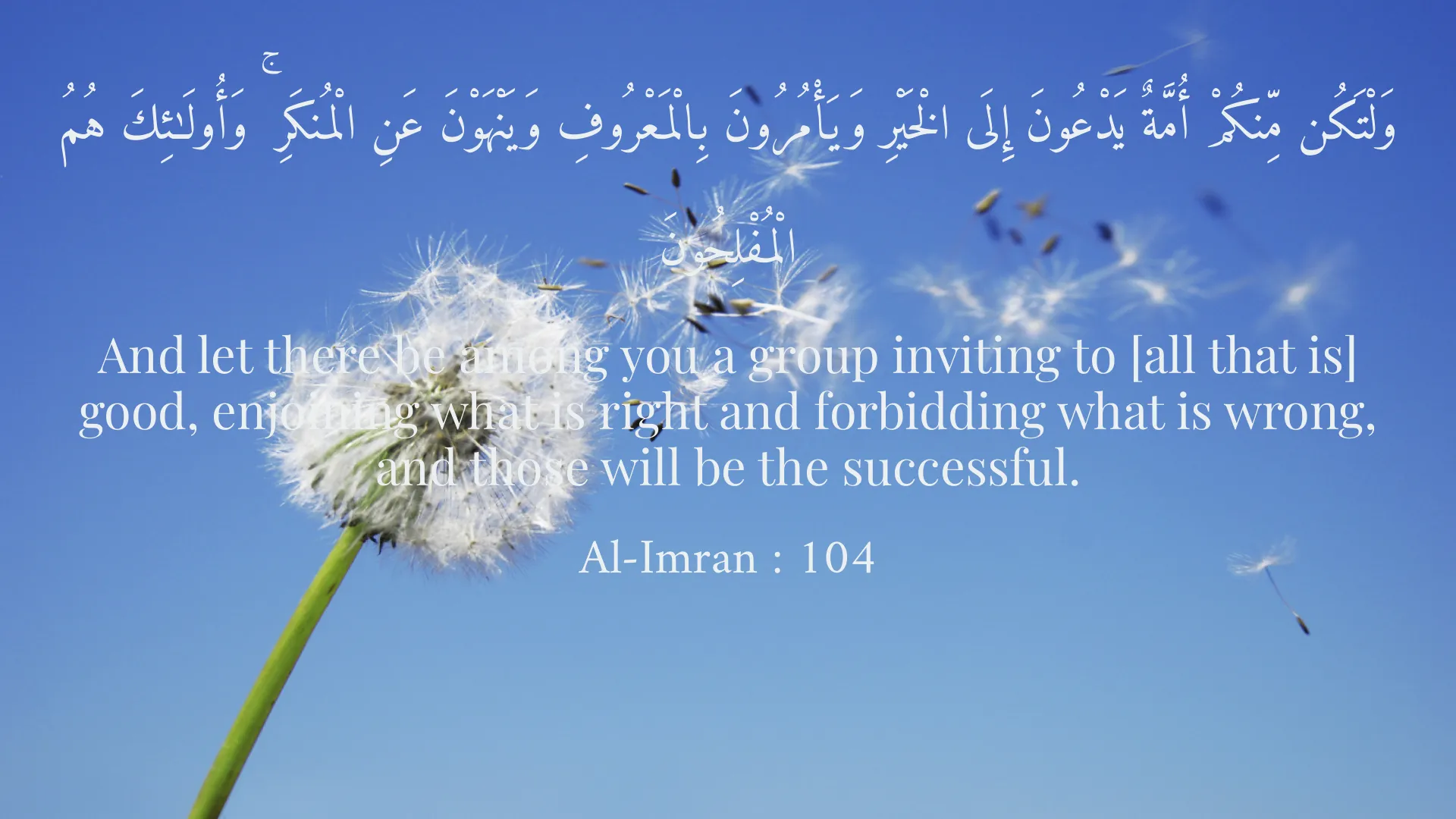
وَلْتَكُن مِّنكُمْ أُمَّةٌ يَدْعُونَ إِلَى الْخَيْرِ وَيَأْمُرُونَ بِالْمَعْرُوفِ وَيَنْهَوْنَ عَنِ الْمُنكَرِ ۚ وَأُولَٰئِكَ هُمُ الْمُفْلِحُونَ
And let there be among you a group inviting to [all that is] good, enjoining what is right and forbidding what is wrong, and those will be the successful.
Al-Imran : 104
يَا أَيُّهَا الَّذِينَ آمَنُوا كُونُوا قَوَّامِينَ بِالْقِسْطِ شُهَدَاءَ لِلَّهِ وَلَوْ عَلَىٰ أَنفُسِكُمْ أَوِ الْوَالِدَيْنِ وَالْأَقْرَبِينَ ۚ إِن يَكُنْ غَنِيًّا أَوْ فَقِيرًا فَاللَّهُ أَوْلَىٰ بِهِمَا ۖ فَلَا تَتَّبِعُوا الْهَوَىٰ أَن تَعْدِلُوا ۚ وَإِن تَلْوُوا أَوْ تُعْرِضُوا فَإِنَّ اللَّهَ كَانَ بِمَا تَعْمَلُونَ خَبِيرًا
O you who have believed, be persistently firm in justice, witnesses for Allah, even if it be against yourselves or parents and relatives. Whether one is rich or poor, Allah is more worthy of both. So follow not [personal] inclination, lest you not be just. And if you distort [the truth] or turn aside [from it] - then indeed Allah is ever, with what you do, Acquainted.
An-Nisa : 135
وَلَا تَرْكَنُوا إِلَى الَّذِينَ ظَلَمُوا فَتَمَسَّكُمُ النَّارُ ۚ وَمَا لَكُم مِّن دُونِ اللَّهِ مِنْ أَوْلِيَاءَ ثُمَّ لَا تُنصَرُونَ
And do not incline toward those who do wrong, lest you be touched by the Fire. And you have no protectors other than Allah, nor will you be helped.
Hud : 113
Short Story
Once upon a time, in a distant land, a tyrant ruled over the people. A dervish, witnessing his tyranny, pondered that if he remained silent, this injustice would take root and corruption would spread further. His friends tried to dissuade him from speaking, saying, "Why speak when your life is at risk?" But the dervish, relying on the words of the wise, who say: "He who witnesses injustice and bites his tongue, is equal to the oppressor and the oppressed," took courage and, with soft but firm words, invited the king to justice. The king, who did not expect such words and was accustomed to the people's silence, was initially angered, but then, in his solitude, he reflected on the dervish's words. From the next day, he began to practice justice. Indeed, sometimes a word of truth is a dam against the flood of tyranny, and silence is a path to ruin.