Quranic Answer
The Holy Quran, the holy book of Islam, is revered by millions around the world for its profound wisdom and guidance on various aspects of life, including how to manage emotions. Among the myriad of topics addressed within its verses is the importance of controlling anger and engaging in commendable behavior. The Quran's teachings on this matter provide not only spiritual guidance but also practical wisdom for daily living. Within its nuanced discussions, we can uncover the pathways to personal growth and harmonious relationships, especially in the face of one of humanity's most challenging emotions: anger. Anger is an innate emotion, a natural response to perceived threats or injustices. It is a powerful feeling that can lead to both negative and positive outcomes, depending on how it is expressed and managed. The Quran offers invaluable insights into the significance of anger control, encouraging a constructive approach to mitigating its effects in our lives. In Surah Al-Imran, verse 133, Allah says: "And seek help through patience and prayer. Indeed, Allah is with the patient." This verse highlights a fundamental principle in Islam: the importance of patience in the face of difficulties and anger. The call to seek help through patience and prayer serves a dual purpose. Firstly, it emphasizes the need to cultivate patience, which is vital for personal development and emotional regulation. Secondly, the advice to engage in prayer reflects a reliance on Divine assistance, encouraging individuals to turn to Allah in moments of anger and distress. When faced with anger and challenges, the Quran teaches that taking a moment to pause is crucial. Instead of succumbing to the impulsive urge to react immediately, believers are encouraged to reflect and seek guidance from their faith. This pause represents a sign of wisdom; it is an indication of a person's inner strength and self-control. By refraining from irrational responses fueled by anger, individuals can avoid potential conflicts, regrets, and hurtful words or actions that may destroy relationships. Moreover, in Surah Ash-Shura, verse 37, it is stated: "And those who avoid major sins and immoralities, and when they are angry, they forgive." Here, the Quran elucidates the qualities of the righteous. Controlling oneself during instances of anger and choosing to forgive rather than retaliate illustrates true wisdom and virtue. This act of forgiveness does not signify weakness; instead, it underscores the strength and moral fortitude of a person who can rise above anger and contempt. The ability to forgive, especially when provoked, reflects a commitment to commendable behavior, as advocated by the Quran. The teachings encourage a fostering of empathy, understanding, and mercy—qualities that are crucial in maintaining healthy relationships and communities. Such forgiveness has the potential to transform conflict into resolution and hatred into love. Cultivating the ability to remain silent during anger extends beyond mere avoidance of conflict; it is also a practical strategy for thoughtful decision-making. Silence provides an opportunity to think deeply and evaluate the situation at hand. Instead of reacting out of impulse and emotion, an individual can analyze their feelings and the circumstances surrounding them, leading to more reasoned and constructive decisions. This practice aligns with the Quran’s messages, promoting logical assessments and mindful responses to life’s challenges. Furthermore, the relationship between controlling anger and achieving inner peace is a recurrent theme in the Quran. Remaining silent and exercising restraint during moments of anger align with a broader understanding of balance and harmony in life. The Quran encourages the development of character traits that contribute to personal growth, highlighting the significance of emotional intelligence and self-governance. The teachings of the Quran ultimately encompass a holistic approach to managing anger that extends beyond individual behavior. The messages serve as a blueprint for building societies based on understanding, respect, patience, and forgiveness. By practicing the principles embodied in the Quran, individuals can contribute to creating environments that reflect these values, fostering peace on both personal and communal levels. In conclusion, the Quran provides profound guidance on the importance of controlling anger and engaging in commendable behavior. Through its verses, we are reminded that patience and prayer are our allies in the face of anger, leading us toward a path of wisdom, virtue, and personal growth. Embracing these teachings not only prepares us for handling challenging emotions but also empowers us to cultivate healthier relationships with ourselves and others. The insights offered by the Quran are timeless and serve as a powerful reminder of the potential for positive change within us, particularly in times of anger and turmoil.
Related Verses
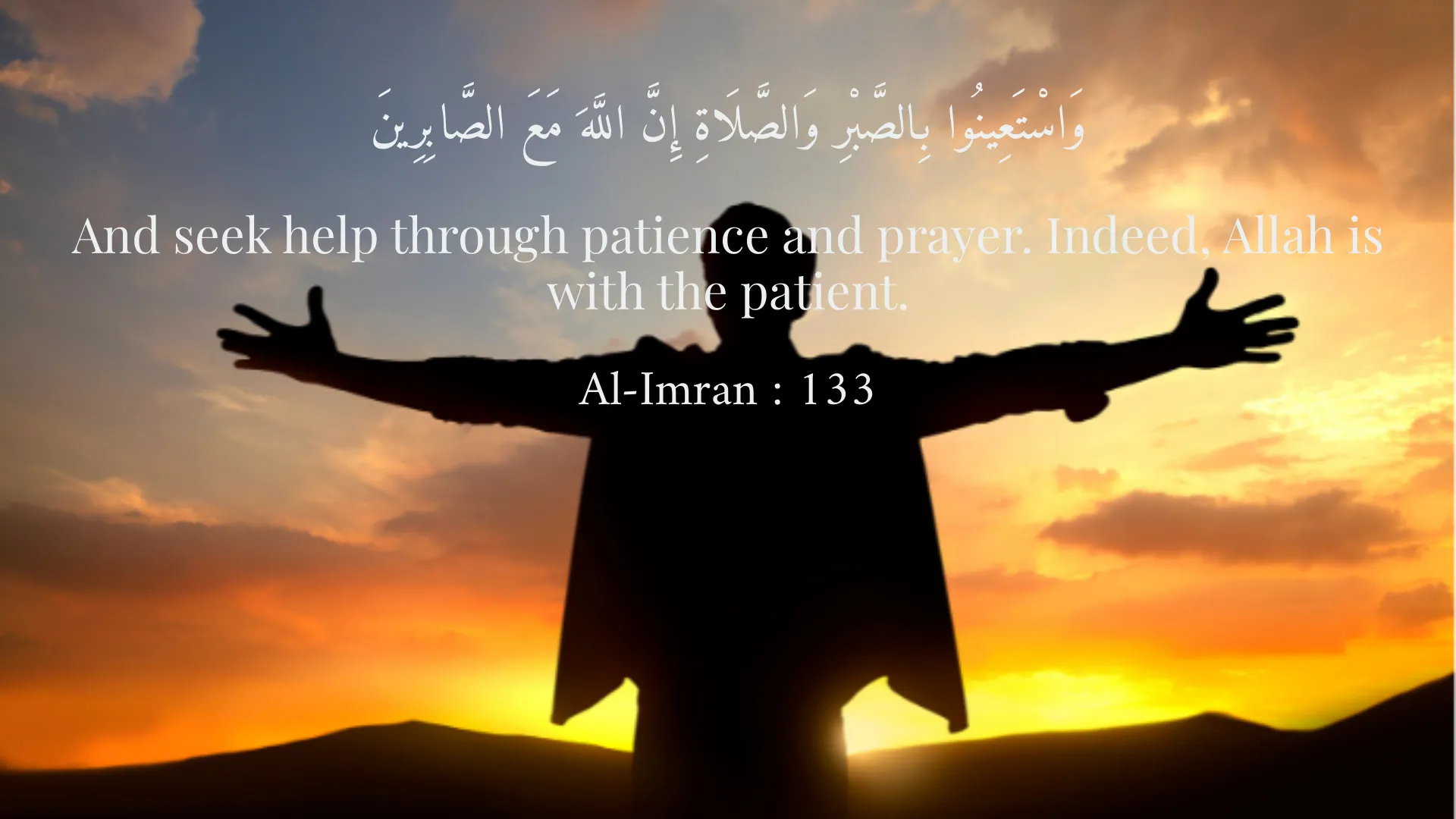
وَاسْتَعِينُوا بِالصَّبْرِ وَالصَّلَاةِ إِنَّ اللَّهَ مَعَ الصَّابِرِينَ
And seek help through patience and prayer. Indeed, Allah is with the patient.
Al-Imran : 133
وَالَّذِينَ يَجْتَنِبُونَ كَبَائِرَ الإِثْمِ وَالْفَوَاحِشَ وَإِذا مَا غَضِبُوا هُمْ يَغْفِرُونَ
And those who avoid major sins and immoralities, and when they are angry, they forgive.
Ash-Shura : 37
Short Story
One day, a man was talking with his friends about anger and self-control. He shared an experience from his life where he managed to stay silent during a moment of anger, which led him to find greater peace. In that moment, he decided to forgive those around him. His friends were amazed by his action and realized that silence could be more positive than any reaction.