Quranic Answer
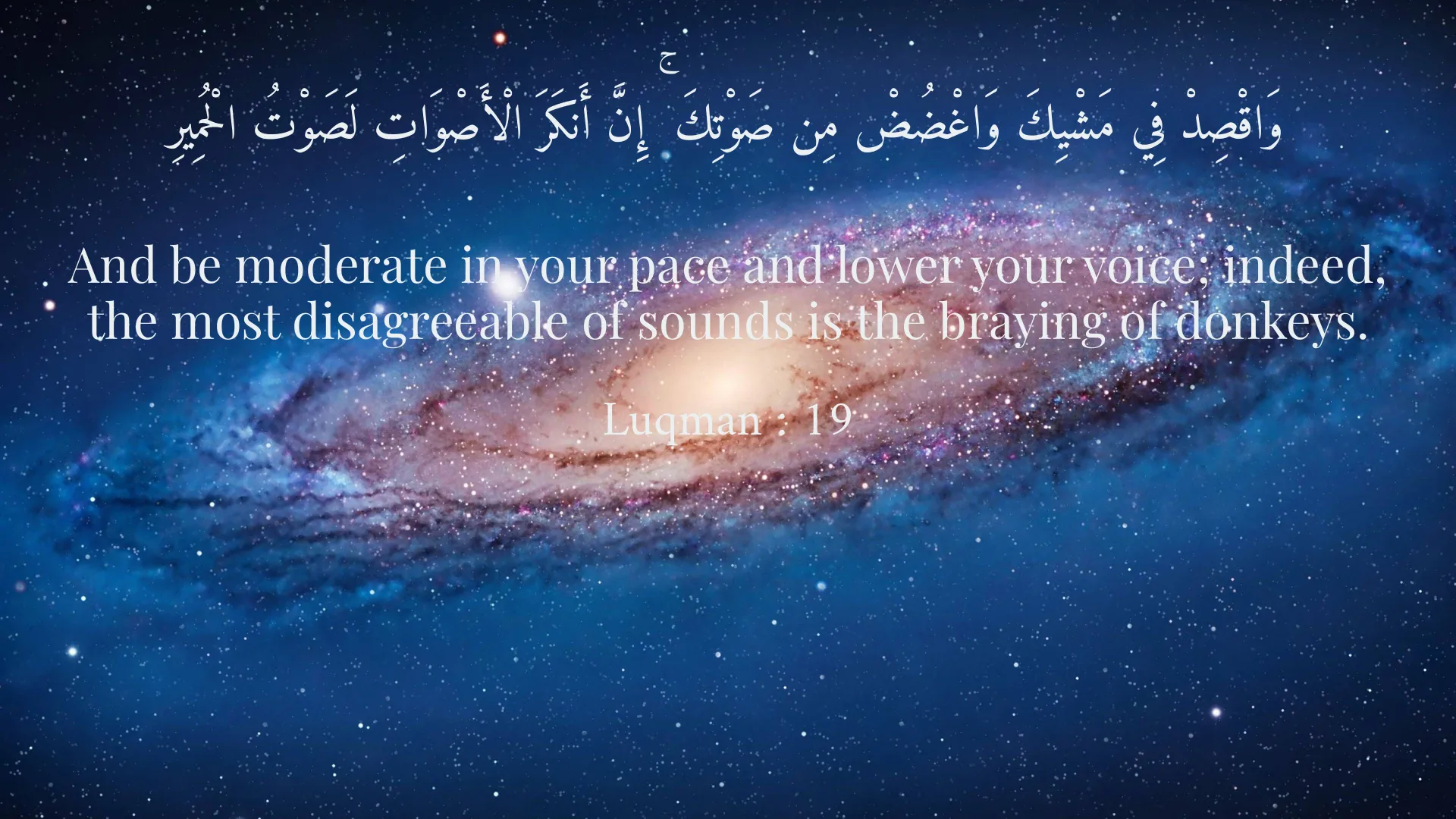
In our fast-paced world, where constant chatter fills the airwaves and social media platforms, the virtues of silence and contemplation have often been overlooked. The Holy Quran, a text revered by millions, emphasizes the importance of these concepts through various verses that provide profound insights into their necessity and utility in our daily lives. This article delves into the significance of silence and contemplation as addressed in the Quran, shedding light on how embracing these principles can lead to a more peaceful and reflective existence. The Holy Quran addresses the significance of silence and contemplation in several verses. A notable mention can be found in Surah Luqman, verse 19, which states, 'And be moderate in your pace and lower your voice; indeed, the most disagreeable of sounds is the braying of donkeys.' This particular verse highlights the value of moderation, reminding us that our voices should be managed with care. The instruction to lower one's voice occurs in the context of maintaining harmony and tranquility, suggesting that excessive noise can lead to discord and discontent. Silence, as indicated by this verse, is not merely the absence of sound; it is a powerful tool that can lead to more profound interactions and connections. In our conversations, it is important to recognize that speaking excessively can drown out meaningful discourse. In a society that often places high value on expression, the principle of moderation in one’s speech serves as a gentle reminder that less is sometimes more. When we speak less and listen more, we give ourselves the opportunity to absorb knowledge, reflect on ideas, and engage in thoughtful dialogue. Furthermore, the Quran’s teachings extend beyond moderation in voice to encompass the broader implications of silence in thought and action. In Surah Al-Isra, verse 53, Allah instructs the Prophet to convey the message: 'And when you hear what they say, say to the believing women that it was not in the worlds that the speaking voices would remain silent.' This verse sheds light on the need for discernment in our speech and reactions. It implies that when faced with trivial words or idle chatter, often silence is the most appropriate response. In an age characterized by rampant communication and engagement, the act of silence can be a form of resistance against the triviality of superficial discussions. There is a unique strength in choosing to remain silent in the face of meaningless debate or gossip. By refusing to participate in such exchanges, individuals can cultivate an aura of dignity and thoughtfulness. The teachings of the Quran call for individuals, particularly believers, to consciously make the effort to weigh their words carefully and acknowledge that at times, the most profound response is a thoughtful silence. Silence not only reduces anger and tension but also aids in deeper thinking. When confronted with significant issues in life—be they personal conflicts or existential dilemmas—taking a step back to embrace silence allows for profound reflection. In quietude, one can unravel the layers of thought that cloud decision-making, leading to choices that are more aligned with one’s values and beliefs. This aligns with the Islamic values of patience and self-control, as advocated in various parts of the Quran. Moreover, contemplating in silence opens up avenues for creativity and insight. Historical figures renowned for their wisdom often attributed their breakthroughs to moments of quiet reflection. By setting aside time for contemplation, free from external stimuli, individuals create a mental space for new ideas to form and emerge. The Quran inspired numerous scholars who took to solitude for practical scholarship. For instance, Imam Al-Ghazali often sought silence for contemplation, and through his reflective practices, he produced works that continue to shape Islamic thought today. In addition to fostering creativity, contemplation in silence cultivates mindfulness. Engaging with our thoughts without the distractions of the outside world allows us to develop a deeper understanding of ourselves and our surroundings. When individuals practice mindfulness, they become adept at recognizing their thoughts and emotions, enabling better regulation of reactions and responses in various situations. This awareness is key to leading a balanced life, fostering emotional intelligence, and reinforcing inner peace. The profound benefits of silence and contemplation lead to the cultivation of peace within oneself and in relationships with others. In societies rife with conflict and volatility, silence can serve as a catalyst for resolution. Instead of reacting impulsively, individuals who take a moment to reflect can engage in dialogue with empathy and a clearer mind. This approach enriches interpersonal relationships and contributes to a harmonious community rooted in understanding and respect. On a broader level, the significance of silence extends to spirituality as well. In many spiritual traditions, silence is considered a pathway to connecting with the divine. For Muslims, the practice of silence during prayer emphasizes the importance of attentiveness and reflection. During silence, a believer focuses on their relationship with Allah, allowing for moments of self-examination, repentance, and thanksgiving. The serene atmosphere of worship fosters a deeper connection to spirituality and devotion. In essence, it is vital for us to recognize that at times, it is preferable to think carefully and ultimately remain silent rather than speak hastily. The Quran’s timeless guidance on silence and contemplation serves as a refreshing reminder of the potential richness that can come from stillness. In our modern world, where we are often bombarded by information and the demands of constant communication, it is essential to reclaim moments of quietude—not only for our personal growth but also for the collective well-being of our communities. In conclusion, the Quran profoundly advocates for the practice of silence and contemplation as essential components of a fulfilling life. By embracing these principles, individuals can navigate the complexities of existence with greater clarity, making choices grounded in sound judgment and deep understanding. Ultimately, silence can lead to peace and deeper contemplation in life, enriching our experiences and fostering connections founded on mutual respect and understanding.
Related Verses
وَاقْصِدْ فِي مَشْيِكَ وَاغْضُضْ مِن صَوْتِكَ ۚ إِنَّ أَنكَرَ الْأَصْوَاتِ لَصَوْتُ الْحُمِيرِ
And be moderate in your pace and lower your voice; indeed, the most disagreeable of sounds is the braying of donkeys.
Luqman : 19
وَلا تَقُلْ لَهُمَا أُفٍّ وَلَا تَنْهَرْهُمَا وَقُل لَّهُمَا قَوْلًۭا كَرِيمًۭا
And do not say to them [so much as], 'uff,' and do not repel them but speak to them a noble word.
Al-Isra : 53
Short Story
One day, a man found himself in a lively gathering filled with chatter and noise. Frustrated, he decided to remain silent and just listen. At that moment, he realized that his silence allowed him to catch deeper insights and positive points. He told his friends, 'Sometimes choosing silence can help us learn more and grow.'