Quranic Answer
Title: The Power of Smiling in Islam: A Reflection of Kindness and Benevolence Introduction In a world often shadowed by negativity and despair, the simple act of smiling can elevate the spirits of those around us. The Holy Quran, revered by millions as the ultimate guide to life, encourages kindness, good behavior, and compassion toward others. Among these manifestations of goodness, the act of smiling holds a unique and profound significance. This article explores the Quranic perspective on kindness, the impact of smiling during challenging times, and the teachings of Prophet Muhammad regarding positive behaviors towards others. It highlights how smiling not only enhances individual well-being but also fosters a thriving community. Kindness in the Quran The Quran places a tremendous emphasis on kindness and charity. In Surah Al-Baqarah, verse 177, Allah underscores the essence of righteousness as more than mere rituals or appearances. Instead, true righteousness encompasses faith, belief in the afterlife, and acts of charity directed towards those in need. The verse states, 'Righteousness is not that you turn your faces toward the east or the west, but [true] righteousness is in one who believes in Allah, the Last Day, the Angels, the Book, and the Prophets and gives his wealth, in spite of love for it, to relatives, orphans, the needy, the traveler, those who ask [for help], and for freeing slaves...' This declaration highlights the essential nature of charity and good actions within Islam, calling upon believers to transcend beyond mere religious formalism. In the context of kindness, smiling becomes an essential expression of good behavior. To smile at someone, especially during a time of distress or despair, can uplift their spirits and significantly enhance their mental well-being. It represents the warm invitation of friendship and empathy, affirming that we recognize and care for the other person's plight. Notably, smiling extends beyond a momentary physical action; it embodies an attitude of compassion that fosters a sense of belonging and community. The Value of Smiling in Challenging Times Life is filled with various challenges, and navigating through hardships can often leave individuals feeling isolated and burdened. In such moments, a smile can act as a beacon of hope, providing encouragement and support to those who are struggling. When we encounter others bearing their troubles, a simple smile can convey solidarity and understanding, letting them know that they are not alone. In numerous verses of the Quran, believers are encouraged to show compassion towards each other. The act of smiling becomes crucial in forming positive interactions that uplift individuals and foster a harmonious society. As human beings, we all have the innate need for connection, and smiling serves as a bridge that nurtures relationships, enhancing the collective mental health of the community. The Teachings of Prophet Muhammad The essence of kindness and smiling is beautifully captured in the teachings of Prophet Muhammad (peace be upon him). He is reported to have said, 'Your smile for your brother is a form of charity.' This teaching emphasizes that the simple act of smiling is not just a gesture of goodwill but a profound act of worship. It suggests that kindness and positive interactions are integral to the spiritual life of a Muslim. As a role model for righteousness, Prophet Muhammad embodied kindness in every aspect of his life. His interactions were marked by gentleness, warmth, and sincerity. In every encounter, he was known to smile warmly at his companions, demonstrating that kindness could significantly ease the hearts of those around him. Moreover, religion is not just a matter of rituals and obligations; it pertains to how we treat one another and cultivate a sense of fellowship among people. Smiling is, therefore, an empowering force. When we smile, we challenge negativity, inspire others to reflect on their actions, and create a ripple effect of positivity that spreads beyond the immediate atmosphere. Creating a Loving Environment Creating an environment of love and nurturing can significantly alter the landscape of our communities and societies. When we practice kindness through smiles and other gestures, we foster trust, empathy, and cooperation among individuals. This is particularly crucial in today's world, where divisiveness often overshadows unity. Research supports the notion that kindness and positivity can lead to enhanced well-being and healthier connection with others. Smiling releases endorphins and creates an atmosphere where people feel at ease, leading to more fruitful interactions and stronger communities. This aligns with the Quranic vision of a supportive society based on mutual respect and compassion. A culture of kindness invites individuals to come together, breaking down barriers and misunderstandings that often lead to conflict. It encourages open communication, empathy, and understanding, ultimately paving the way for peace and tranquility. Each smile exchanged holds the possibility of healing wounds and igniting hope. Conclusion In conclusion, the significance of smiling in Islam extends beyond mere physical expression. It is a powerful tool for creating an environment of kindness, compassion, and empathy. The Quran and the teachings of Prophet Muhammad profoundly emphasize the importance of good behavior, with smiling being an essential form of charity. In doing so, we enhance our own well-being while positively influencing the lives of others. In today's challenging world, adopting a smile can be seen as a revolutionary act of kindness. It reaffirms our belief in the values of love and compassion that are deeply woven into the fabric of Islamic teachings. By choosing to smile, we not only uplift ourselves but also brighten the lives of those around us. Ultimately, a culture of smiles fosters a cohesive society infused with love, empathy, and resilience, allowing individuals and communities to flourish together.
Related Verses
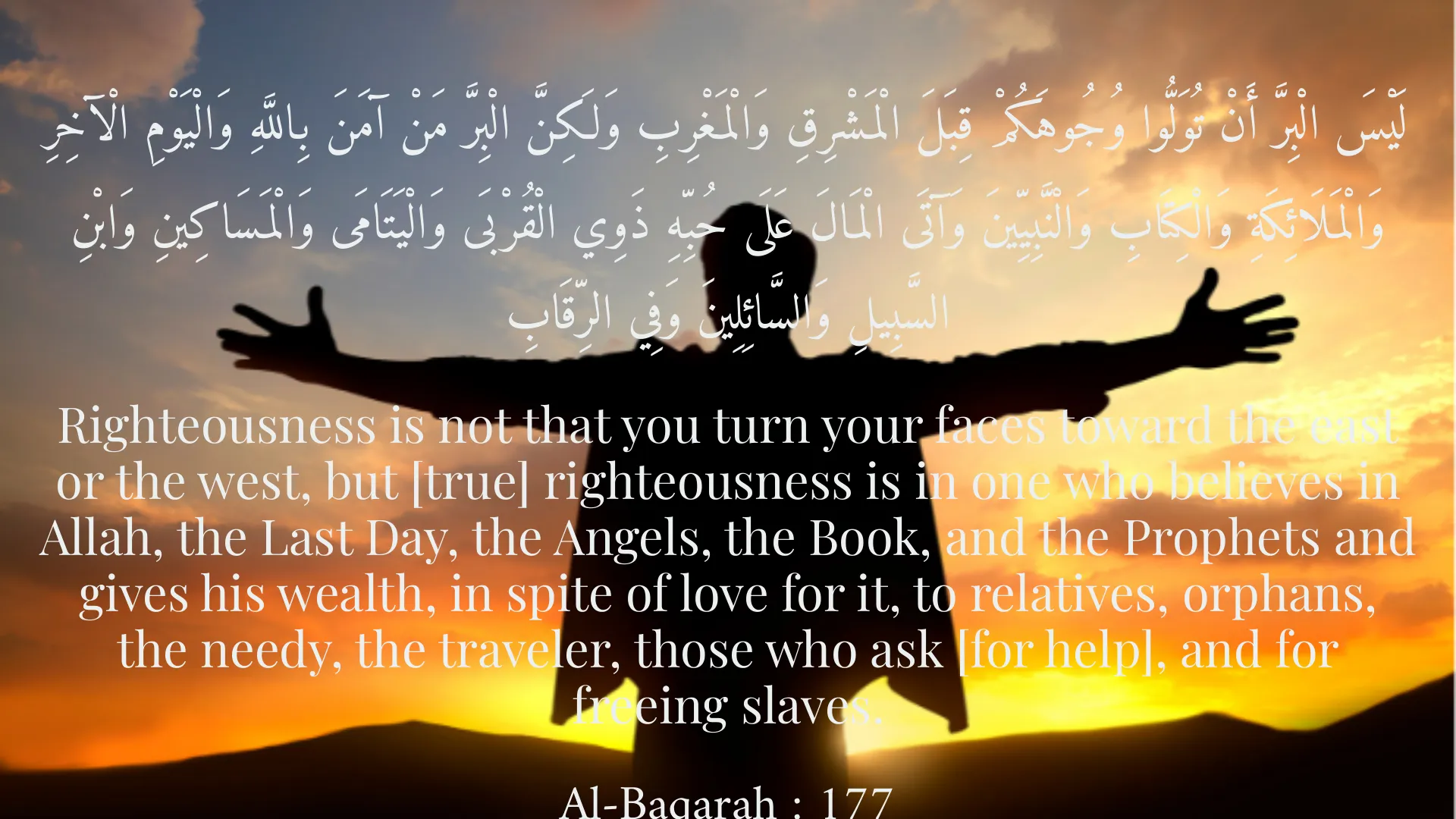
لَيْسَ الْبِرَّ أَنْ تُوَلُّوا وُجُوهَكُمْ قِبَلَ الْمَشْرِقِ وَالْمَغْرِبِ وَلَكِنَّ الْبِرَّ مَنْ آمَنَ بِاللَّهِ وَالْيَوْمِ الْآخِرِ وَالْمَلَائِكَةِ وَالْكِتَابِ وَالْنَّبِيِّينَ وَآتَى الْمَالَ عَلَى حُبِّهِ ذَوِي الْقُرْبَى وَالْيَتَامَى وَالْمَسَاكِينِ وَابْنِ السَّبِيلِ وَالسَّائِلِينَ وَفِي الرِّقَابِ
Righteousness is not that you turn your faces toward the east or the west, but [true] righteousness is in one who believes in Allah, the Last Day, the Angels, the Book, and the Prophets and gives his wealth, in spite of love for it, to relatives, orphans, the needy, the traveler, those who ask [for help], and for freeing slaves.
Al-Baqarah : 177
Short Story
Once upon a time, there was a man named Rahman who decided to make positive changes in his life. One day, he encountered a sad individual and smiled at him. Rahman's smile not only uplifted that person’s spirits but also made him feel happier. From that day on, Rahman always tried to smile at others and bring joy to his community through his simple acts.