Quranic Answer
In the Holy Quran, the act of smiling is regarded as a profound and impactful expression of kindness, emphasizing the value of interpersonal relationships and the influence they have on society. Smiling is not merely an involuntary response but is instead a conscious decision to project positivity, warmth, and love towards others. This is particularly highlighted in the Quran where the act of smiling is linked with moral and ethical behavior, reflecting the importance that Islam places on interpersonal communication. One of the most captivating mentions of this in the Quran is found in Surah Al-Baqarah, verse 263, where Allah instructs believers to choose kind words and gentle behavior when interacting with others. The verse states, "A kind word with forgiveness is better than charity followed by injury." This serves as a reminder that our words and actions matter greatly, and that they can either uplift or undermine those around us. Smiling, which is often accompanied by kind words, can serve as an immediate form of goodwill that radiates positivity, creating a ripple effect throughout the community. The significance of this verse lies in its emphasis on the intentionality behind communication. When a person chooses to smile, they are not only expressing their own emotional state but are also inviting warmth and kindness into their exchanges. It's a gentle reminder to believers that their interactions should be rooted in empathy and compassion, ensuring that their social circles are filled with harmony and understanding. Moreover, in Surah Al-Ankabut, verse 46, Allah commands the Prophet Muhammad (PBUH) to engage with all people in a gentle and considerate manner. The directive here highlights the importance of demeanor in conversations. The Prophet’s life exemplifies this teaching as he is known for his warm smile and kind interactions, regardless of the people he encountered. His character demonstrated that a simple act of smiling could break barriers and cultivate strong bonds between individuals of varying backgrounds. By emphasizing gentle interaction, the Quran illuminates the potential of smiling as a means to foster understanding, goodwill, and ultimately peace in society. In addition to verses from the Quran, there are several hadiths that reinforce the significance of smiling. One of the most renowned sayings of Prophet Muhammad (PBUH) is that "Your smile to your brother is charity." This beautiful statement encapsulates the idea that smiling has value—it is not just an expression of happiness but also an act of selflessness that can uplift spirits and spread joy. In a world where negativity often surrounds us, the humble act of smiling can be a beacon of light, offering hope and joy to those who may be struggling or in despair. The physical act of smiling itself releases a cascade of neurochemicals in our brains that promote feelings of happiness and contentment. These biological responses not only resonate within the individual but also extend outwardly, impacting those in their presence. When someone smiles, it often elicits a similar response in others, creating a chain reaction of positivity and goodwill. This cyclical nature of smiling highlights its role as a tool for building community and connection. As community leaders and individuals actively strive for a better world, harnessing the power of a smile can be instrumental in creating a culture of appreciation, understanding, and collaboration. Furthermore, scientific research supports the significant impact of smiling on physical health. When we smile, our bodies produce endorphins and serotonin, which are chemicals known to relieve stress and promote a sense of well-being. This research suggests that smiling not only enhances individual mental health but can also improve overall life satisfaction. Therefore, adopting a smiling demeanor can lead to improved personal health and contribute positively to the vibrancy of the community. For Muslims and people of goodwill around the world, actively practicing kindness through smiles is a straightforward yet powerful way to implement the teachings of Islam in everyday life. In an era where divisiveness seems prevalent, adhering to these principles can act as unifying factors that encourage empathy and understanding among people from all walks of life. Moreover, fostering an environment that values smiles can lead to the creation of safe spaces where open dialogue, acceptance, and friendship can thrive. This is particularly essential in multicultural communities where diverse beliefs and backgrounds may initially lead to misunderstandings. Emphasizing the communal aspect of kindness through smiling can help to bridge gaps and encourage fruitful and respectful conversations. In conclusion, the act of smiling is implicitly cherished in the teachings of the Quran and the practices of the Prophet Muhammad (PBUH). It signifies love, friendship, and a deep-rooted commitment to mutual respect and kindness. As we navigate life’s challenges, let us remember the importance of our expressions, and understand that each smile is an opportunity to spread love, bring joy to others, and lay the foundation for a more compassionate world. Ultimately, in a world that can often seem filled with strife and negativity, the simple act of a smile can be a powerful remedy, promoting peace, love, and friendship within the community.
Related Verses
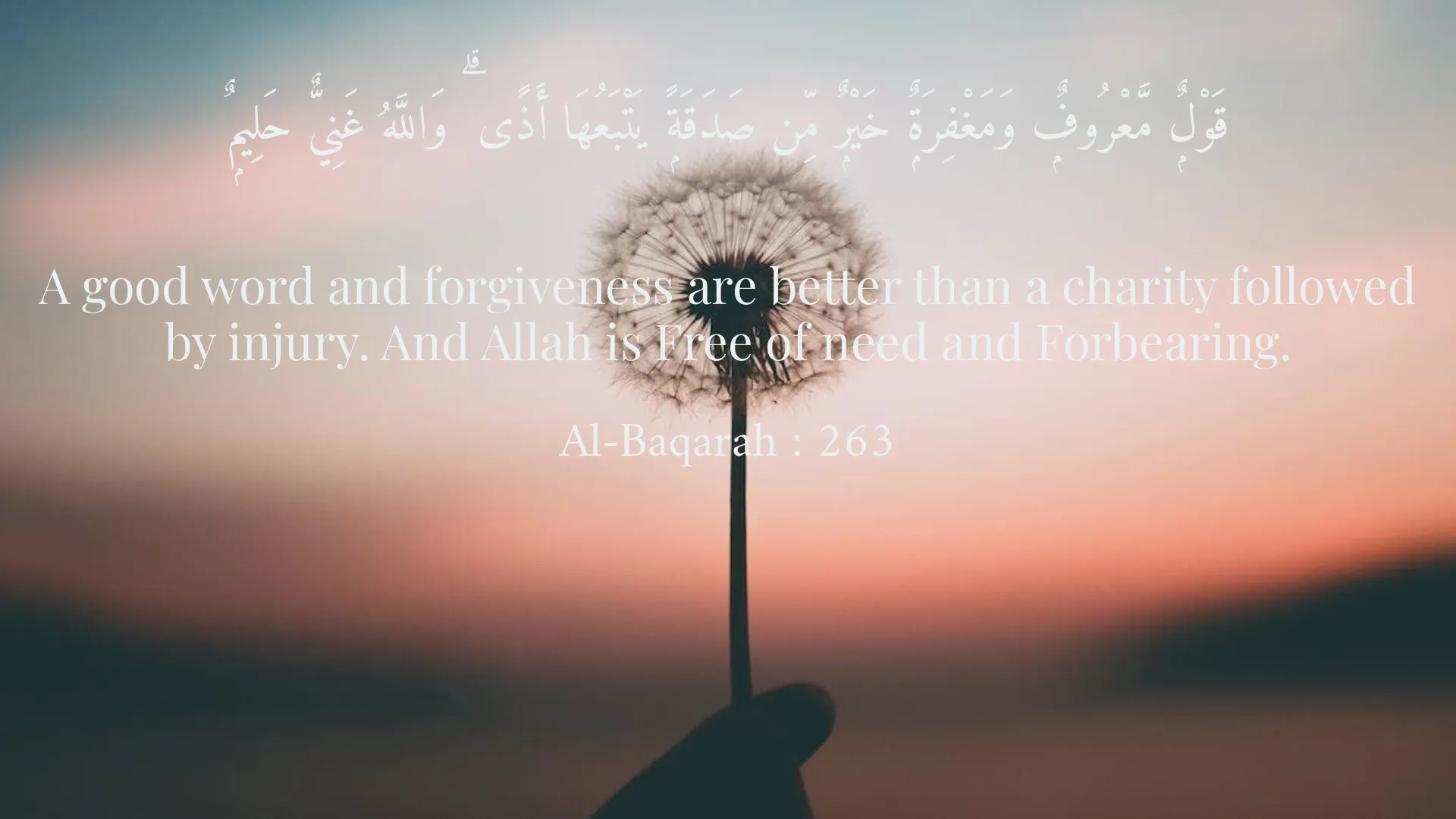
قَوْلٌۭ مَّعْرُوفٌۭ وَمَغْفِرَةٌۭ خَيْرٌۭ مِّن صَدَقَةًۭ يَتْبَعُهَا أَذًى ۗ وَاللَّهُ غَنِيٌّ حَلِيمٌۭ
A good word and forgiveness are better than a charity followed by injury. And Allah is Free of need and Forbearing.
Al-Baqarah : 263
وَلا تُجادِلُوا أَهْلَ الْكِتَابِ إِلَّا بِالَّتِي هِيَ أَحْسَنُ إِلَّا الَّذِينَ ظَلَمُوا مِنْهُمْ ۚ وَقُولُوا آمَنَّا بِالَّذِي أُنزِلَ إِلَيْنَا وَأُنزِلَ إِلَيْكُمْ وَإِلَٰهُنَا وَإِلَٰهُكُمْ وَاحِدٌۢ وَنَحْنُ لَهُ مُسْلِمُونَ
And do not argue with the People of the Scripture except in a way that is best, except for those who commit injustice among them. And say, 'We have believed in that which has been revealed to us and revealed to you, and our God and your God is one; and we are Muslims [submitting] to Him.'
Al-Ankabut : 46
Short Story
Once upon a time, there was a man named Ismail who always had a smile on his face. With his smile, he brought joy to those around him and filled his daily life with this beautiful act. One day, one of his friends asked him, 'Why are you always so happy?' Ismail replied with a smile, 'Allah taught me that smiling not only brings happiness to me but also to others. The Quran mentions that kind words and love bring peace.' From that day on, his friend decided to start smiling too, and their friendship and joy grew day by day.