Quranic Answer
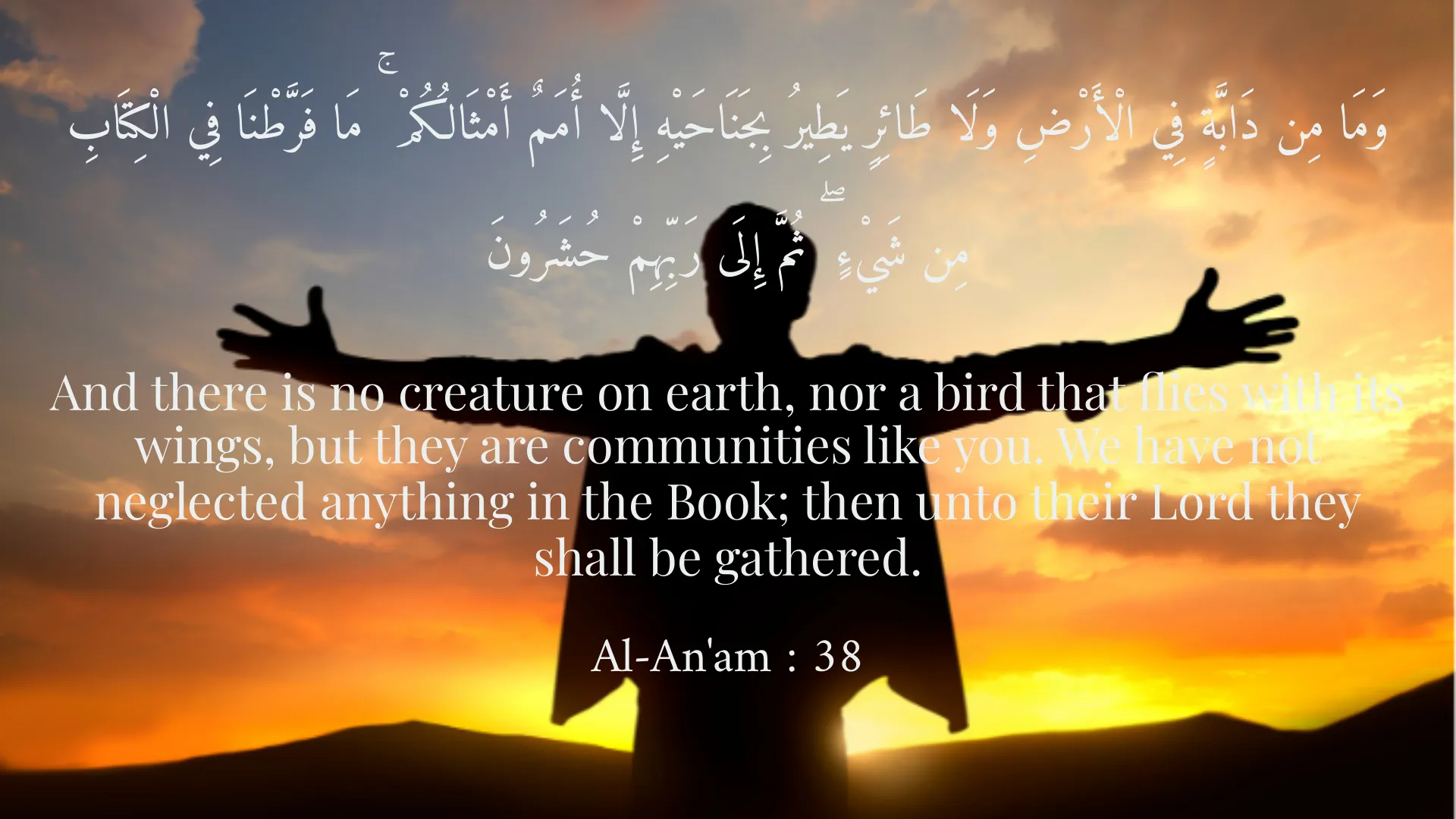
In the Holy Quran, the importance of caring for all of God's creatures and showing love to them is emphasized. One of the fundamental principles of Islam is mercy and compassion towards living beings. The teachings of Islam promote a deep sense of responsibility and ethical treatment towards all animals and nature, reflecting the values of mercy, kindness, and respect. The Quran provides clear guidance on how humans should act towards animals and the environment. In Surah Al-An'am, verse 38, Allah explicitly states: 'And there is no creature on earth, nor a bird that flies with its wings, but they are communities like you.' This remarkable verse illustrates the interconnectedness of all living creatures and asserts that they possess inherent value and rights that must be acknowledged. Similar to human beings, animals are part of communities, each serving its purpose in the larger ecosystem. Understanding this relationship instills a sense of stewardship in us, prompting individuals to protect and care for all creatures of Allah. The teachings of the Prophet Muhammad (peace be upon him) further illuminate the profound respect that should be afforded to animals. His life and sayings exhibit a deep reverence for every living being; he has encouraged kindness and good treatment of animals in numerous traditions. For instance, one well-documented Hadith tells the story of a woman who was punished by God for mistreating a cat. Conversely, another tradition highlights a man who was forgiven for his sins because he provided water to a thirsty dog. Through such accounts, it becomes clear that acts of compassion towards animals are deeply valued, resonating with the mercy of Allah. Indeed, the Prophet emphasized that showing love to animals is a form of worship, suggesting that a faithful person's ethical consideration and conduct towards animals is integral to their spirituality. Moreover, Quranic commentary underscores that benevolence towards animals, irrespective of whether it stems from personal benefit or a genuine desire to alleviate their discomfort, is praiseworthy in the sight of Allah. This principle not only illustrates the compassionate nature of Islam but also encourages believers to adopt ethical practices that strengthen their bond with all living beings. Islamic teachings insist that good deeds, particularly in the realm of animal welfare, carry significant weight and are rewarded generously by God. Thus, the treatment of animals is not merely an act of charity but is viewed as an essential duty for Muslims. Acts such as providing food, shelter, and humane treatment reflect a true understanding of our role as caretakers of God's creation. Animals play a vital role in the ecosystem and in human society; hence, neglecting their needs or inflicting undue suffering is viewed negatively in the Islamic framework. The concept of 'Tawheed' (the oneness of God) in Islam extends beyond merely acknowledging a singular deity; it encompasses recognizing the intricate relationships among His creations. This integrity of the created world insists upon our responsibility towards all beings, ensuring that we treat them with dignity and justice. The compassion enshrined in Islam is not limited to pets or domesticated animals; it extends to wildlife and even insects. The natural world is portrayed as a harmonious creation, and all entities carry significance in maintaining the balance of life. Treading lightly upon the earth ensures the longevity of ecosystems and preserves the welfare of creatures, large and small. Our approach to conservation, animal rights, and environmental stewardship are fundamentally informed by these teachings. Even when hunting or gathering, Muslims are taught to do so sustainably and in moderation, always attributing their sustenance to the blessings of Allah. Furthermore, modern issues surrounding animal rights and welfare align with Islamic principles, reinforcing the urgency of empathetic practices in today's world. As societies embark on discussions regarding ethical treatment of both domesticated and wild animals, it is crucial to provide an Islamic perspective that highlights the necessity of justice for all creatures. In a fast-evolving world where exploitation and neglect of animals are rampant, Muslims can take the lead in advocating for humane treatment and addressing the often-compounded injustices faced by animals. As Muslims engage with the wider community on the issue of animal welfare, it becomes vital to approach these conversations with compassion and respect. Through collaboration with other organizations and activists, we can create a profound impact that reflects the core values of mercy and kindness within the Islamic tradition. Moreover, serving as a voice for the voiceless and reminding society of the rights of animals contributes to a more compassionate world. In conclusion, the teachings of Islam regarding the treatment of animals form a significant pillar of faith that encompasses mercy, compassion, and ethical responsibility. Not only do these principles shape individual behavior, they also drive collective responses to contemporary issues surrounding animal rights and environmental conservation. The universal call for kindness towards all of Allah's creatures demonstrates a path towards nurturing a more harmonious existence, urging humanity to recognize their role within the intricate web of life. Therefore, showing love for animals can indeed be viewed as a multi-faceted form of worship, intrinsically woven into the fabric of Islamic belief and practice. In doing so, believers not only fulfill their obligation towards fellow creatures but also earn the favor and rewards of Allah, showcasing an essential tenet of faith that fosters both spiritual growth and societal improvement.
Related Verses
وَمَا مِن دَابَّةٍ فِي الْأَرْضِ وَلَا طَائِرٍ يَطِيرُ بِجَنَاحَيْهِ إِلَّا أُمَمٌ أَمْثَالُكُمْ ۚ مَا فَرَّطْنَا فِي الْكِتَابِ مِن شَيْءٍ ۖ ثُمَّ إِلَى رَبِّهِمْ حُشَرُونَ
And there is no creature on earth, nor a bird that flies with its wings, but they are communities like you. We have not neglected anything in the Book; then unto their Lord they shall be gathered.
Al-An'am : 38
Short Story
Once upon a time, a man named Jamil was walking in the park. He noticed a group of children helping an injured cat. They were petting it and providing it with food. Watching this scene reminded Jamil of the verses of the Quran, highlighting how valuable it is to show love to animals. He said to himself, 'Every living being has a right upon us, and we must show them love and kindness.' From that moment, Jamil decided to always pay attention to animals and take care of them.