Quranic Answer
The concept of forgiveness, particularly 'true forgiveness,' is not only possible but profoundly emphasized and intricately woven into the fabric of Islamic teachings, as revealed in the Holy Quran. Islam presents forgiveness as a noble virtue, a path to spiritual purification, and a key to both individual peace and societal harmony. It is a divine attribute that believers are encouraged to emulate, reflecting Allah's infinite mercy and boundless compassion. At its core, true forgiveness in Islam transcends a mere verbal declaration; it involves a sincere release of resentment, anger, and the desire for retribution towards one who has wronged you. It's about letting go of the emotional burden, not necessarily forgetting the event, but rather transforming its impact on your heart and mind. The Quran repeatedly urges believers to adopt this lofty ethical stance, promising immense rewards in this life and the hereafter. One of the most powerful foundations for understanding forgiveness in Islam is Allah's own nature. The Quran describes Allah with numerous names that embody forgiveness, such as 'Al-Ghafoor' (The Oft-Forgiving), 'Ar-Rahim' (The Most Merciful), and 'Al-Afuw' (The Pardoner). These names are not just abstract concepts; they are invitations for humanity to seek divine forgiveness and to reflect these attributes in their interactions with others. For instance, Allah says in Surah Al-Baqarah (2:268), "...and Allah promises you forgiveness from Him and bounty." This verse highlights that forgiveness is a divine gift and a promise. Similarly, in Surah An-Nisa (4:110), it states, "And whoever does a wrong or wrongs himself but then seeks forgiveness of Allah will find Allah Forgiving and Merciful." These verses underscore the accessibility and universality of divine forgiveness for those who sincerely repent. The very act of seeking Allah's forgiveness cultivates a spirit of humility and self-reflection, which are prerequisites for forgiving others. Allah Almighty has kept the door of repentance wide open, signifying that even after committing major sins, one can attain divine pardon through genuine remorse and turning towards Him. This instills hope in the human heart, guiding it towards the purification of its soul and psyche. Building upon this divine model, the Quran explicitly commands and encourages believers to practice forgiveness. It is seen as a sign of piety, strength, and spiritual maturity. Forgiveness is not a sign of weakness; rather, it requires immense self-control, patience (sabr), and a deep understanding of human fallibility. Surah Ash-Shura (42:40) beautifully articulates this principle: "And the retribution for an evil act is an evil act equivalent to it. But whoever pardons and makes reconciliation - his reward is [due] from Allah. Indeed, He does not like wrongdoers." This verse presents a choice: one can retaliate in kind (which is permissible to the extent of the harm done, but not encouraged), or one can choose the higher path of pardon and reconciliation, with the assurance that Allah Himself will be the rewarder. This divine promise serves as a powerful motivator for extending forgiveness, even when it feels incredibly difficult. Through this verse, Allah beautifully demonstrates that the reward for pardoning and making amends, even if one foregoes their rightful claim, is preserved with Him, and this is indeed the greatest reward. Another profound verse is found in Surah An-Nur (24:22), which specifically addresses the companions of the Prophet regarding forgiving those who slandered Aisha (RA): "...And let them pardon and overlook. Would you not like that Allah should forgive you? And Allah is Forgiving and Merciful." This verse is particularly potent because it links our forgiveness of others directly to our desire for Allah's forgiveness. It teaches us that to receive mercy, we must first show mercy. It creates a powerful incentive: if we yearn for the boundless mercy and forgiveness of the Almighty, we must extend that same grace to our fellow human beings, even when they have wronged us significantly. This vital lesson illustrates that the human capacity for inner forgiveness is achieved through faith in God and seeking His assistance. The challenges of true forgiveness are undeniable. It can be excruciatingly difficult to forgive someone who has caused deep pain, betrayal, or injustice. The human tendency is to hold onto grievances, to seek revenge, or to allow bitterness to fester. However, the Quran offers guidance and comfort in these challenging moments. It recognizes the human struggle but consistently guides towards the path that leads to inner peace and divine pleasure. Forgiveness is a process, not always a single event. It may require time, self-reflection, and even emotional healing. It does not mean condoning the wrong act or denying the pain caused. Rather, it means releasing oneself from the prison of resentment and allowing the heart to heal. It also does not preclude seeking justice in a lawful manner if necessary; however, even then, the Quran emphasizes that forgiveness is superior if it leads to reconciliation and betterment. The Quran consistently urges humanity to pursue the optimal path, a path frequently paved with forgiveness and forbearance. The benefits of practicing true forgiveness are manifold, touching various aspects of an individual's life and society at large. * Spiritual Elevation: Forgiveness purifies the heart from malice, envy, and hatred, allowing one to draw closer to Allah. It demonstrates taqwa (God-consciousness) and strengthens one's faith. The reward promised by Allah is immense, including blessings in this world and a high status in the hereafter. * Psychological Well-being: Holding onto grudges is detrimental to mental health. It leads to chronic stress, anxiety, depression, and a constant state of negative emotional turmoil. By forgiving, individuals liberate themselves from this internal burden, experiencing peace of mind, serenity, and emotional freedom. It allows one to move forward from the past rather than being perpetually trapped by it. Being freed from the shackles of resentment lightens the soul and prepares it to receive divine blessings. * Social Harmony: On a societal level, forgiveness is crucial for building and maintaining healthy relationships and communities. It prevents cycles of revenge and retribution, fostering reconciliation and cooperation. When individuals are willing to forgive, disputes can be resolved amicably, leading to stronger family bonds, friendships, and communal cohesion. The Prophet Muhammad (PBUH) himself exemplified forgiveness, even to his staunchest enemies, particularly during the conquest of Mecca, setting a powerful precedent for his followers. This prophetic tradition clearly demonstrates the practicality and profound impact of forgiveness within society. In conclusion, true forgiveness, as illuminated by the Quran, is not only possible but a highly virtuous and transformative act. It is a reflection of divine mercy, a path to spiritual elevation, and a cornerstone of psychological and social well-being. It requires genuine effort, inner strength, and a conscious decision to release the chains of resentment for the sake of Allah and one's own peace. The Quran provides ample guidance and encouragement, promising great rewards for those who choose this noble path, making it clear that the capacity for profound and sincere forgiveness resides within the human spirit, nurtured by faith and divine guidance. This ability is not merely a possibility, but an ethical and spiritual imperative that guides humanity towards perfection.
Related Verses
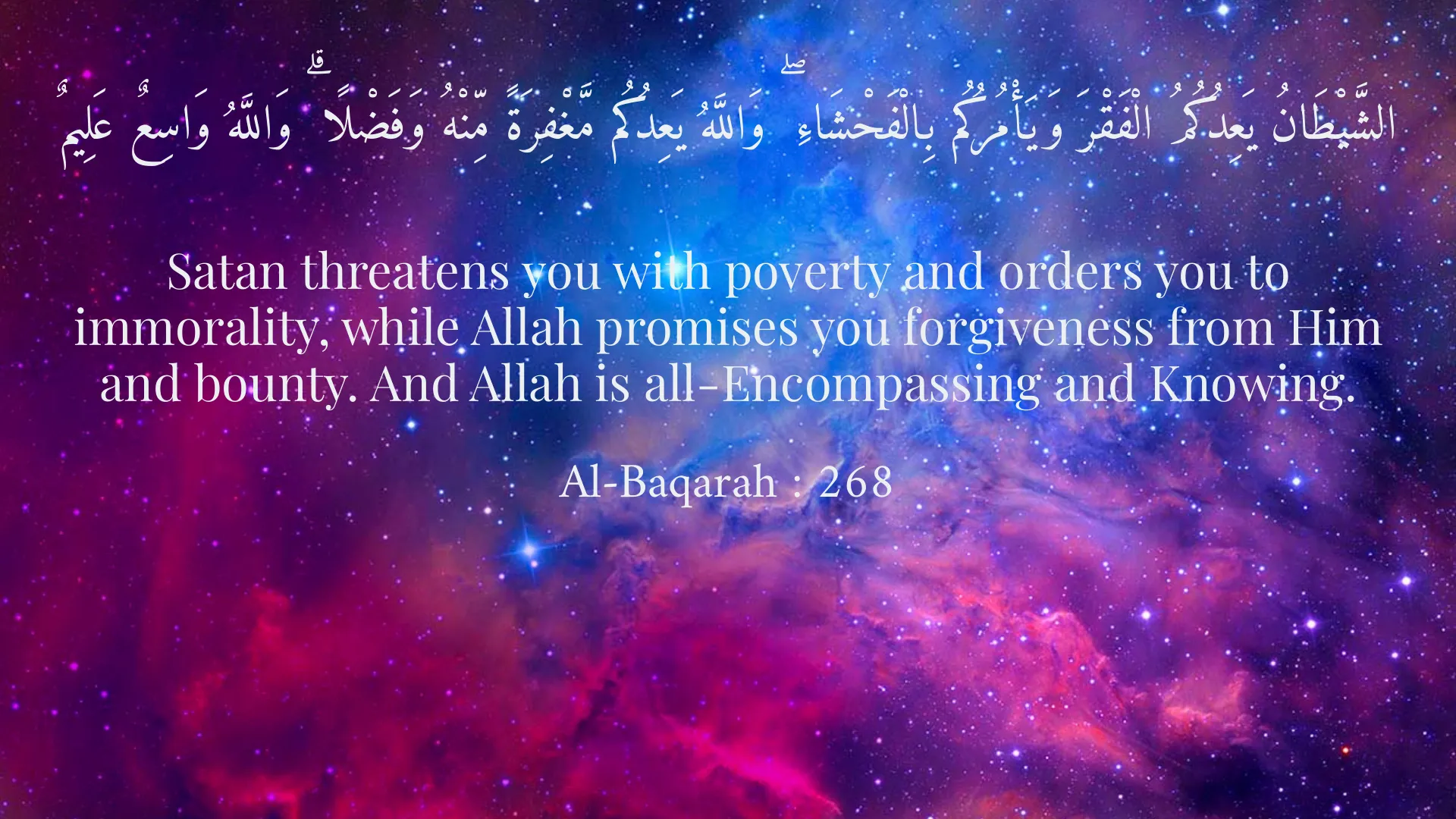
الشَّيْطَانُ يَعِدُكُمُ الْفَقْرَ وَيَأْمُرُكُم بِالْفَحْشَاءِ ۖ وَاللَّهُ يَعِدُكُم مَّغْفِرَةً مِّنْهُ وَفَضْلًا ۗ وَاللَّهُ وَاسِعٌ عَلِيمٌ
Satan threatens you with poverty and orders you to immorality, while Allah promises you forgiveness from Him and bounty. And Allah is all-Encompassing and Knowing.
Al-Baqarah : 268
وَلَا يَأْتَلِ أُولُو الْفَضْلِ مِنكُمْ وَالسَّعَةِ أَن يُؤْتُوا أُولِي الْقُرْبَىٰ وَالْمَسَاكِينَ وَالْمُهَاجِرِينَ فِي سَبِيلِ اللَّهِ ۖ وَلْيَعْفُوا وَلْيَصْفَحُوا ۗ أَلَا تُحِبُّونَ أَن يَغْفِرَ اللَّهُ لَكُمْ ۗ وَاللَّهُ غَفُورٌ رَّحِيمٌ
And let not those among you who are blessed with grace and abundance swear not to give [any longer] to their relatives and the needy and the emigrants for the cause of Allah, and let them pardon and overlook. Would you not like that Allah should forgive you? And Allah is Forgiving and Merciful.
An-Nur : 22
وَجَزَاءُ سَيِّئَةٍ سَيِّئَةٌ مِّثْلُهَا ۖ فَمَنْ عَفَا وَأَصْلَحَ فَأَجْرُهُ عَلَى اللَّهِ ۚ إِنَّهُ لَا يُحِبُّ الظَّالِمِينَ
And the retribution for an evil act is an evil act equivalent to it. But whoever pardons and makes reconciliation - his reward is [due] from Allah. Indeed, He does not like wrongdoers.
Ash-Shura : 40
Short Story
It is said that a kind-hearted and wise man lived in a city, constantly seeking the welfare of its people. One day, as he passed by a house, an ignorant person from within angrily cursed him. The wise man remained silent, continued on his way, and offered no retort. A passerby asked him, 'Why did you endure such impoliteness and not retaliate?' The wise man smiled and said, 'Because I freed myself from the burden of malice and enmity. It was as if he had tied a knot on himself, and I chose not to untie it, leaving him entangled. Forgiveness lifts the burden from the heart and brings peace. Resentment is like a large stone we carry on our shoulders, and the more we carry it, the heavier it becomes.' The passerby was astonished by this wisdom and understood that forgiveness is not just for the wrongdoer, but primarily for the forgiver, and that liberation from the chains of malice and bitterness is the key to tranquility and salvation, as the Almighty God has emphasized in His Book.