Quranic Answer
The Quran is a revered text that serves as a guiding light for millions of Muslims around the globe. Among its countless themes, love and compassion stand out significantly, as they are integral to the moral and ethical framework that the Quran advocates for humanity. In fact, one could argue that love and compassion are not mere virtues in Islamic teaching; rather, they are foundational principles that define human interactions and relationships with one another as well as with Allah. Throughout the Quran, Allah advises believers to embrace love, making it clear that it is one of the highest human values. This emphasis on love can be seen as a means to unify humanity, promote peace, and foster positive relationships in society. In Surah Al-Imran, verse 31, the Quran explicitly states, 'Say, [O Muhammad], If you should love Allah, then follow me, so Allah will love you and forgive you your sins.' This verse encapsulates a profound concept: the relationship between divine love and human action. It implies that love for God is not solely an emotional state but also requires action and obedience. By following the teachings of Prophet Muhammad (peace be upon him), believers demonstrate their love for Allah, which consequently results in receiving Allah's love and mercy. This reciprocal relationship forms the cornerstone of a faithful Muslim's belief system, illustrating how love manifests not only in devotion to God but also in the adherence to His commandments. Moreover, in Surah Al-Baqarah, verse 177, true faith is described as not merely a matter of ritualistic observance but instead encompasses performing good deeds and loving others while being obedient to Allah. The implication here is that love for others—be it family, friends, or strangers—is an essential part of one's faith. The Quran emphasizes that acts of kindness, generosity, and compassion towards others are reflections of genuine belief. Therefore, one of the pillars of Islamic faith is the practice of love, not only towards Allah but also towards fellow human beings. The verses from the Quran demonstrate that love is not conditional; it calls for unconditional love that transcends personal interests or conveniences. Such love is particularly vital in family and social relationships. Establishing loving and compassionate connections is not just a moral obligation but is also seen as a divine commandment within Islam. The significance of love in familial ties is especially highlighted, as families often serve as the first place where individuals learn about compassion and empathy in their early years. A loving family environment can shape an individual's character in positive ways, empowering them to replicate such love and compassion in their interactions with others in the wider community. Unconditional love serves as a catalyst for personal growth and spiritual development. It promotes emotional well-being, helping individuals cope with challenges and hardships in life. When love is practiced unconditionally, it allows individuals to experience a sense of belonging and security. This, in turn, encourages them to cultivate their spiritual connection with Allah, leading to a more fulfilling and meaningful life. Furthermore, the Quran illustrates that love has the potential to break down barriers, foster understanding, and bridge differences among people. By implementing the principles of love and compassion laid out in the Quran, individuals can contribute to social harmony. The Quran calls for justice and equity, urging believers to treat all people fairly, regardless of their backgrounds. Love cultivates tolerance, respect, and acceptance in a world that can often be marred by conflict and division. By engaging in acts of charity, helping the less fortunate, and promoting social welfare all rooted in love, individuals not only strengthen their own faith but also enhance the overall fabric of society. The transformative power of love is further illustrated in several hadiths (sayings of Prophet Muhammad), where he emphasized the significance of loving one another. He stated, 'None of you truly believes until he loves for his brother what he loves for himself.' This powerful statement reinforces the concept that love should extend beyond one's immediate circle. It challenges individuals to think beyond themselves and advocate for the well-being of others. By cultivating love for others, believers align their intentions with Allah's vision for humanity. Importantly, love is also portrayed as a source of hope and resilience in the Quran. In times of hardship, believers are reminded to rely on Allah's mercy and to continue demonstrating love, both to themselves and to others. The essence of love in the face of adversity serves as a reminder of the strength that arises from compassion and solidarity. It helps foster a supportive community that can uplift one another during challenging times. In conclusion, the Quran's emphasis on love and compassion is not merely an aspect of religious teaching; it encapsulates a comprehensive framework for living a virtuous and fulfilling life. Through various verses, the Quran sheds light on the significance of loving God, following divine commandments, and expressing that love through acts of kindness and compassion toward others. Unconditional love forms the basis of familial relations and social interactions while promoting personal growth and spiritual development. Ultimately, the teachings of love in the Quran promote social harmony, urging humanity to create bonds that transcend differences, reject hatred, and embrace understanding. In this light, it can be firmly concluded that unconditional love is a paramount principle in the Quran, serving as a guide for improving human relationships and forging a compassionate and united society.
Related Verses
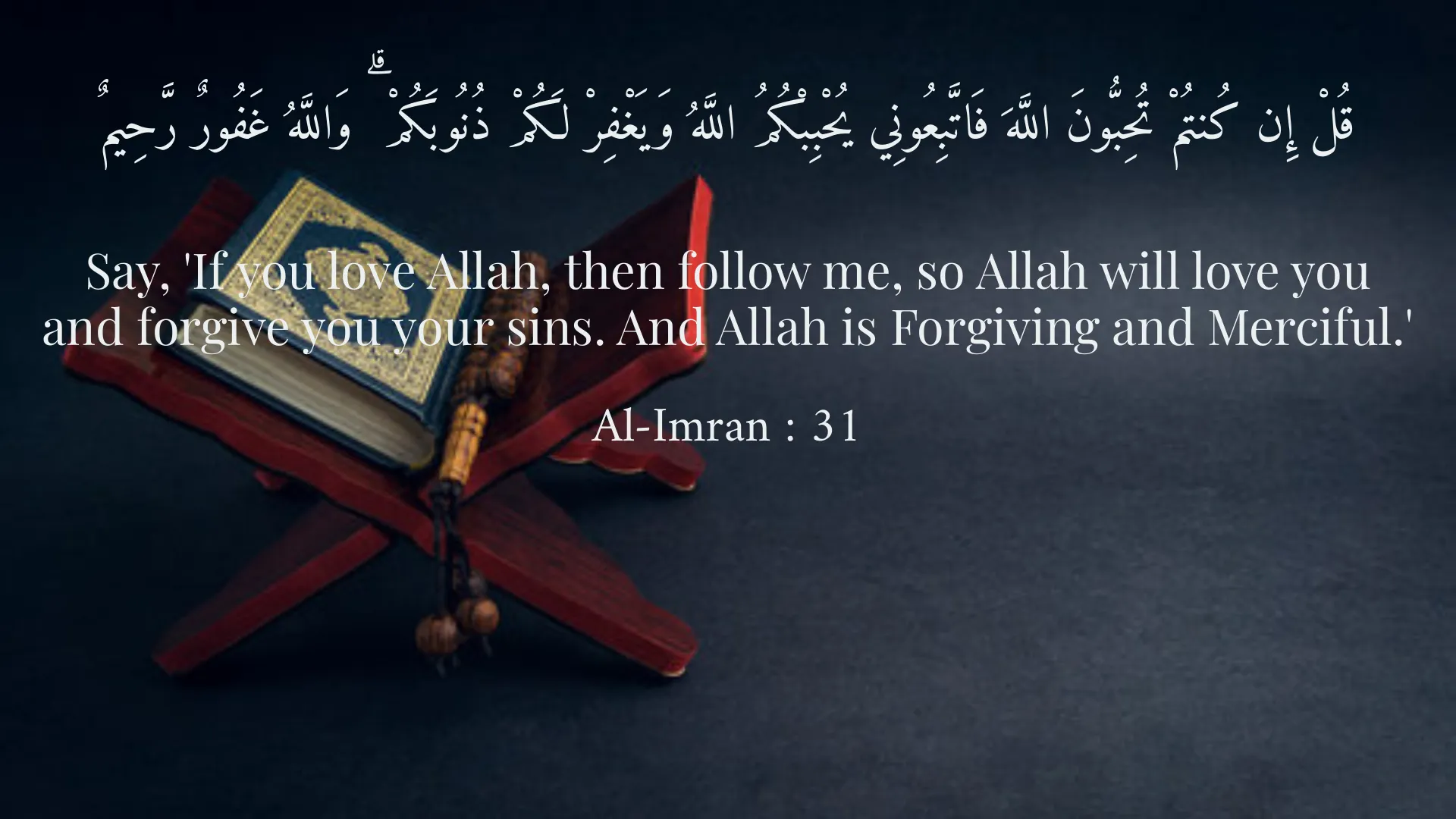
قُلْ إِن كُنتُمْ تُحِبُّونَ اللَّهَ فَاتَّبِعُونِي يُحْبِبْكُمُ اللَّهُ وَيَغْفِرْ لَكُمْ ذُنُوبَكُمْ ۗ وَاللَّهُ غَفُورٌ رَّحِيمٌ
Say, 'If you love Allah, then follow me, so Allah will love you and forgive you your sins. And Allah is Forgiving and Merciful.'
Al-Imran : 31
لَّيْسَ الْبِرَّ أَن تُوَلُّوا وُجُوهَكُمْ قِبَلَ الْمَشْرِقِ وَالْمَغْرِبِ وَلَكِنَّ الْبِرَّ مَن آمَنَ بِاللَّهِ وَالْيَوْمِ الْآخِرِ وَالْمَلَائِكَةِ وَالْكِتَابِ وَالنَّبِيِّينَ وَآتَى الْمَالَ عَلَى حُبِّهِ ذَوِي الْقُرْبَى وَالْيَتَامَى وَالْمَسَاكِينِ وَابْنَ السَّبِيلِ وَالسَّائِلِينَ وَفِي الرِّقَابِ وَأَقَامَ الصَّلَاةَ وَآتَى الزَّكَاةَ وَالْمُوفُونَ بِعَهْدِهِمْ إِذَا عَاهَدُوا وَالصَّابِرِينَ فِي الْبَأْسَاءِ وَالضَّرَّاءَ وَحِينَ الْبَأْسِ ۚ أُو۟لَـٰئِكَ الَّذِينَ صَدَقُوا ۖ وَأُو۟لَـٰئِكَ هُمُ الْمُتَّقُونَ
Righteousness is not that you turn your faces toward the east or the west, but [true] righteousness is in one who believes in Allah, the Last Day, the Angels, the Book, and the Prophets and gives his wealth, in spite of his love for it, to relatives, orphans, the needy, the traveler, those who ask [for help], and for freeing slaves; and [who] establishes prayer and gives zakah; those who fulfill their promise when they promise; and [those who are] patient in poverty and hardship and during battle. Those are the ones who have been true, and it is those who are the righteous.
Al-Baqarah : 177
Short Story
Once in a village, there was a ruler known for his love and kindness. Everyone admired him and held him in high regard. He visited orphaned and needy children every day, helping to fulfill their needs. One day, he told an orphan, 'You are a child of Allah, and I have learned unconditional love from God, and I wish to extend that love to you.' This statement touched the orphan's heart deeply, leading him to pledge that when he grew up, he would also love others and practice unconditional friendship in his life.