Quranic Answer
Working holds significant value and importance in an individual’s life, and this is clearly stated in the Holy Quran. The concept of work is not just a means to provide for oneself; it transcends into a deeper realm of spiritual fulfillment, social responsibility, and personal growth. In Islam, work is viewed not merely as a chore, but as an act of worship, a testament to one's faith, and a means to serve humanity. The very essence of labor is interwoven with the teachings and principles laid down in the Quran. In Surah Al-Jathiya, verse 13, Allah says: 'And He has made subservient to you whatever is in the heavens and whatever is in the earth, all together. Surely, in that are signs for a people who reflect.' This verse emphasizes the abundant blessings that Allah has provided to humankind, positioning work as the mechanism through which these blessings can be utilized and appreciated. The act of engaging in work is a demonstration of gratitude towards these divine provisions. Furthermore, the Quran elucidates that the resources and opportunities available in the world are not just for personal consumption but are to be harnessed for the betterment of society. This creates a symbiotic relationship between individual efforts and collective growth. Through hard work and dedication, one can contribute to the welfare of others, thereby fulfilling both their personal and communal obligations. Additionally, work serves as a means of self-improvement. As stated in Surah Al-Baqarah, verse 281, 'And fear a Day when you will be returned to Allah. Then every soul will be compensated for what it earned, and they will not be wronged.' This reinforces the notion that our efforts on Earth have ramifications in the hereafter. The emphasis on earning through legitimate means underscores the moral principles governing work and labor. Moreover, these verses remind us that work is not just about monetary gain; it’s about the character and values we build through our endeavors. Engaging in productive activities sharpens our skills, enhances our capabilities, and molds our personalities. Every task we undertake, whether small or large, serves as an opportunity for learning and ethical refinement. Additionally, the income we gain from our work allows us to aid others, assist those in need, and engage in charitable acts. This ties back to the Quranic principle of community service and social responsibility, urging us to look beyond our own needs. By providing for ourselves and being in a position to help others, we embody the teachings of the Quran. An important aspect of work is its role in establishing a sense of identity and purpose within the community. When individuals engage in meaningful work, they become integral parts of their societies, thereby fostering collaboration and unity. This collective effort is critical for societal advancement and stability. Work encourages interaction among diverse groups, thereby building relationships and reinforcing social bonds. The act of working together towards common goals ignites a sense of belonging and shared responsibility for the community’s welfare. Additionally, the spiritual dimension of work cannot be overstated. In a world that often places material wealth above other values, Islamic teachings remind us of the intrinsic value of hard work. The effort spent in labor transforms mundane tasks into acts of worship, thereby renewing the intent behind our actions. Consequently, work becomes a channel for divine blessings to flow into our lives. As we strive to fulfill our responsibilities with sincerity and diligence, we align ourselves with Islamic principles, thereby enhancing our spiritual connection to Allah. This holistic approach to work embodies the Quranic wisdom that our experiences are interconnected—physical, spiritual, and social. Challenges and adversities in work are also acknowledged in Islamic teachings. These obstacles are not seen as deterrents but rather as opportunities for growth, resilience, and deeper faith. In fact, the Quran urges believers to remain steadfast in the face of difficulties, recognizing that true rewards often come after trials. Such challenges test our patience and determination, molding us into better individuals. In the contemporary world, the significance of work remains paramount. As societies evolve and economies fluctuate, the core values surrounding hard work and dedication are increasingly relevant. Individuals are encouraged to seek careers that align with their skills, passions, and ethical values. In doing so, they not only contribute to their own well-being but also partake in the larger objective of fostering a balanced and just society. Educational systems, workplaces, and communities must emphasize the importance of meaningful work, reflective of both social and spiritual paradigms. Ultimately, working is valuable not only for meeting our own needs but also for the social wellbeing and support we can offer to others. The profound teachings of the Quran provide a comprehensive framework that celebrates work as a conduit for personal growth, social responsibility, and spiritual enlightenment. By embracing the principles of hard work, individuals can play an instrumental role in shaping societies that are compassionate, equitable, and resilient. It is through our efforts that we can truly reflect the signs of Allah's blessings, ensuring that our labor is not in vain but a significant contribution to the continuum of human experience and collective progress.
Related Verses
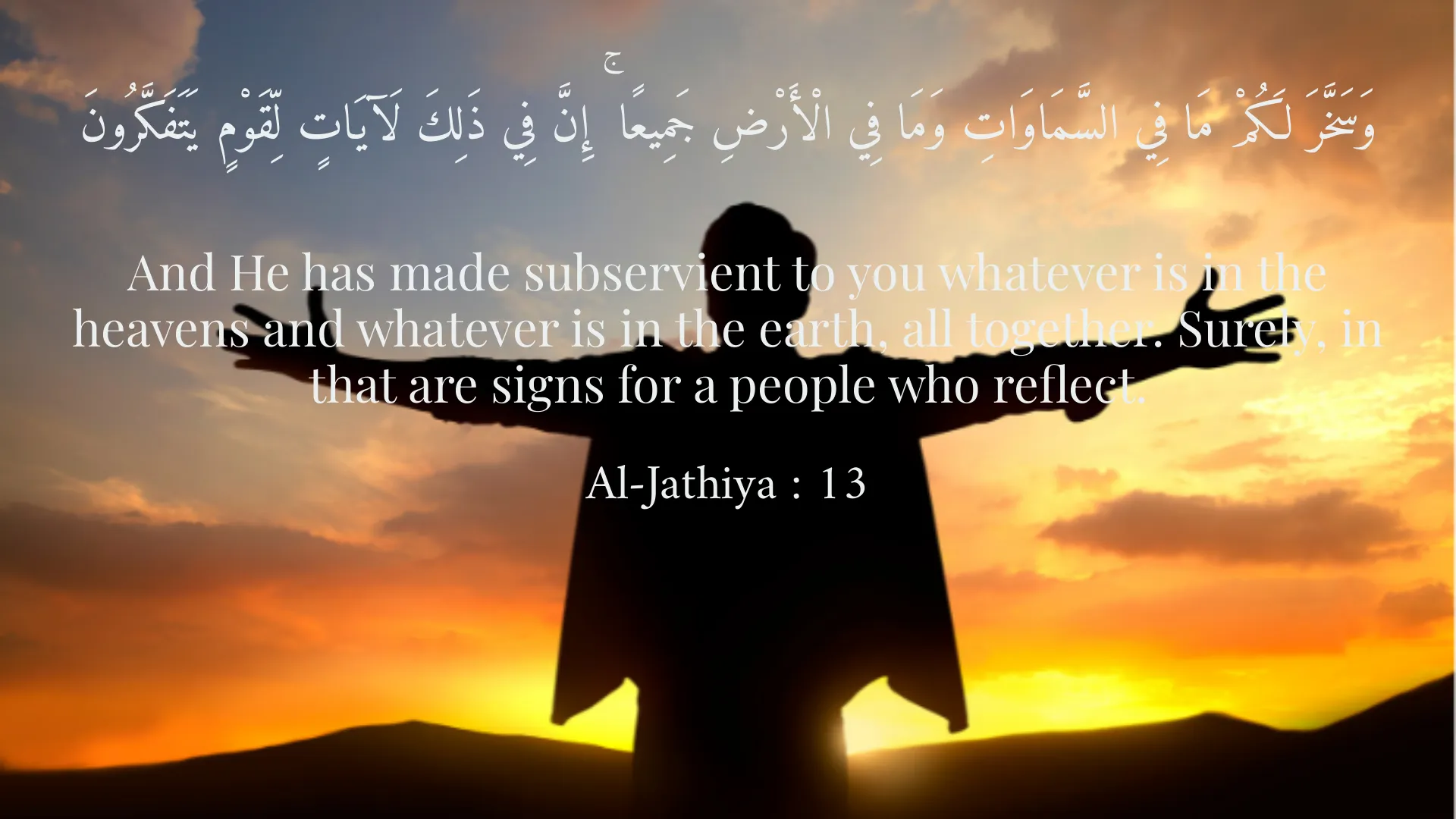
وَسَخَّرَ لَكُمْ مَا فِي السَّمَاوَاتِ وَمَا فِي الْأَرْضِ جَمِيعًا ۚ إِنَّ فِي ذَلِكَ لَآيَاتٍ لِّقَوْمٍ يَتَفَكَّرُونَ
And He has made subservient to you whatever is in the heavens and whatever is in the earth, all together. Surely, in that are signs for a people who reflect.
Al-Jathiya : 13
وَاتَّقُوا يَوْمًا تُرْجَعُونَ فِيهِ إِلَى اللَّهِ ثُمَّ تُوَفَّى كُلُّ نَفْسٍ مَّا كَسَبَتْ وَهُمْ لَا يُظْلَمُونَ
And fear a Day when you will be returned to Allah. Then every soul will be compensated for what it earned, and they will not be wronged.
Al-Baqarah : 281
Short Story
On a beautiful day, a young man named Reza was contemplating his life. He realized the value of work in life. Remembering the verses of the Quran, he decided to not only meet his own needs through work but also to help others. Reza began working at a charitable institution and used his income to support the needy. Through this, he found greater satisfaction and joy.