Quranic Answer
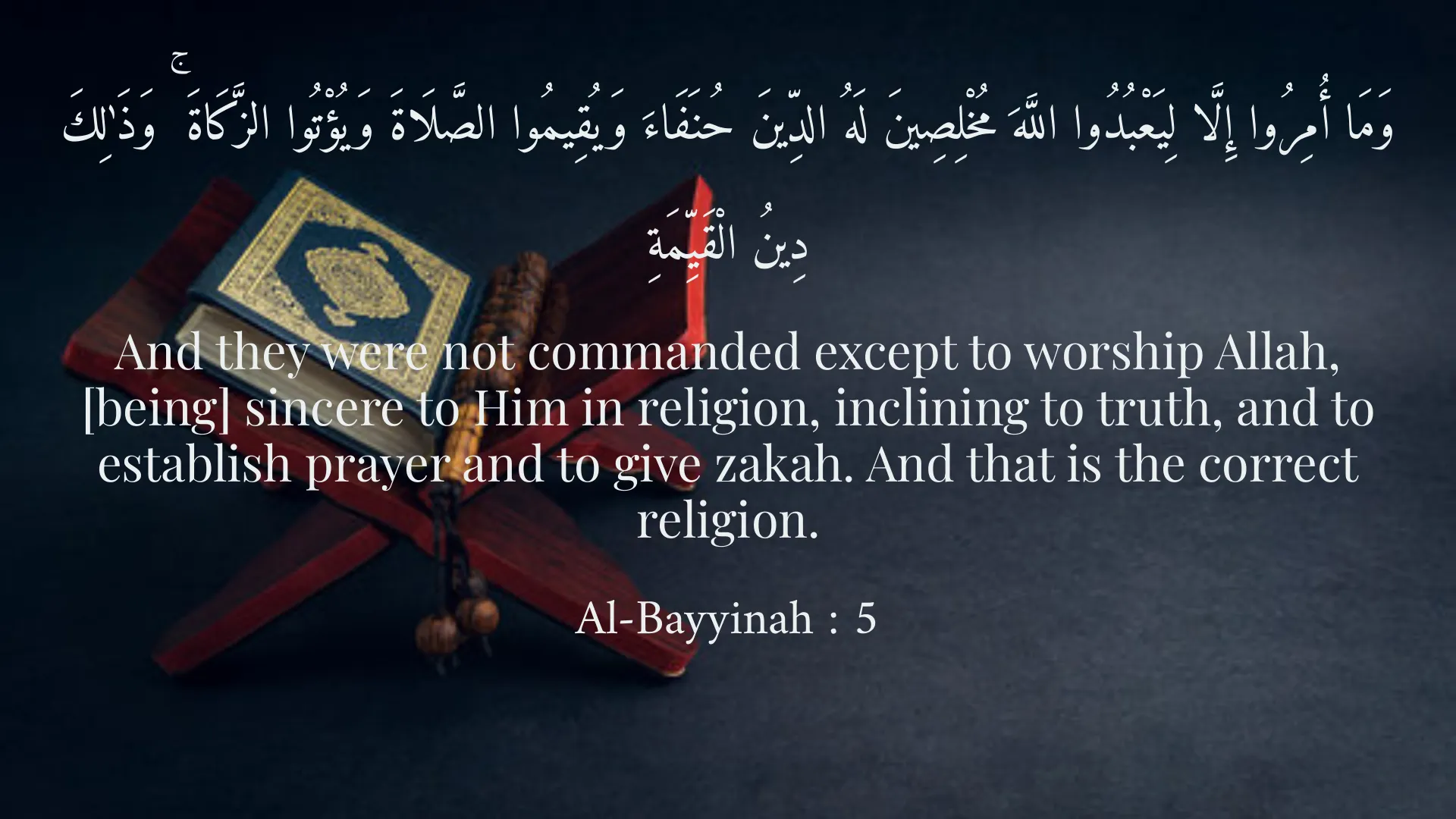
In the rich and profound teachings of the Holy Quran, intention (niyyah) holds an unparalleled and vital position as the spirit and essence of all actions. The Quran repeatedly emphasizes that the true value of any deed depends not merely on its outward form but fundamentally on the inner motive and purpose of the individual. This foundational principle distinguishes acts of worship from daily habits and serves as a criterion for measuring sincerity and drawing closer to God. The Quran explicitly and implicitly states that Allah looks at hearts and intentions, not just the outward appearance of deeds. Surah Al-Bayyinah, verse 5, proclaims: "And they were not commanded except to worship Allah, [being] sincere to Him in religion, inclining to truth, and to establish prayer and to give zakah. And that is the correct religion." This verse clearly underscores the necessity of sincerity (ikhlas) in worship. Ikhlas is that pure intention, free from any form of polytheism (shirk) or showing off (riya), where an action is performed solely for the pleasure of Allah. Without this sincerity, even the grandest deeds can become worthless. In Surah Hud, verses 15 and 16, the Quran describes the state of those who perform good deeds to achieve worldly aims: "Whoever desires the life of this world and its adornments - We will fully compensate them for their deeds therein, and they will not be deprived from it. * Those are the ones for whom there will be nothing in the Hereafter but the Fire. And what they did therein has become worthless, and what they used to do is invalid." These verses distinctly show that if one's intention behind their actions is solely to gain worldly benefits, they will have nothing but the Fire in the Hereafter, and their deeds will be fruitless. This Quranic statement places a strong emphasis on the importance of intentions geared towards the afterlife and seeking Allah's pleasure in every action. Another example of the impact of intention in the Quran relates to hypocrisy and showing off. Surah Al-Ma'un, verses 4 to 7, refers to the state of those who pray but are heedless or perform their prayers for show: "So woe to those who pray [But] who are heedless of their prayer Those who make show [of their deeds] * And withhold [small] ordinary items." In these verses, a hypocritical intention is explicitly identified as the cause of the degradation and worthlessness of prayer. This indicates that even an outwardly religious act like prayer, if not performed with pure intention and devotion to Allah, will not only yield no reward but may also lead to censure and punishment. Overall, the Holy Quran presents intention as the compass for human actions. Every deed, whether small or large, gains meaning through intention. A good intention can transform a permissible act into an act of worship; for instance, sleeping with the intention of regaining strength for worship or lawful work is considered worship itself. Conversely, a corrupt intention can turn an outwardly good deed into a malicious one, such as giving charity for display or to harm others. Thus, the impact of intention in the Quran is deeply profound and comprehensive. This impact includes the following aspects: 1. Determining the Hereafter's Value of the Deed: Pure intention is the key to divine rewards and eternal bliss. Without it, deeds, no matter how outwardly grand, will hold no value in the sight of Allah. 2. Distinguishing Worship from Habit: It is intention that transforms a routine act into an act of worship. If eating and drinking are done with the intention of gaining energy to fulfill divine duties, they become worship. 3. Acceptance of Deeds: Allah accepts deeds only if they are performed with pure intention and for His pleasure. 4. Divine Accountability: Allah knows what is in the hearts of humans and judges them based on their intentions. This relates to divine justice and wisdom, which considers not only outward appearances but also inner roots and motivations. In conclusion, the Quran strongly emphasizes the necessity of purifying and correcting intentions. Believers must always review their intentions before any action and ensure that their sole motive is to seek the pleasure of Allah. This focus on intention guides individuals towards a meaningful life, true sincerity, and closeness to God, making their deeds fruitful in both this world and the Hereafter.
Related Verses
وَمَا أُمِرُوا إِلَّا لِيَعْبُدُوا اللَّهَ مُخْلِصِينَ لَهُ الدِّينَ حُنَفَاءَ وَيُقِيمُوا الصَّلَاةَ وَيُؤْتُوا الزَّكَاةَ ۚ وَذَٰلِكَ دِينُ الْقَيِّمَةِ
And they were not commanded except to worship Allah, [being] sincere to Him in religion, inclining to truth, and to establish prayer and to give zakah. And that is the correct religion.
Al-Bayyinah : 5
مَن كَانَ يُرِيدُ الْحَيَاةَ الدُّنْيَا وَزِينَتَهَا نُوَفِّ إِلَيْهِمْ أَعْمَالَهُمْ فِيهَا وَهُمْ فِيهَا لَا يُبْخَسُونَ
Whoever desires the life of this world and its adornments - We will fully compensate them for their deeds therein, and they will not be deprived from it.
Hud : 15
الَّذِينَ هُمْ يُرَاءُونَ
Those who make show [of their deeds]
Al-Ma'un : 6
Short Story
One day, in Sa'di's time, a wealthy king, to display his generosity, held a grand feast and bestowed precious gifts upon the people. Everyone praised him. In the same city, a poor man, who had only a single loaf of bread, gave it to someone in need. One of Sa'di's disciples asked him, "Master, the king's deeds were grander and more visible, but why do you occasionally speak of the poor man and his bread?" Sa'di smiled and said, "My son, the greatness of a deed is not merely in its quantity, but in the intention behind it. The king gave to gain a good name and for people to praise him, but the poor man gave his bread not for fame, but out of compassion and for the pleasure of God. Allah looks at hearts, not treasuries. That poor man, with his pure intention, bought a treasure in paradise that does not equate to all the king's wealth. Intention is the soul of action, and without a soul, the body is worthless."