Quranic Answer
Title: An Exploration of Major Sins in the Holy Quran In the Holy Quran, one of the most significant aspects that defines the relationship between Allah and humanity is the notion of sin. The Quran serves as a guiding text for millions of Muslim believers, providing instructions and principles that govern their moral conduct and spiritual obligations. Among the myriad of guidelines and principles, the text clearly outlines certain acts that are considered to be the gravest of sins. This article delves into some of these major sins, with specific attention given to the concept of 'Shirk', the act of gossiping and backbiting, and the sin of oppression and corruption on earth. The Concept of Shirk At the heart of Islamic theology lies the concept of monotheism, which emphasizes the oneness of Allah. Shirk, the act of associating partners with Allah, is considered the gravest sin in Islam. This sin is referenced multiple times throughout the Quran, with one of the most poignant mentions found in Surah An-Nisa, verse 48: "Indeed, Allah does not forgive associating partners with Him, but He forgives what is lesser than that for whomever He wills." This verse underscores the critical importance of monotheism and highlights how severe the consequences of Shirk can be. To associate partners with Allah is to fundamentally undermine the sheer singularity and sovereignty of the Creator in Islam. Shirk manifests in various forms, including polytheism, atheism, and even the elevation of material possessions and desires over the worship of Allah. These variations serve as a reminder to believers to reflect inwardly and examine their core values and priorities. Maintaining a pure and unwavering belief in the oneness of Allah is paramount to being a practicing Muslim. Failure to do so not only jeopardizes one’s standing in the eyes of Allah but also deters individuals from striving for spiritual growth and connection. The Dangers of Gossiping and Backbiting Another significant area of sin that the Quran highlights pertains to social interactions among individuals, particularly actions such as gossiping and backbiting. In Islamic teachings, it has been established that engaging in gossip, especially about others in their absence, is tantamount to moral decay and social corruption. Surah Al-Hujurat, verse 12, advises believers to avoid much suspicion, stating, "For indeed, some suspicion is sinful." This verse not only underlines the social consequences of gossiping but also encourages a culture of respect, mutual understanding, and forgiveness among individuals. Moreover, the Quran offers a vivid metaphor to illustrate the severity of backbiting: comparing it to eating the flesh of one’s dead brother. This metaphor presents a powerful image that reinforces the heinous nature of such actions, thereby urging Muslims to cultivate a community founded on trust, integrity, and compassion. Avoiding gossiping and backbiting not only fulfills an individual’s personal obligation to Allah, but also fosters an atmosphere of unity and empathy within the community, crucial for a harmonious societal structure. Oppression and Corruption on Earth The Quran also explicitly highlights the consequences and moral reprehensibility of oppression and corruption. Surah Al-Baqarah, verse 188 warns against the injustices of wealth consumption, stating, "And do not consume one another's wealth unjustly." This verse serves as a categorical denouncement of any form of exploitation or deceit that undermines the rights of individuals within a society. The act of oppression is not limited to financial dealings but extends to all forms of injustice, whether physical, emotional or psychological, thus presenting a comprehensive framework on moral accountability. Oppression and corruption lead to societal breakdown, inequality, and unrest, inflicting damage not only on the individual but also on the collective. Muslims are urged to act justly, whether in personal transactions or broader social engagements. By advocating for fairness and justice, believers uphold the fundamental teachings of the Quran and contribute to a society that reflects the values of compassion and respect as highlighted in Islamic doctrine. Conclusion In summary, the Holy Quran unequivocally addresses the concept of sin and outlines several actions that should be rigorously avoided by believers. The act of Shirk, which compromises the essence of monotheism, stands as the most significant of these sins. Concurrently, the Quran’s condemnation of gossiping, backbiting, and social injustices serves as a guideline for maintaining ethical and moral integrity in interpersonal relationships. The overarching message emphasizes the need for accountability, self-reflection, and a commitment to righteousness in all aspects of life. By adhering to these principles, Muslims can cultivate a deeper connection with Allah, foster meaningful relationships, and contribute positively to their communities. Thus, the teachings of the Quran continue to be a beacon of guidance for all who seek a life of faith and integrity.
Related Verses
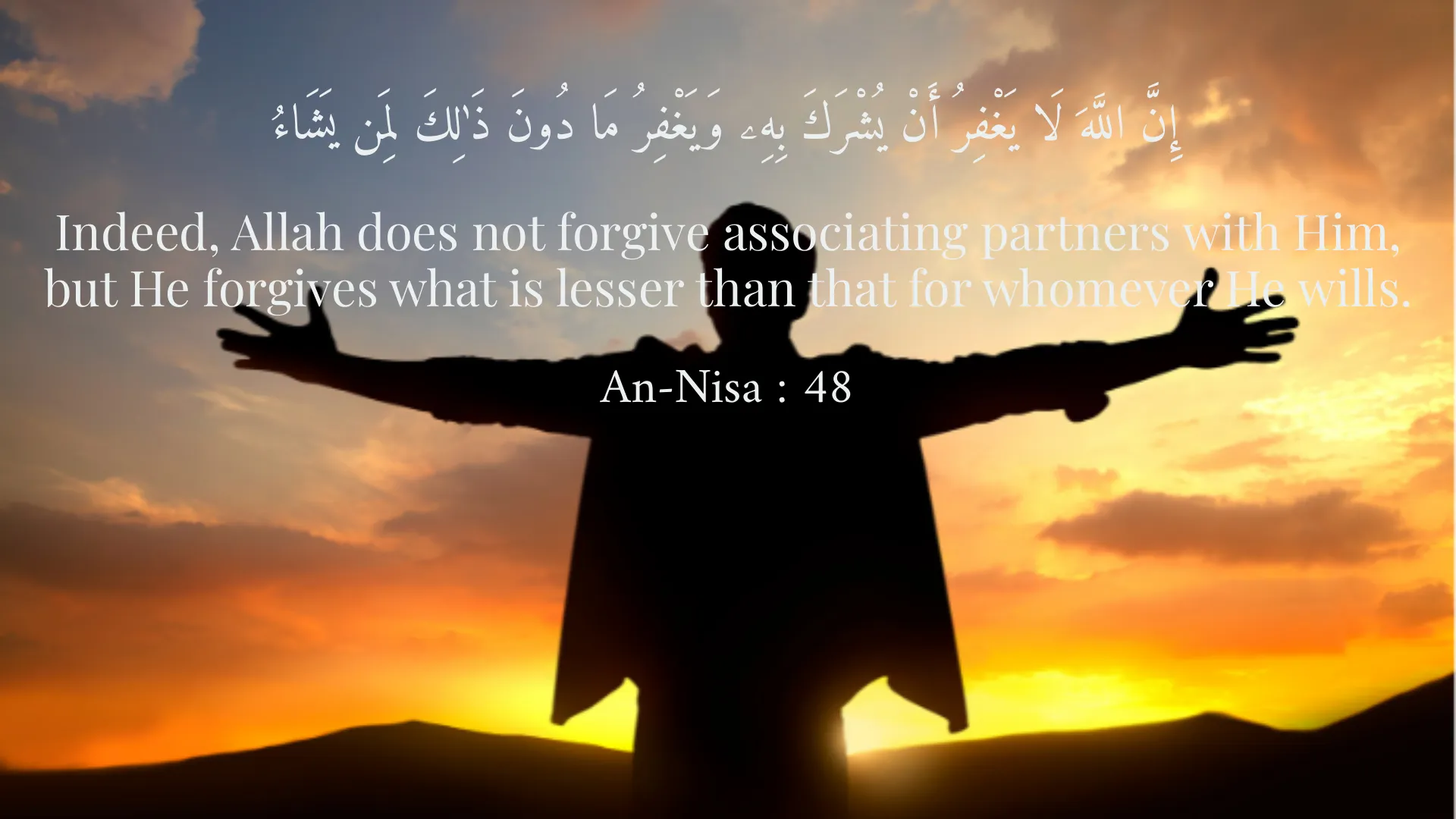
إِنَّ اللَّهَ لَا يَغْفِرُ أَنْ يُشْرَكَ بِهِۦ وَيَغْفِرُ مَا دُونَ ذَٰلِكَ لِمَن يَشَاءُ
Indeed, Allah does not forgive associating partners with Him, but He forgives what is lesser than that for whomever He wills.
An-Nisa : 48
يَا أَيُّهَا الَّذِينَ آمَنُوا اجْتَنِبُوا كَثِيرًا مِّنَ الظَّنِّ ۚ إِنَّ بَعْضَ الظَّنِّ إِثْمٌ
O you who have believed, avoid much [negative] assumption. Indeed, some assumption is sin.
Al-Hujurat : 12
وَلَا تَأْكُلُوا أَمْوَالَكُمْ بَيْنَكُمْ بِالْبَاطِلِ
And do not consume one another's wealth unjustly.
Al-Baqarah : 188
Short Story
One day, a man named Hasan was sitting in the market, reflecting on his sins. He realized that many of his actions were far from pleasing Allah and that he needed to change. After contemplating the verses of the Quran about major sins, he decided that he would no longer engage in gossip and would be more mindful in his behaviors. Through these small changes, Hasan was able to uplift his spirit and find greater peace.