Quranic Answer
Muslims have multiple responsibilities towards society, deeply rooted in the teachings of the Holy Quran. These responsibilities encompass a range of actions and behaviors that are essential for creating a harmonious and prosperous community. The Quran serves as both a spiritual guide and a social framework, outlining clear directives on how Muslims should engage with one another and their surrounding environment. This article elaborates on these teachings and explores the significance of doing good deeds, giving charity, promoting goodness, and upholding the values of brotherhood and social justice. One of the fundamental tenets emphasized in the Quran is the importance of doing good deeds. As stated in Surah Al-Ma'idah, verse 2: 'And cooperate in righteousness and piety.' This particular verse highlights the obligation of Muslims to work together in fostering an environment where good is promoted and evil is discouraged. This sense of cooperation is essential in creating a virtuous community where members support one another to achieve collective goals. Acts of kindness, community service, and volunteerism are all encouraged, and serve to strengthen the bonds among individuals. When Muslims come together for a common good, they create a sense of belonging and shared purpose, which is vital for social cohesion. Moreover, the act of giving charity is deeply ingrained in Islamic teachings. Charity, or Zakat, is not merely an act of goodwill; it is a fundamental pillar of Islam. It signifies the duty of Muslims to assist those in need and to contribute to the welfare of society. In numerous verses, the Quran emphasizes helping the poor and the destitute, illustrating that aiding others is a means of purifying one's wealth. The act of giving is portrayed not only as a moral obligation but also as an opportunity for personal growth and spiritual elevation. By sharing their resources, Muslims cultivate empathy and compassion, fostering a culture of generosity and understanding. The Quran also calls upon Muslims to promote goodness while preventing wrongdoing. This balance between advocacy for virtue and the prevention of vice is vital for the maintenance of social justice. In Surah Al-Anfal, verse 72, Allah states: 'Indeed, those who have believed and emigrated and fought in the cause of Allah – they are the true believers.' This verse underscores the necessity of standing firm against injustice while striving for the betterment of society. Muslims are encouraged to speak out against oppression and to engage in actions that align with the principles of fairness and equity. When Muslims actively work toward social justice, they not only fulfill their religious duties but also contribute to the advancement of the communities in which they reside. Another critical aspect of a Muslim's responsibility towards society is the promotion of peace and love among fellow community members. In Surah Al-Hujurat, verse 10, it is mentioned: 'The believers are but brothers.' This verse serves as a reminder of the deep connections shared among Muslims, emphasizing the importance of brotherhood and solidarity. Muslims are urged to exhibit mutual love and support for one another, transcending personal conflicts and differences. By fostering strong relationships within the community, individuals can create bonds that contribute to a stable and loving society. Acts of forgiveness, tolerance, and understanding are essential in nurturing a harmonious environment where individuals can coexist peacefully. Moreover, the Quran does not only emphasize charity towards fellow Muslims but extends this principle to all of humanity. In several verses, the Quran encourages believers to act with kindness towards others, regardless of their faith or background. This principle of universal compassion is crucial in combating stereotypes and building bridges within diverse communities. By engaging with others in a spirit of generosity and respect, Muslims can serve as ambassadors of peace and goodwill, effectively dispelling misunderstandings about their faith and fostering greater acceptance. Furthermore, the Quran acknowledges the importance of individual rights and communal obligations. Muslims have rights, but so do others. As such, they are called to respect the rights of others, regardless of their beliefs. This respect for others' rights reinforces the idea that true faith goes hand in hand with justice and empathy. The Quranic teachings encourage Muslims to create an environment where everyone feels valued and respected, thus contributing to a more equitable society. By standing up for the rights of others, Muslims demonstrate their commitment to justice and equity, reinforcing the values that underpin their faith. Ultimately, the responsibilities outlined in the Quran highlight a comprehensive framework for community engagement and social responsibility. The teachings of Islam urge Muslims to go beyond personal piety and actively participate in building a better world. By performing good deeds, giving charity, promoting virtue, and upholding the principles of brotherhood and justice, Muslims are not only fulfilling religious obligations but also contributing significantly to the welfare of society. In doing so, they embody the essence of what it means to be a part of a moral and ethical community. In conclusion, the responsibilities of Muslims towards society as delineated in the Holy Quran encompass a holistic approach to community living. By embracing the core teachings that advocate for goodness, charity, and social justice, Muslims can play a vital role in enhancing the fabric of their communities. In a world that often experiences division and strife, these principles serve as a guiding light, encouraging individuals to unite for the common good. Thus, as individuals, and collectively as a community, Muslims are called to live by these values, ensuring that they contribute meaningfully and positively to society.
Related Verses
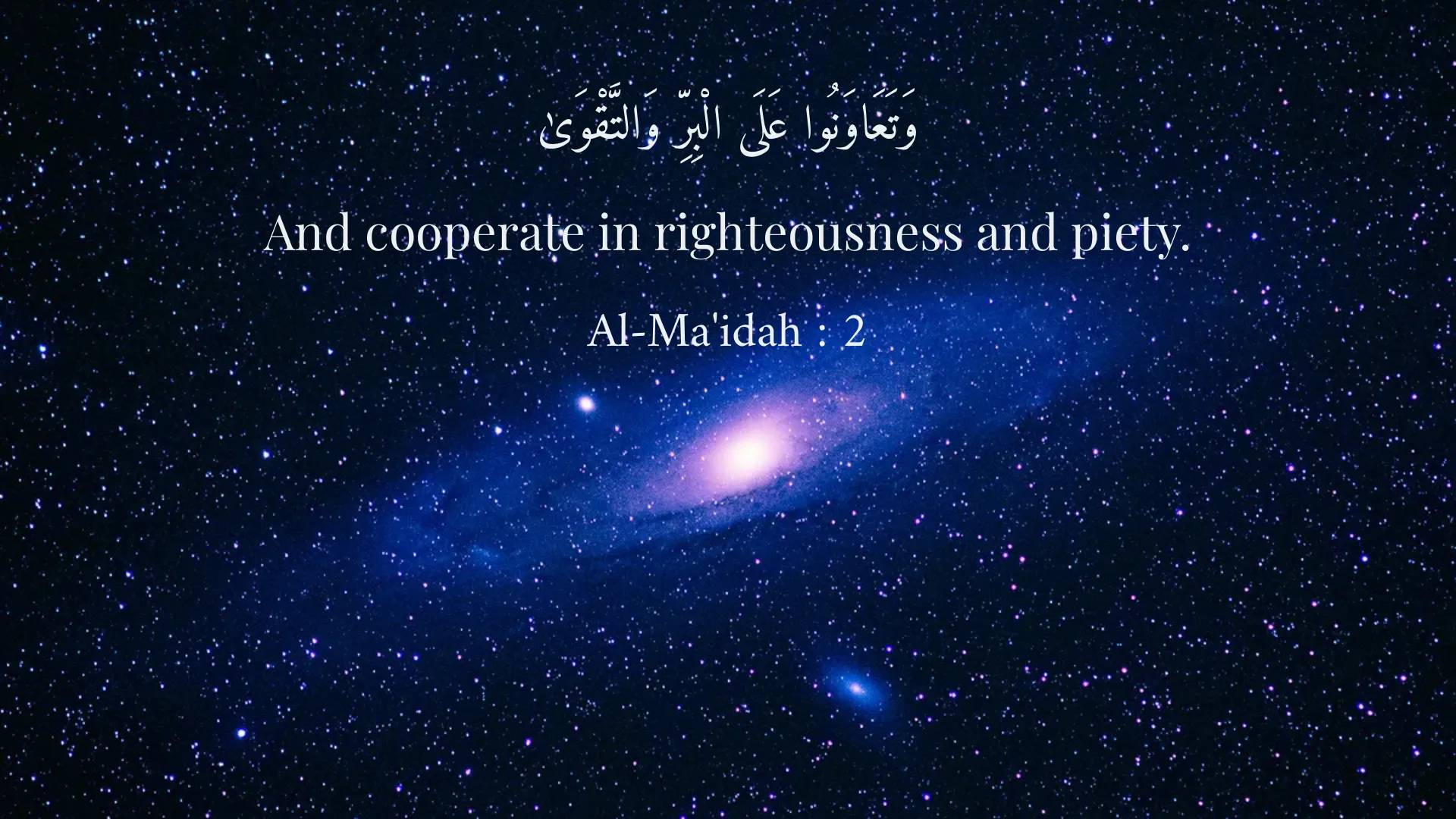
وَتَعَاوَنُوا عَلَى الْبِرِّ وَالتَّقْوَىٰ
And cooperate in righteousness and piety.
Al-Ma'idah : 2
إِنَّ الَّذِينَ آمَنُوا وَهَاجَرُوا وَجَاهَدُوا فِي سَبِيلِ اللَّهِ أُو۟لَـٰئِكَ هُمُ ٱلْمُؤْمِنُونَ حَقًّۭا
Indeed, those who have believed and emigrated and fought in the cause of Allah – they are the true believers.
Al-Anfal : 72
إنما المؤمنون إخوة
The believers are but brothers.
Al-Hujurat : 10
Short Story
One day, a young man named Amir was inspired by the verses of the Quran and thought about how he could serve his community. He decided to go help the needy by distributing warm meals once a week. Amir not only assisted the needy but also inspired his friends to join him in this effort. This small act led to significant changes in his community and fostered a spirit of solidarity and love.