Quranic Answer
The Holy Quran meticulously outlines the characteristics of a good and worthy leader, emphasizing moral and divine principles. These qualities are not exclusively meant for rulers and statesmen but are applicable to anyone who holds a position of responsibility and leadership at any level – be it in the family, workplace, or community. The Quran views leadership not merely as a position of power but as a profound trust and a divine responsibility that necessitates upholding the rights of individuals and maintaining piety (taqwa) towards God. Among the most prominent of these characteristics are justice, piety, consultation, trustworthiness, mercy, and patience, which will be elaborated upon to highlight the depth and breadth of the Quranic perspective on leadership. The first, and perhaps most crucial, characteristic is Justice and Fairness (Adl). The Quran explicitly commands believers to act justly in all circumstances, even towards adversaries. In Surah An-Nisa (4:58), Allah states: "Indeed, Allah commands you to render trusts to whom they are due and when you judge between people to judge with justice." This verse directly addresses leaders and rulers, obliging them to return trusts (including wealth, power, and responsibilities) to their rightful owners and to uphold justice in their judgments and decisions. Justice here means respecting the rights of all members of society, without discrimination based on race, class, religion, or gender. A just leader prioritizes public interest over personal or group interests and always bases decisions on truth and fairness. This not only contributes to societal stability and peace but also builds public trust and legitimizes governance. Justice is the foundational pillar of any society built upon divine principles, and leaders play a central role in establishing it. The second essential characteristic is Piety and God-consciousness (Taqwa). A virtuous leader constantly perceives God as the observer of their actions and does not transgress divine boundaries. Taqwa implies self-restraint and abstention from sin, both in private and public life. This quality ensures that the leader refrains from corruption, oppression, and abuse of power. A leader who practices taqwa understands that they are accountable not only to the people but also, and primarily, to Allah. This inner sense of responsibility compels them to always make the best decisions for the welfare and comfort of the people. In Surah Al-Ma'idah (5:8), Allah says: "Be just; that is nearer to righteousness. And fear Allah." This verse illustrates that justice and taqwa are inseparable; a leader with taqwa implements justice, and the implementation of justice, in turn, brings them closer to greater taqwa. A leader's piety prevents arrogance and pride, reminding them always that they are a servant of God. The third significant characteristic is Consultation (Shura) and utilization of collective wisdom. A good leader is not autocratic, making decisions without consulting others. On the contrary, the Quran instructs the Prophet Muhammad (PBUH), who is the unparalleled model of leadership, to engage in consultation. In Surah Al-Imran (3:159), it is stated: "and consult them in the matter. And when you have decided, then rely upon Allah." This divine command indicates that consultation not only leads to more refined decisions but also fosters a sense of participation and solidarity within the community. A leader who practices consultation respects the intellect of others, benefits from diverse experiences and knowledge, and thereby reduces the likelihood of human error. This characteristic symbolizes the leader's humility, as they do not consider themselves above the opinions of others, but rather utilize the intellectual capacities of society to advance common goals. The fourth crucial attribute is Trustworthiness (Amana). Leadership is a divine trust bestowed upon an individual to use it for the benefit and welfare of the general public. Trustworthiness is not limited to safeguarding people's wealth and property but also encompasses protecting their honor, dignity, rights, and human respect. A trustworthy leader never abuses their position for personal gain or nepotism and always strives to uphold public interests. They understand that their responsibility is a sacred duty that must be fulfilled with complete honesty and transparency. As mentioned in Surah An-Nisa (4:58), the rendering of trusts is emphasized, which includes the trust of leadership. Violation of this trust is considered treason against God and the people, carrying severe worldly and otherworldly consequences. The fifth characteristic is Mercy and Compassion (Rahmah and Shafaqah). Good leaders must not only be just but also kind and empathetic towards their people. The Holy Quran, in Surah Al-Imran (3:159), addresses the Prophet (PBUH): "So by mercy from Allah, [O Muhammad], you were lenient with them. And if you had been rude [in speech] and harsh in heart, they would have disbanded from about you." This verse highlights that gentleness, empathy, and compassion are factors that attract people and foster affection among them. A leader should not deal with people harshly or mercilessly but should understand their needs and problems and seek compassionate solutions. This quality builds trust between the people and their leader, encouraging cooperation, which in turn smooths the path for societal progress and development. The sixth characteristic is Patience and Steadfastness (Sabr and Istiqamah) in the face of difficulties and challenges. The path of leadership often involves numerous hardships, including opposition, crises, and pressures. A good leader is one who remains patient and steadfast on this path, not faltering in the face of adversity. By relying on Allah, they utilize their abilities and their team's capabilities, learning from setbacks. This steadfastness not only empowers the leader but also instills a spirit of hope and resilience in the people. The Quran repeatedly emphasizes the importance of patience, considering it a quality of true believers. Finally, a good leader in the Quran is an individual who possesses sufficient Knowledge and Wisdom (Ilm and Hikmah) to manage affairs. They must be capable of analyzing complex issues, anticipating the consequences of decisions, and providing appropriate solutions. This knowledge and wisdom are not merely theoretical but include deep insight and foresight regarding social, economic, and political matters. Leadership without sufficient knowledge and awareness can lead to misguided decisions and severe harm to society. Therefore, leaders must always strive to acquire knowledge and enhance their insight. In summary, the Quran presents a comprehensive and elevated model of leadership that transcends mere power and position. This model is built upon divine and moral values and includes characteristics such as justice, piety, consultation, trustworthiness, mercy, patience, and knowledge and wisdom. Muslim leaders, by emulating these Quranic teachings and the practice of the Prophet Muhammad (PBUH), can build healthy, progressive societies based on human and divine values. These characteristics are vital not only for worldly success but also for salvation in the hereafter, as every leader is ultimately accountable to Allah for their actions.
Related Verses
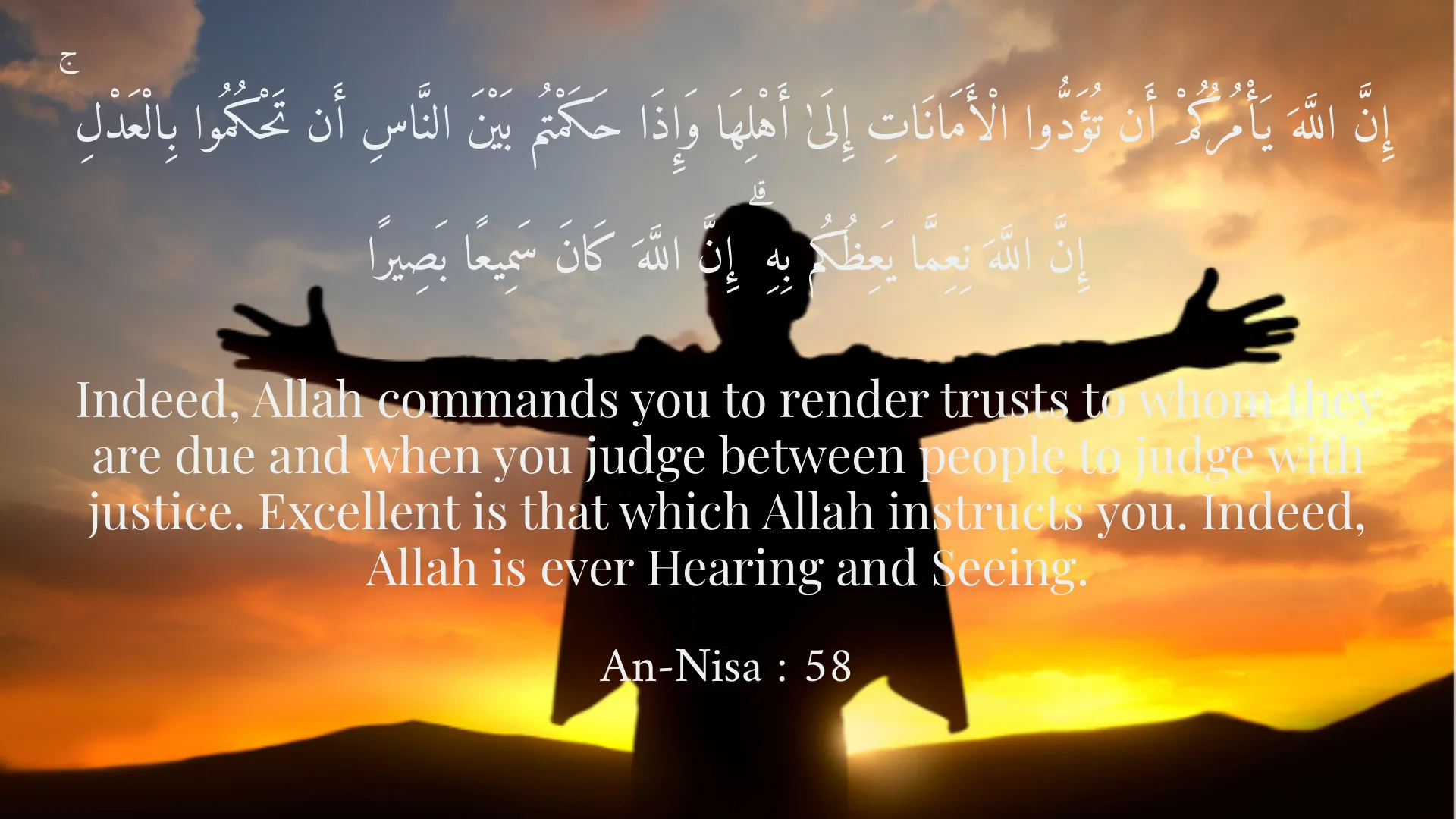
إِنَّ اللَّهَ يَأْمُرُكُمْ أَن تُؤَدُّوا الْأَمَانَاتِ إِلَىٰ أَهْلِهَا وَإِذَا حَكَمْتُم بَيْنَ النَّاسِ أَن تَحْكُمُوا بِالْعَدْلِ ۚ إِنَّ اللَّهَ نِعِمَّا يَعِظُكُم بِهِ ۗ إِنَّ اللَّهَ كَانَ سَمِيعًا بَصِيرًا
Indeed, Allah commands you to render trusts to whom they are due and when you judge between people to judge with justice. Excellent is that which Allah instructs you. Indeed, Allah is ever Hearing and Seeing.
An-Nisa : 58
فَبِمَا رَحْمَةٍ مِّنَ اللَّهِ لِنتَ لَهُمْ ۖ وَلَوْ كُنتَ فَظًّا غَلِيظَ الْقَلْبِ لَانفَضُّوا مِنْ حَوْلِكَ ۖ فَاعْفُ عَنْهُمْ وَاسْتَغْفِرْ لَهُمْ وَشَاوِرْهُمْ فِي الْأَمْرِ ۖ فَإِذَا عَزَمْتَ فَتَوَكَّلْ عَلَى اللَّهِ ۚ إِنَّ اللَّهَ يُحِبُّ الْمُتَوَكِّلِينَ
So by mercy from Allah, [O Muhammad], you were lenient with them. And if you had been rude [in speech] and harsh in heart, they would have disbanded from about you. So pardon them and ask forgiveness for them and consult them in the matter. And when you have decided, then rely upon Allah. Indeed, Allah loves those who rely [upon Him].
Al-Imran : 159
يَا أَيُّهَا الَّذِينَ آمَنُوا كُونُوا قَوَّامِينَ لِلَّهِ شُهَدَاءَ بِالْقِسْطِ ۖ وَلَا يَجْرِمَنَّكُمْ شَنَآنُ قَوْمٍ عَلَىٰ أَلَّا تَعْدِلُوا ۚ اعْدِلُوا هُوَ أَقْرَبُ لِلتَّقْوَىٰ ۖ وَاتَّقُوا اللَّهَ ۚ إِنَّ اللَّهَ خَبِيرٌ بِمَا تَعْمَلُونَ
O you who have believed, be persistently standing firm for Allah, witnesses in justice, and do not let the hatred of a people prevent you from being just. Be just; that is nearer to righteousness. And fear Allah. Indeed, Allah is Acquainted with what you do.
Al-Ma'idah : 8
Short Story
It is narrated that there was once a powerful king, yet at times he was caught in the web of his own pride. One day, while hunting, he became separated from his entourage and lost his way. Thirsty and weary, he came upon a kind shepherd who, unaware of his identity, warmly hosted him. Observing the shepherd's contentment and simple wisdom, the king reflected within himself that leadership was not just about power, but about service, humility, and compassion for even the humblest of subjects. When he returned to his palace, he was a changed man, and from then on, he ruled with greater mercy and justice, always remembering the simple shepherd's kindness as a reminder of his true duty.