Quranic Answer
Taqwa in the Quran represents a profound and multifaceted concept that underscores the importance of fearing Allah and steering clear of wrongful acts. It is recognized as one of the fundamental principles of faith and Islamic life, acting as a cornerstone for the believer’s interaction with both their Lord and the broader world. The Quran eloquently frames this concept, imbuing it with a sense of urgency and necessity for all who seek a righteous path. In Surah Al-Baqarah, verses 2 and 3, Allah says: "This is the Book about which there is no doubt, a guidance for those conscious of Allah.” This statement underscores the cornerstone of Islamic belief—that the Quran is the ultimate source of guidance for the believers. Here, the term ‘conscious of Allah,’ or in Arabic, ‘mutaqeen,’ highlights the aspect of mindfulness that taqwa embodies. It encapsulates an awareness of Allah’s presence, which fosters a lifestyle committed to moral integrity and spiritual growth. At its essence, taqwa acts as a powerful shield, protecting individuals from sins and undesirable behaviors. By establishing a constant reminder of Allah's greatness and justice in one’s life, believers are encouraged to cultivate qualities that align with faith. This protective aspect is not merely individualistic but also instrumental in shaping community dynamics. In Surah Al-Imran, verse 133, Allah states: "And hasten to forgiveness from your Lord and a Garden as wide as the heavens and the earth, prepared for the righteous.” The imagery used here is evocative, portraying the rewards that await those who embrace taqwa. It prompts believers to actively pursue Allah’s pleasure and engage in righteous deeds while avoiding actions that may lead to divine retribution. Moreover, the manifestations of taqwa extend beyond individual behavior; they also encompass one's social interactions and ethical conduct. A practical demonstration of taqwa in daily life is found in the commitment to doing good to others and exhibiting kindness in behavior. The ethical implications of taqwa manifest in one’s responsibilities towards family, friends, and the community at large. In Surah Al-Mu’minun, verse 9, it is mentioned that "And they who are to their trusts and their covenant are [constantly] attentive.” This verse draws attention to the importance of trustworthiness—a hallmark of noble character. Those who embody taqwa demonstrate reliability and respect for agreements, fostering an atmosphere of trust and cooperation in society. Taqwa, as a foundational principle, serves as a guiding light toward goodness and virtue. Its manifestations are intertwined with every aspect of life—from personal ethics to social interactions. When one cultivates taqwa, they nurture a sense of integrity and moral responsibility that transcends personal gain. Consequently, the individual becomes an agent of change, positively impacting their surroundings and encouraging others to reflect upon their own conduct. Furthermore, understanding taqwa leads to a deeper exploration of spiritual development. It compels believers to contemplate their relationship with Allah and recognize the consequences of their actions. The Quran encourages regular self-reflection and self-assessment; taqwa inspires Muslims to evaluate their deeds, thinking broadly about their effects on both themselves and others. This consciousness leads to a cycle of continuous improvement, where individuals strive to heighten their spiritual state and reinforce their commitment to faith. In the social context, practicing taqwa fosters compassion and empathy among community members. In an age marked by divisions and conflicts, embracing the principles of taqwa can bridge gaps and mitigate hostilities. When individuals are mindful of their actions and the impact they have on others, they cultivate an environment rooted in respect, understanding, and harmony. The virtues encouraged by taqwa, such as generosity and forgiveness, become essential tools in community building and conflict resolution. Moreover, Islamic teachings emphasize that taqwa must not be seen in isolation; it is often accompanied by other virtues like patience (sabr), gratitude (shukr), and humility (tawadu). These interconnected qualities elevate the importance of taqwa by integrating it within a broader framework of moral conduct and spiritual excellence. Thus, the application of taqwa is not only a personal mandate; it becomes a collective responsibility as well. Lastly, the role of taqwa transcends this worldly life and has profound implications for the hereafter. Islam teaches that taqwa is the path to paradise, a state of everlasting bliss that awaits those who faithfully adhere to Allah’s commands. The Quran makes it explicitly clear that those who embody taqwa will find an eternal abode in a Garden filled with ultimate beauty and satisfaction. This spiritual incentive further motivates believers to integrate taqwa into their daily lives, as every act driven by it is seen not only as compliance with divine commandments but also as an investment in their eternal success. In conclusion, taqwa in the Quran is a central theme that emphasizes a life lived in conscious awareness of Allah, advocating against wrongful acts while promoting ethical behavior and community welfare. It manifests in various aspects of life—spiritual, ethical, and social—guiding believers towards a path of righteousness and virtue. By embracing taqwa, individuals not only elevate their own lives but also contribute positively to the society around them, creating a legacy of goodness and faithfulness that resonates through generations. Thus, taqwa serves as both a personal and collective guiding principle, reinforcing the importance of faith in the everyday lives of Muslims.
Related Verses
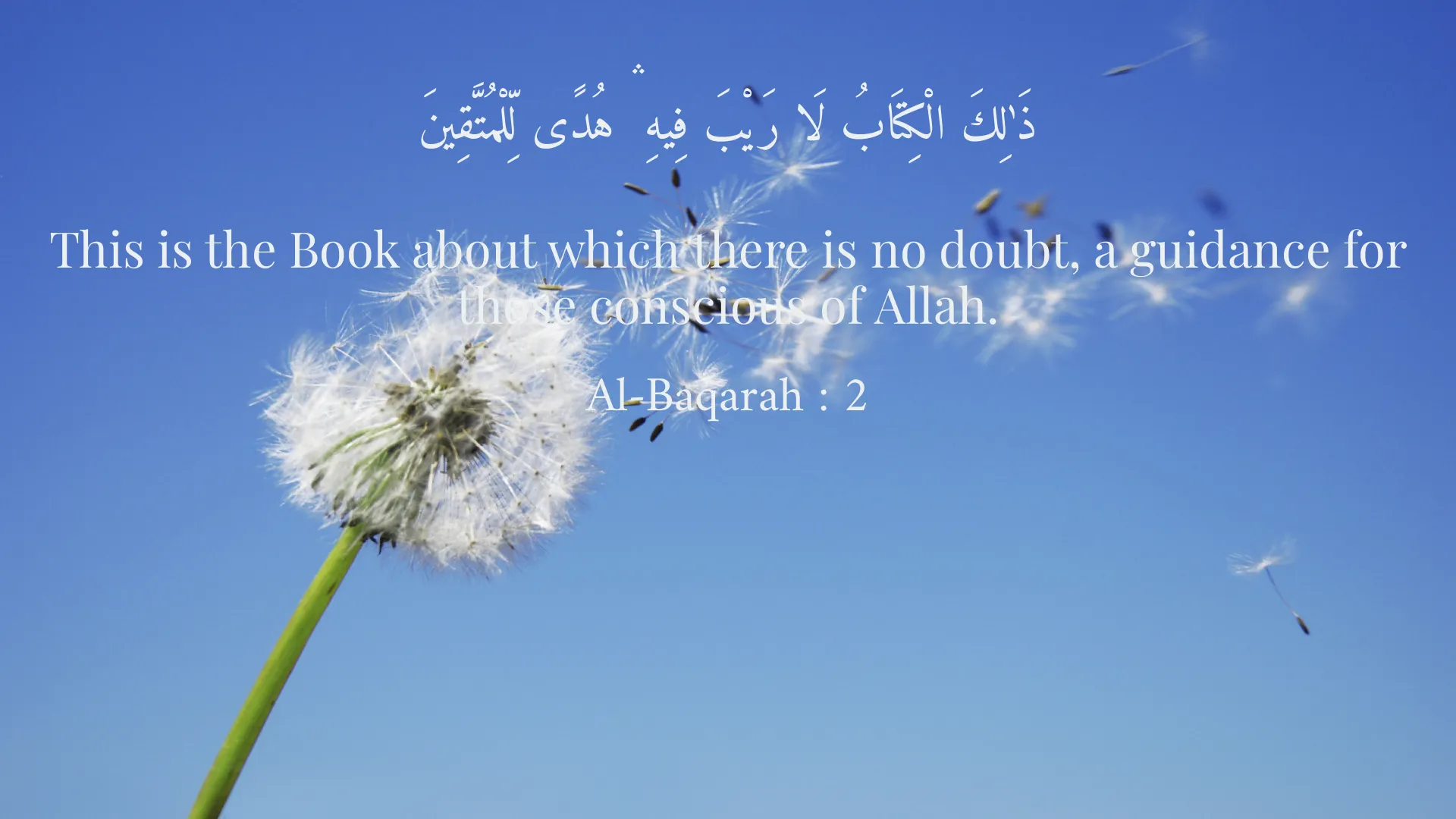
ذَٰلِكَ الْكِتَابُ لَا رَيْبَ فِيهِ ۛ هُدًى لِّلْمُتَّقِينَ
This is the Book about which there is no doubt, a guidance for those conscious of Allah.
Al-Baqarah : 2
وَسَارِعُوا إِلَى مَغْفِرَةٍ مِّن رَّبِّكُمْ وَجَنَّةٍ عَرْضُهَا السَّمَاوَاتُ وَالْأَرْضُ أُعِدَّتْ لِلْمُتَّقِينَ
And hasten to forgiveness from your Lord and a Garden as wide as the heavens and the earth, prepared for the righteous.
Al-Imran : 133
وَالَّذِينَ هُمْ لِأَمَانَاتِهِمْ وَأَهْلِهِمْ رَاعُونَ
And they who are to their trusts and their covenant are [constantly] attentive.
Al-Mu'minun : 9
Short Story
One day, a young man named Hossein was sitting in a park on a hot summer day, contemplating his future. He always felt like something was missing. Suddenly, an old man sat next to him and asked, "Do you know what taqwa is?" Hossein replied, "No." The old man started explaining that taqwa means following the principles and laws of God and staying away from sin. He mentioned that when we live with taqwa, we will feel peace and tranquility. Hossein listened intently and decided that from that day on, he would pay more attention to his taqwa and treat others with kindness and goodness.