Quranic Answer
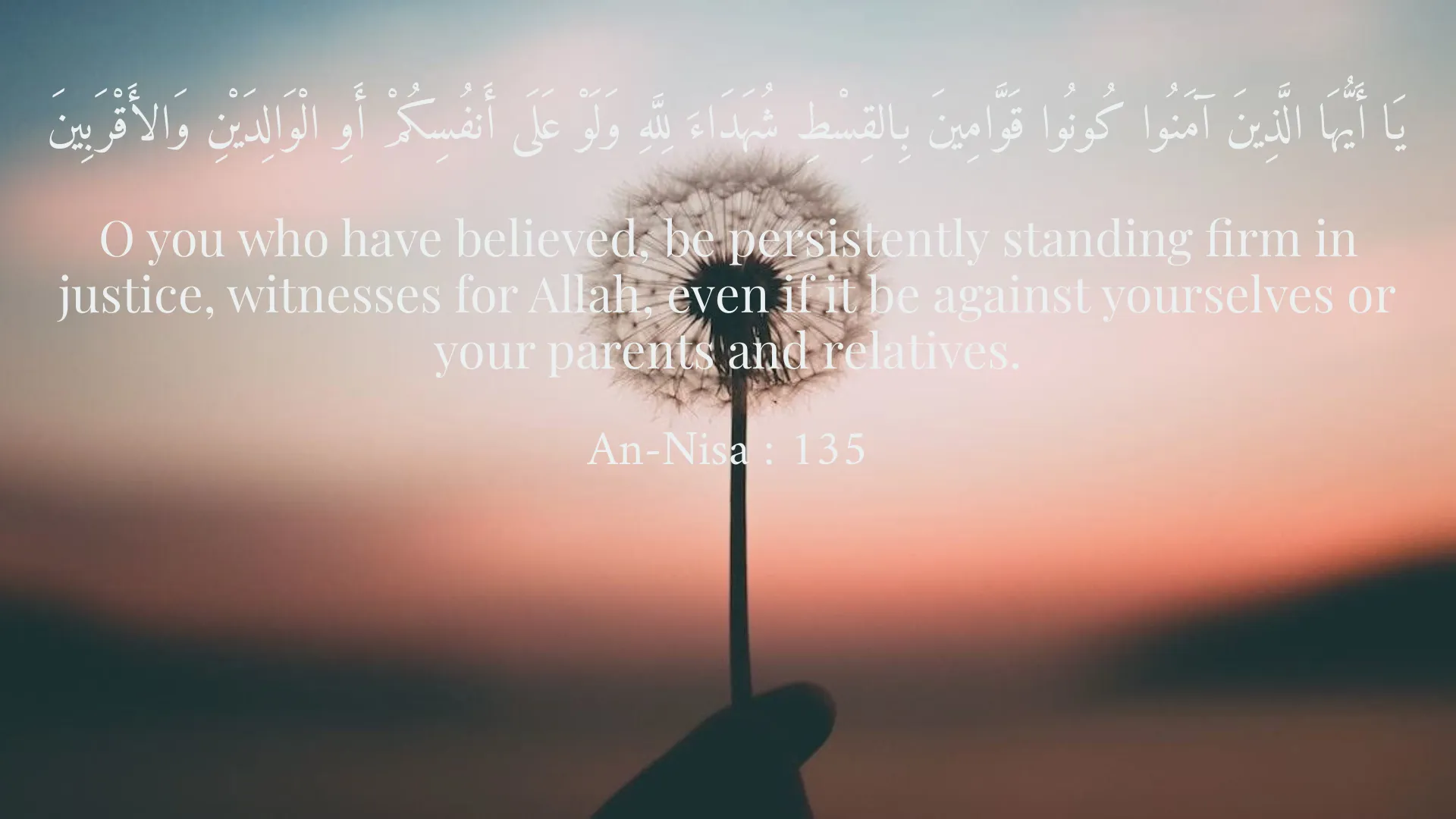
The Holy Quran, revered as the divine word of God in Islam, underscores the paramount importance of social justice in numerous verses. Justice transcends being merely a moral virtue; rather, it forms the very foundation of a healthy civilization and society. Throughout the Quran, social justice is promoted as an essential element for peace, harmony, and solidarity amongst individuals. In a world often marked by inequality and conflict, the principles enshrined in the Quran resonate with the aspirations for a just and equitable society. One of the most compelling verses regarding justice is found in Surah An-Nisa (Chapter 4), verse 135, where Allah commands: 'O you who have believed, be persistently standing firm in justice, witnesses for Allah, even if it be against yourselves or your parents and relatives.' This remarkable verse lays the groundwork for a comprehensive understanding of justice in Islam. It emphasizes that the pursuit of justice should remain unwavering, regardless of personal circumstances, interests, or familial ties. This directive reinforces the notion that personal relationships and emotional connections should never overshadow the obligation to uphold fairness and truth. In a society where biases and favoritism often prevail, this teaching encourages Muslims to prioritize justice above all else, fostering an environment where rights are respected and inequities are addressed. Moreover, the Quran addresses the potential influence of societal feelings, particularly in Surah Al-Ma'idah (Chapter 5), verse 8, which states: 'O you who have believed, be persistently standing firm in justice, witnesses for Allah. And do not let the hatred of a people prevent you from being just.' This verse serves as a profound reminder that one's emotional responses and affiliations should not compromise their commitment to justice. In times of conflict, it is easy for individuals to succumb to biases fueled by animosity towards certain groups or individuals. However, Islamic teachings call for maintaining integrity and fairness, even in the face of personal prejudices. This enduring call to justice creates a more balanced society where the elevation of mutual respect and compassion supersedes ongoing divisions. Social justice, as articulated in the Quran, extends beyond mere tolerance; it embodies an active commitment to ensuring the rights of others are safeguarded and promoted. The theme runs throughout the sacred text, demonstrating that justice cannot be an abstract ideal; it must be woven into the fabric of social life. The Quran encourages Muslims to take up the mantle of responsibility in advocating for the common good, thereby creating a collective mandate for justice. The pursuit of justice is intricately tied to the welfare of the community, which reveals a fundamental interconnectedness within the social tapestry of Islam. Furthermore, the Quran's teachings highlight different dimensions of social justice, including economic justice, political fairness, and social equity. The emphasis on fair distribution of wealth and resources is a crucial part of establishing social justice. The principle of preventing exploitation and ensuring access to essential resources for all members of society underscores the divine imperative of social responsibility. Economic justice is vital in creating equitable opportunities for every individual, allowing them to thrive and contribute positively to society. It is this extension of justice that forms the backbone for creating robust communities where every member feels valued and has the potential to succeed. Islam also emphasizes the importance of social equity, where everyone, irrespective of race, social status, or economic background, is entitled to equal treatment under the law. The Quran condemns any form of discrimination, urging believers to strive towards a society where the dignity and rights of every individual are respected. This vision of social equity aligns with modern human rights principles and reinforces the relevance of the Quran’s teachings in today’s global landscape. In light of these teachings, it can be argued that social justice is not merely a peripheral aspect of Islam but a central tenet essential for maintaining a cohesive society. The Quran delineates the responsibilities of religious leaders, community members, and individuals alike in implementing justice. This holistic approach to social justice reflects the necessity of collective participation in pursuing a vision for a just and thriving society. Importantly, the call for social justice in the Quran is timeless—its principles resonate across generations and cultures, urging humanity to confront social injustices and seek transformative change. As the world grapples with various forms of inequality, the Quran’s exhortations remain profoundly relevant, encouraging individuals to advocate for a more just world amidst the challenges that they face. In conclusion, the significance of social justice in the Quran cannot be understated. It serves as a moral compass for Muslims, providing guidance on how to navigate complex social dynamics with integrity and fairness. The Quran places civilizational responsibilities upon believers to uphold justice, urging them to transcend personal biases and ensure the rights of all individuals are recognized and upheld. Through the lens of the Quran, social justice emerges not solely as an ideal but as a collective obligation deeply rooted in the pursuit of societal harmony and well-being. As we reflect on these teachings, we are called to embody the principles of justice in our daily lives, contributing toward the creation of a more equitable world for all.
Related Verses
يَا أَيُّهَا الَّذِينَ آمَنُوا كُونُوا قَوَّامِينَ بِالقِسْطِ شُهَدَاءَ لِلَّهِ وَلَوْ عَلَى أَنفُسِكُمْ أَوِ الْوَالِدَيْنِ وَالأَقْرَبِينَ
O you who have believed, be persistently standing firm in justice, witnesses for Allah, even if it be against yourselves or your parents and relatives.
An-Nisa : 135
يَا أَيُّهَا الَّذِينَ آمَنُوا كُونُوا قَوَّامِينَ لِلَّهِ شُهَدَاءَ بِالْقِسْطِ وَلَا يَجْرِمَنَّكُمْ شَنَآنُ قَوْمٍ عَلَى أَلَّا تَعْدِلُوا
O you who have believed, be persistently standing firm in justice, witnesses for Allah. And do not let the hatred of a people prevent you from being just.
Al-Ma'idah : 8
Short Story
Once upon a time, a man named Ahmad lived in the city market. He always witnessed numerous inequalities and injustices around him. One day, he decided to tell himself that the only way to bring about change was to act on justice and fairness. Ahmad began helping the poor and those whose rights had been violated. After a while, others joined him, and a more just community was formed. Ahmad realized that the beginning of every change starts with an individual, and following the verses of the Quran could also be a path to achieving social justice.