Quranic Answer
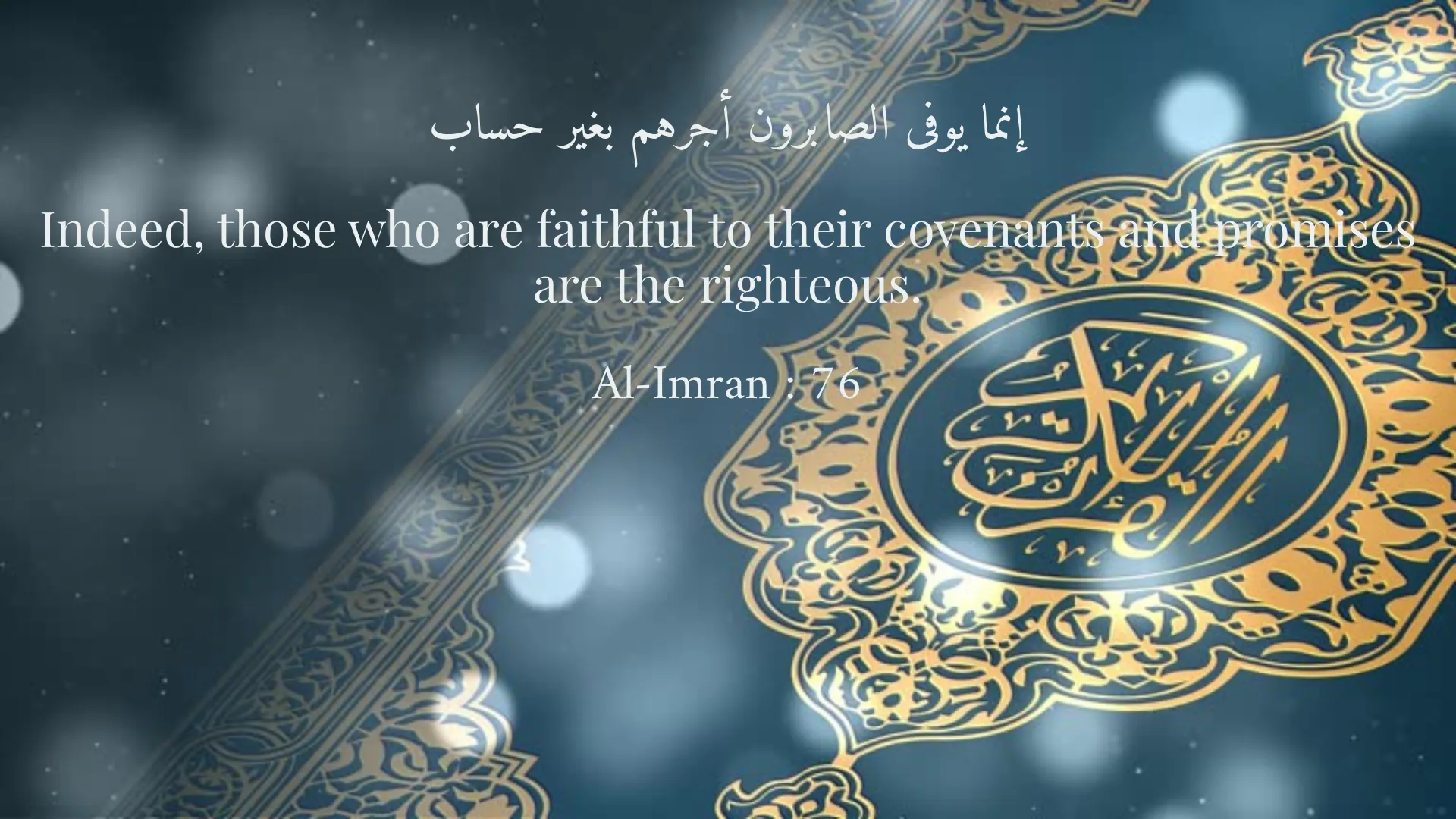
The Holy Quran serves as a guiding light for millions of Muslims around the world, offering insights not just on spiritual matters but also on the principles of ethical living, including the important theme of loyalty. Loyalty in the context of the Quran is not limited to mere allegiance to God and the Prophet; rather, it infiltrates various layers of human interaction, emphasizing the importance of fidelity in both divine and earthly matters. In essence, loyalty becomes a cornerstone, intricately woven into the fabric of daily life, relationships, and one's spiritual journey. At its core, loyalty to Allah is exalted as the highest form of devotion. This idea is beautifully encapsulated in Surah Al-Imran, verse 76: 'Indeed, those who are faithful to their covenants and promises are the righteous.' This emphasizes a duality of loyalty: first, to the Creator, and secondly, to the commitments we make in our lives. The term 'covenants' here refers not only to formal agreements made between individuals but also to the promises made in the spiritual or religious context, such as the agreements between God and humanity regarding guidance, morality, and behavioral expectations. Being righteous necessitates fulfilling these covenants, making loyalty a prerequisite for a faith-driven life. Expanding on this idea, the Quran does not isolate loyalty to God; it extends its meaning to human relationships, hinting at the interconnectedness of both realms. In interpersonal dealings, loyalty can translate into commitment and faithfulness to friends, family, and societal agreements. This is crucial because it fosters trust within communities, forming the very foundation upon which society itself is built. When individuals are loyal to their promises and honor their commitments, society thrives, and social contracts are fulfilled, leading to a harmonious coexistence. The Quran further elaborates on this theme of loyalty in Surah Al-Anfal, verse 27: 'O you who have believed, fulfill [all] contracts. And do not betray Allah and the Messenger.' Here, betrayal is explicitly condemned, widening the scope of loyalty. Betrayal disrupts the bonds of fidelity and trust essential for relationships to flourish, whether they be divine or human. This verse underlines that loyalty is not just a passive belief but an active commitment to keeping one's word and honoring obligations, whether they are religious, legal, or personal. The significance of loyalty and trustworthiness is also well documented in the Hadith literature, further emphasizing its primacy in Islam. The Prophet Muhammad (peace be upon him) has been quoted as saying, 'When a man tells something and he intends it to be a trust, then it is a trust.' This reinforces that confidentiality and fidelity to others' expectations are paramount, indicating that loyalty is not simply a transaction but a valuable trait that dictates character. Loyalty cultivates respect and integrity, which are essential in all types of relationships. Moreover, the social contract explicitly laid out by the Quran reflects the necessity of loyalty in governance, community living, and coexistence. Allah's commands encourage cooperation, social bonds, and alliances between individuals, which are rooted in mutual respect and loyalty. Today, many of the world's conflicts stem from broken promises, disloyalty, and deceit, showcasing that loyalty is more than a religious ideal; it's a societal need. Loyalty, as emphasized in the Quran, is also indicative of one's character and faith. In Islam, loyalty is not merely about allegiance to a leader, ideology, or belief system; it also pertains to loyalty to one's principles – faith in justice, compassion, and morality. As Muslims navigate their daily lives, instilling the values of loyalty aids in the development of a just and equitable society, where honesty and reliability are prioritized. In light of these Quranic principles of loyalty, one can derive profound implications relevant to contemporary challenges. In a world often marked by division, mistrust, and betrayal, the lessons imparted within these verses can serve as a significant remedy for restoring faith in social contracts and relationships. By embracing loyalty in every facet of life, individuals cultivate an environment of trust, understanding, and ethical integrity. Ultimately, the Quran's teachings present loyalty as an integral part of both our relationship with God and among ourselves. The call for loyalty is not just a religious directive but rather an invitation to create a culture of trust, sincerity, and commitment, essential for both personal growth and societal harmony. As we strive to embody these values, we contribute to the collective moral foundation laid down in Islamic teachings, ensuring that acts of loyalty resonate across generations. In conclusion, the Holy Quran places a significant emphasis on loyalty – a often overlooked yet fundamental aspect of human interactions and divine obedience. It reveals that loyalty is not merely allegiance but a multifaceted trait that encompasses faithfulness, trustworthiness, and an unwavering commitment to upholding one's promises and agreements. Enshrined in both religious and communal tenets, loyalty emerges as an essential pillar of a fulfilling faith-driven life, guiding us toward righteousness and integrity in our dealings with both Allah and one another. As we reflect on the teachings of the Quran, may we strive to embody such loyalty in our daily lives, cultivating not only our relationship with the Divine but also nurturing the bonds we share with fellow human beings.
Related Verses
إنما يوفى الصابرون أجرهم بغير حساب
Indeed, those who are faithful to their covenants and promises are the righteous.
Al-Imran : 76
يا أيها الذين آمنوا أوفوا بالعقود ولا تخونوا الله ورسوله
O you who have believed, fulfill [all] contracts. And do not betray Allah and the Messenger.
Al-Anfal : 27
Short Story
One day, a young man named Hassan decided to embody loyalty in his life. While reading the Quran, he came across verses about loyalty. From that day on, Hassan made an effort to be loyal to his family and friends, fulfilling all his promises and commitments diligently. Gradually, he noticed that loyalty not only strengthened his relationships but also brought him a greater sense of peace and satisfaction.