Quranic Answer
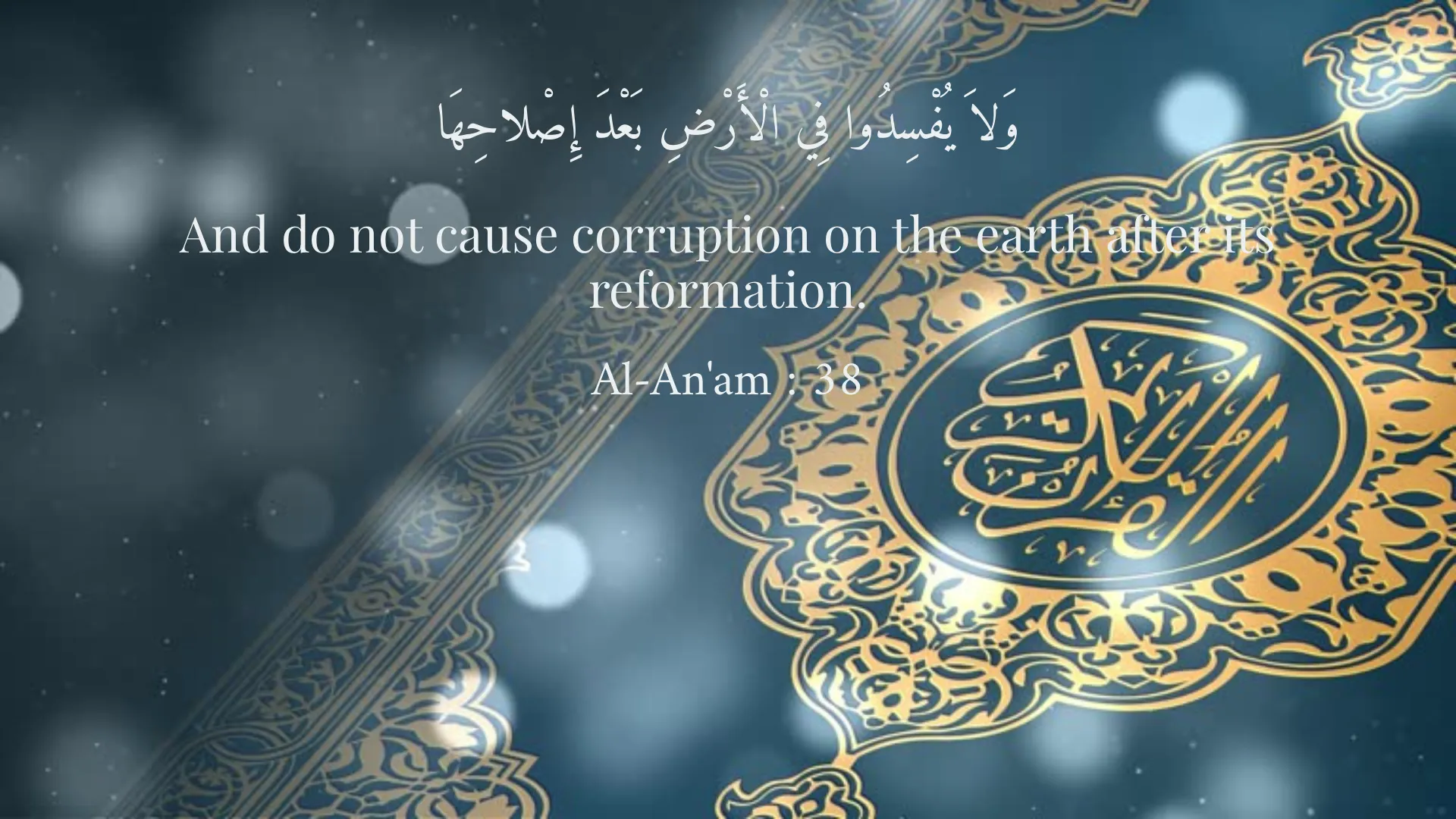
The Holy Quran is not only a spiritual guide for Muslims around the world, but it also serves as a comprehensive manual for ethical living, encompassing all aspects of life. Among these aspects, the Quran puts considerable emphasis on the significance of nature and the environment, establishing a fundamental connection between faith and ecological responsibility. In these modern times, as we face environmental challenges such as climate change, pollution, and loss of biodiversity, the guiding principles and verses from the Quran offer profound insights into our duties toward the earth and its resources. One of the pivotal messages found in the Quran regarding our relationship with the environment is presented in Surah Al-An'am, verse 38, where Allah states: "And do not cause corruption on the earth after its reformation." This verse encapsulates the essence of ecological balance and the need to preserve created environments. Corruption and destruction, as indicated, should be avoided at all costs, particularly after recognizing the potential of the earth's resources. This verse reinforces the notion that we, as the crown of creation, have a moral obligation to act responsibly and to protect our surroundings from degradation. The imperative to avoid causing pollution, destruction, or waste is thus rooted deeply in the religious tradition, making the act of preserving the environment not just a personal choice, but a divine command. Delving further into the Quran, in Surah Al-Baqarah, verse 164, Allah draws our attention to the wonders of creation, saying: "Indeed, in the creation of the heavens and the earth, and the alternation of the night and the day are signs for those of understanding." This verse urges believers to reflect and ponder the signs of Allah's creativity in nature and the cosmos. The profound beauty and intricate balance of the natural world reveal a higher purpose and order, calling for our respect and stewardship. By encouraging contemplation of these divine signs, the Quran invites us not just to appreciate nature aesthetically but also to acknowledge our role within it, as custodians rather than conquerors. The connection between spirituality and environmental protection is further highlighted when considering the broader ethical implications of ecological degradation. Protecting the environment emerges as both a religious and humanitarian duty; it is not merely about preserving beautiful landscapes but rather about ensuring the survival and well-being of all living beings. Natural resources such as water, soil, forests, and biodiversity must be respected and preserved for both current and future generations. Indeed, the Quran speaks to this responsibility; failing to honor our duty to the planet jeopardizes not only our health but also the very foundation of life for those who will come after us. In Surah Ar-Ra'd, verse 11, Allah posits: "Indeed, Allah does not change the condition of a people until they change what is within themselves." This verse underlines the idea that personal and collective transformation is essential for fostering a sustainable environment. It implies that our relationship with nature reflects our inner selves; as we nurture positive traits such as compassion, mindfulness, and responsibility, we simultaneously foster a healthier relationship with the environment. This connection indicates that environmental change begins with individual accountability, underlining that the first step towards environmental stewardship is personal reflection and behavioral modification. As custodians of the environment, Muslims are called to practice moderation and sustainability following the principles outlined in the Quran. This encourages a lifestyle that minimizes waste and advocates for the responsible consumption of resources. The idea of not causing corruption on earth can be seen in practical actions such as recycling, conserving energy, protecting natural habitats, and advocating for policies that enhance environmental health. Each individual's actions, irrespective of their scale, contribute to the collective effort of preserving the planet. Furthermore, education plays a vital role in fostering an environmentally conscious society. By integrating lessons from the Quran about nature into educational curricula, communities can nurture a generation that reveres and values the environment, understanding that their well-being is intertwined with the health of the planet. Collaboration among community members, governments, and organizations is also imperative for effective environmental protection. The Quran is reflective of broader social justice themes, emphasizing the importance of community welfare alongside individual responsibility. Allies must unite in tackling environmental issues such as climate change and resource management. Initiatives should target not only preserving the current environment but also nurturing it so that future generations can benefit from a prosperous and sustainable planet. In summary, the messages within the Holy Quran elevate the importance of nature and environmental stewardship to a divine obligation. Reflecting upon the verses and teachings of the Quran fosters a deeper understanding of our interconnectedness with the earth and urges us towards responsible behavior. The call to protect our environment resonates with essential Islamic principles, interweaving faith with action. As we heed these messages, we take a significant step toward creating a sustainable future, one that represents not just the ideals of our present selves but also safeguards for generations unchecked by environmental crisis. Through such commitment, we honor the Quran’s teachings and acknowledge our active role as protectors of this planet, ensuring a legacy of respect, sustainability, and harmony with nature.
Related Verses
وَلاَ يُفْسِدُوا فِي الْأَرْضِ بَعْدَ إِصْلاحِهَا
And do not cause corruption on the earth after its reformation.
Al-An'am : 38
إن في خلق السماوات والأرض واختلاف الليل والنهار لآيات لأولي الألباب
Indeed, in the creation of the heavens and the earth and the alternation of the night and the day are signs for those of understanding.
Al-Baqarah : 164
إن الله لا يغير ما بقوم حتى يغيروا ما بأنفسهم
Indeed, Allah does not change the condition of a people until they change what is within themselves.
Ar-Ra'd : 11
Short Story
One day, a man named Jalal went to the fields around his town. He admired all the natural beauty and marveled at the blue sky and green trees. He recalled the verses of the Quran that instruct about respecting and protecting the earth. Jalal decided to act as a worthy steward of this land and care for its natural resources, educating others as well. On his way, he encountered children playing and told them, 'Let's plant trees to make the earth greener.' They happily joined him, and in this way, Jalal preserved the blessings of nature with his good deeds.