Quranic Answer
Corruption is a term that encompasses a broad spectrum of unethical behaviors and practices detrimental to the cohesion and functioning of society. In the Quran, the exploration of corruption is extensive, highlighting its moral, social, and economic dimensions. Understanding how these various forms of corruption manifest can offer valuable lessons for individuals and societies alike, urging a collective responsibility to combat these destructive forces. The Quran identifies corruption as a behavior that undermines societal bonds and ethical values. It warns against the various manifestations of this corruption, reminding believers of the catastrophic consequences that ensue from succumbing to corruptive temptations. One notable verse, Surah Al-Ma'idah, verse 33, implores, 'Do not cause corruption in the land after its reformation.' This admonition underscores a crucial point: corruption can emerge from yielding to evil temptations, deteriorating the improvements and rehabilitative efforts previously established within society. It indicates that corruption is not just an isolated incident but a factor that can seep into every facet of life if one is not vigilant. The Quran's perspective on moral corruption highlights a decline in ethical standards and societal values. When individuals engage in corruption, they not only betray their principles but also endanger the moral integrity of their communities. Surah Al-A’raf, verse 56 warns against such behavior by stating, 'And do not cause corruption in the land after its reformation.' This illustrates the Quranic viewpoint that corrupt activities can lead to the disintegration of human relationships essential for societal harmony. The erosion of trust and mutual respect among community members signifies a broader societal collapse, as these foundational elements are critical for a functioning society. Furthermore, economic corruption serves as a stark reminder of the negative ramifications such behavior can have on collective prosperity. Economic corruption is characterized by misappropriation of public resources and blatant disregard for the rights of others. In the context of financial integrity, Surah Al-Baqarah, verse 188 offers a fundamental guideline: 'Indeed, those who eat the wealth of the people unjustly...' This highlights that unjust wealth consumption not only creates disparities but can also engender widespread discontent and unrest among the public. Economic corruption leads to the marginalization of vulnerable sections of society, often resulting in heightened poverty levels and economic inequality, thus exacerbating the challenges faced by already struggling communities. The Quran suggests that moral and economic corruption cannot be seen in isolation; they are inherently interconnected. Economic injustices often sprout from moral failures, and as ethical values decay, the likelihood of exploiting others economically increases. As such, tackling corruption requires a comprehensive understanding of its fundamental roots, which are deeply embedded in moral decay. When societal norms decline, so does the treatment of wealth, leading to unscrupulous practices where individuals prioritize personal gain over communal welfare. Social corruption is another area the Quran addresses, emphasizing the significance of maintaining societal integrity and cohesion. The underlying message conveyed through its verses is that corrupt practices can seem benign at times but ultimately lead to a greater societal fracture. The repercussions of corruption evoke serious challenges such as conflicts and wars that stem from economic and resource inequalities. Surah Al-Ma'idah, verse 33 captures the essence of this warning, as corruption disrupts the peace and harmony that societies strive to establish. This connection between corruption and large-scale disruptions illustrates how deeply interwoven the consequences of corrupt practices are with societal stability. The consequences of allowing corruption to flourish are severe. Societies plagued by corruption often face wars, severed family ties, and deep-rooted social inequalities. Such consequences serve as a testament to the Quranic doctrine that emphasizes not only the importance of individual morality but also the collective duty to uphold ethical standards that benefit society as a whole. For instance, when communities prioritize ethical engagements over selfish interests, mutual respect and trust can flourish, thus enabling societies to thrive despite economic and social challenges. Ultimately, the teachings of the Quran advocate for a resolute stance against corruption, urging individuals and communities to engage in acts that fortify societal integrity and moral resilience. The Quran advises believers to pursue righteousness, justice, and relentless endeavors in combating corruption. In this light, fighting against corruption is not merely a personal responsibility, but a collective moral duty that transcends individual actions to foster a healthy, functional, and just society. Thus, armies of crusaders against corruption must be raised to restore equity, promote social justice, and enhance governance frameworks that support transparency and integrity at all levels. Through the lens of Quranic teachings, we learn that efforts to combat corruption are of paramount importance and serve as a testament to our commitment to creating a better society for future generations. It is an endeavor that every individual can contribute to, be it through adhering to ethical practices in their personal endeavors or advocating for justice and accountability within their communities. Combating corruption is indeed a noble undertaking that aligns with the prophetic teachings and forms the cornerstone of a thriving, just society.
Related Verses
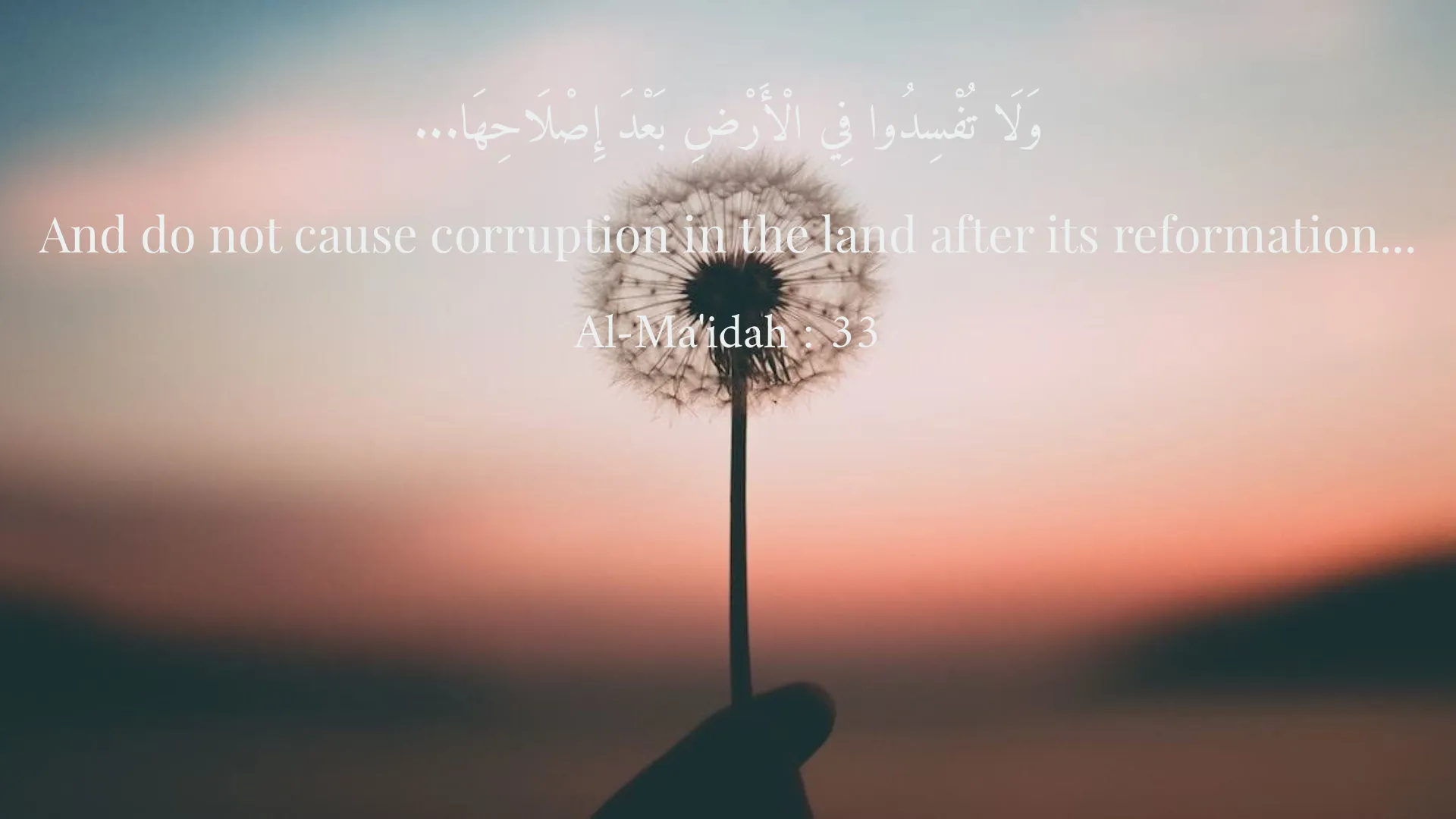
وَلَا تُفْسِدُوا فِي الْأَرْضِ بَعْدَ إِصْلَاحِهَا...
And do not cause corruption in the land after its reformation...
Al-Ma'idah : 33
إِنَّ الَّذِينَ يَأْكُلُونَ أَمْوَالَ النَّاسِ بِالْبَاطِلِ...
Indeed, those who eat the wealth of the people unjustly...
Al-Baqarah : 188
وَلَا تُفْسِدُوا فِي الْأَرْضِ بَعْدَ إِصْلَاحِهَا...
And do not cause corruption in the land after its reformation...
Al-A'raf : 56
Short Story
Once upon a time, there was a young man named Hasan who worked in a big market. He was very fond of wealth and always tried to attract more customers. However, one day he realized that many of his transactions were based on deception and lies. Remembering the Quranic verses about corruption and decay, he decided to stop cheating and treat his customers in a correct and ethical manner. After a while, Hasan gained a good reputation among the people and was happy that now he had not only wealth but also the trust of the people.