Quranic Answer
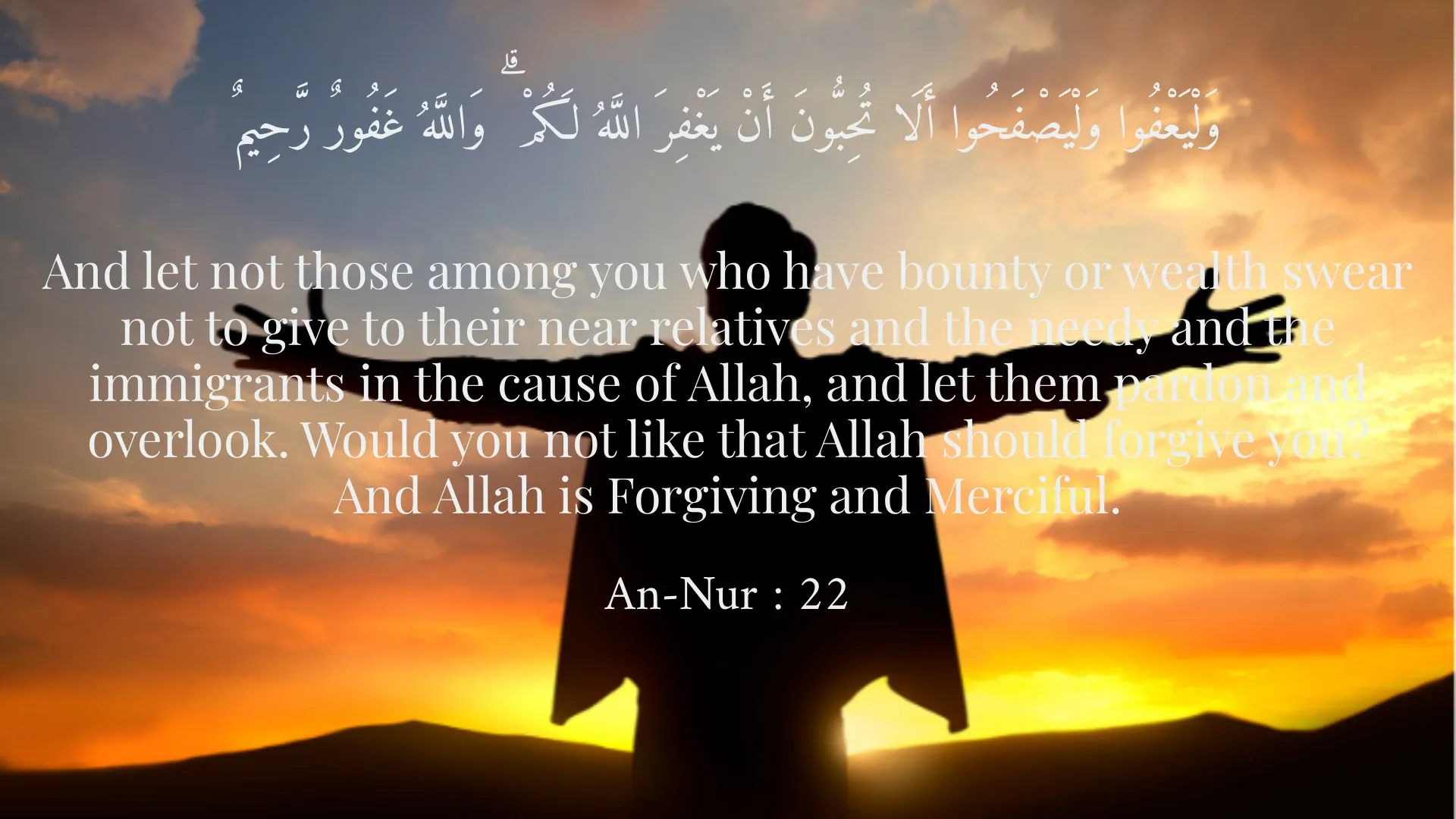
The concept of forgiveness holds a pivotal place in the teachings of the Holy Quran. It is regarded as one of the noble and humane attributes that not only reflects on individual characters but also plays a significant role in societal harmony. Throughout the Quran, Allah commands the believers in numerous verses to forgive the faults and wrongdoings of others, emphasizing that such an act is essential for spiritual and moral development. The significance of forgiveness can be seen in various aspects of life, including personal relationships, community bonds, and an individual's relationship with Allah. Surah An-Nur, verse 22, provides a profound insight into the ethics of forgiveness. It states: 'And let not those among you who have bounty or wealth swear not to give to their near relatives and the needy and the immigrants in the cause of Allah, and let them pardon and overlook. Would you not like that Allah should forgive you? And Allah is Forgiving and Merciful.' This verse not only encourages charitable behavior but also emphasizes the importance of pardoning others. Forgiveness here is linked to generosity and kindness, suggesting that true wealth is not merely material but also encompasses the richness of character and compassion towards others. Furthermore, in Surah Ali 'Imran, verse 134, the Quran states: 'And those who restrain anger and who pardon the people - and Allah loves the doers of good.' This verse indicates that the act of forgiving is not just a passive response to wrongdoings but an active exercise in self-restraint and moral strength. By controlling anger and choosing to forgive, individuals exhibit a form of spiritual and emotional maturity that is greatly valued in the sight of Allah. This kind of forgiveness is not effortless; it requires inner strength, humility, and the willingness to let go of past grievances. Therefore, it is a testament to a person’s character and dignity. The Quran underscores that forgiveness reflects Allah’s mercy and love for His servants, guiding them toward divine pardon. Surah Al-Mu’minun, verse 96, further reinforces this notion with the verse: 'So repel by that which is best. We are most knowing of what they describe.' This verse indicates that when confronted with hostility, opting for the best response—such as forgiveness—can lead to favorable outcomes. It highlights a moral responsibility for individuals to act with benevolence rather than vengeance, thereby showcasing the transformative power of forgiveness. Forgiveness is not merely an act of compassion towards others but is intrinsically linked to one’s personal peace and spiritual well-being. By forgiving others, individuals free themselves from the shackles of resentment and anger, allowing their hearts to soften. This is crucial in a world where strife and conflict often dominate human interactions. When believers embrace forgiveness, they forge deeper connections not only with other individuals but also with the divine. Forgiveness in the Quran is presented as a virtuous act that fosters unity, peace, and understanding within communities. It removes barriers and heals wounds, creating an environment where individuals can coexist harmoniously. The Quran teaches that through forgiveness, believers can cultivate a sense of empathy and compassion, essential qualities for building a just and equitable society. This aspect of forgiveness highlights its communal dimensions, where the act of pardoning extends beyond personal relationships to encompass the collective well-being of the community. Moreover, it is important to understand that forgiveness is not synonymous with condoning wrongdoing. The Quran does not suggest that one should ignore injustices or allow harm to continue unabated. Instead, forgiveness serves as a powerful tool for healing. It encourages individuals to acknowledge wrongs while choosing to transcend them, thus promoting a more profound understanding of justice. By forgiving, one does not negate the pain caused but chooses to rise above it for the sake of personal and spiritual elevation. Historically, the teachings of forgiveness have played a transformative role in the lives of many individuals and communities. Numerous stories from Islamic traditions illustrate the profound impact of forgiving one's adversaries. These narratives resonate with individuals facing personal grievances, inspiring them to adopt the path of peace through forgiveness. It empowers individuals to break cycles of hatred, vengeance, and rivalry, fostering forgiveness as a means to cultivate love and compassion. In conclusion, the Quran presents forgiveness as an integral aspect of faith and morality. It encourages believers to embody this noble quality, illustrating that the act of forgiving not only benefits the one who forgives but also reinforces social bonds and promotes a culture of tolerance and understanding. As believers strive to reflect Allah’s merciful nature, they find that forgiveness brings them closer to divine grace, softens their hearts, and serves as a foundation for spiritual growth. In essence, forgiveness encapsulates the journey of the believer, highlighting it as one of the defining characteristics that separate the faithful from others in their pursuit of righteousness and the love of Allah.
Related Verses
وَلْيَعْفُوا وَلْيَصْفَحُوا أَلَا تُحِبُّونَ أَنْ يَغْفِرَ اللَّهُ لَكُمْ ۗ وَاللَّهُ غَفُورٌ رَّحِيمٌ
And let not those among you who have bounty or wealth swear not to give to their near relatives and the needy and the immigrants in the cause of Allah, and let them pardon and overlook. Would you not like that Allah should forgive you? And Allah is Forgiving and Merciful.
An-Nur : 22
وَالَّذِينَ كَظَمُوا الْغَيْظَ وَالَّذِينَ هُمْ بِالْعَافِينَ عَنِ النَّاسِ ۗ وَاللَّهُ يُحِبُّ الْمُحْسِنِينَ
And those who restrain anger and who pardon the people - and Allah loves the doers of good.
Ali 'Imran : 134
فَادْفَعْ بِالَّتِي هِيَ أَحْسَنُ ۖ نَحْنُ أَعْلَمُ بِمَا يَصِفُونَ
So repel by that which is best. We are most knowing of what they describe.
Al-Mu'minun : 96
Short Story
One day, a man encountered someone in the street and felt great anger towards him. He remembered the verses of the Quran and decided to overcome his anger and forgive. He approached the person with a smile and said, 'Let’s forget this incident and start anew.' With this act, he not only calmed his own heart but also created a new friendship.