Quranic Answer
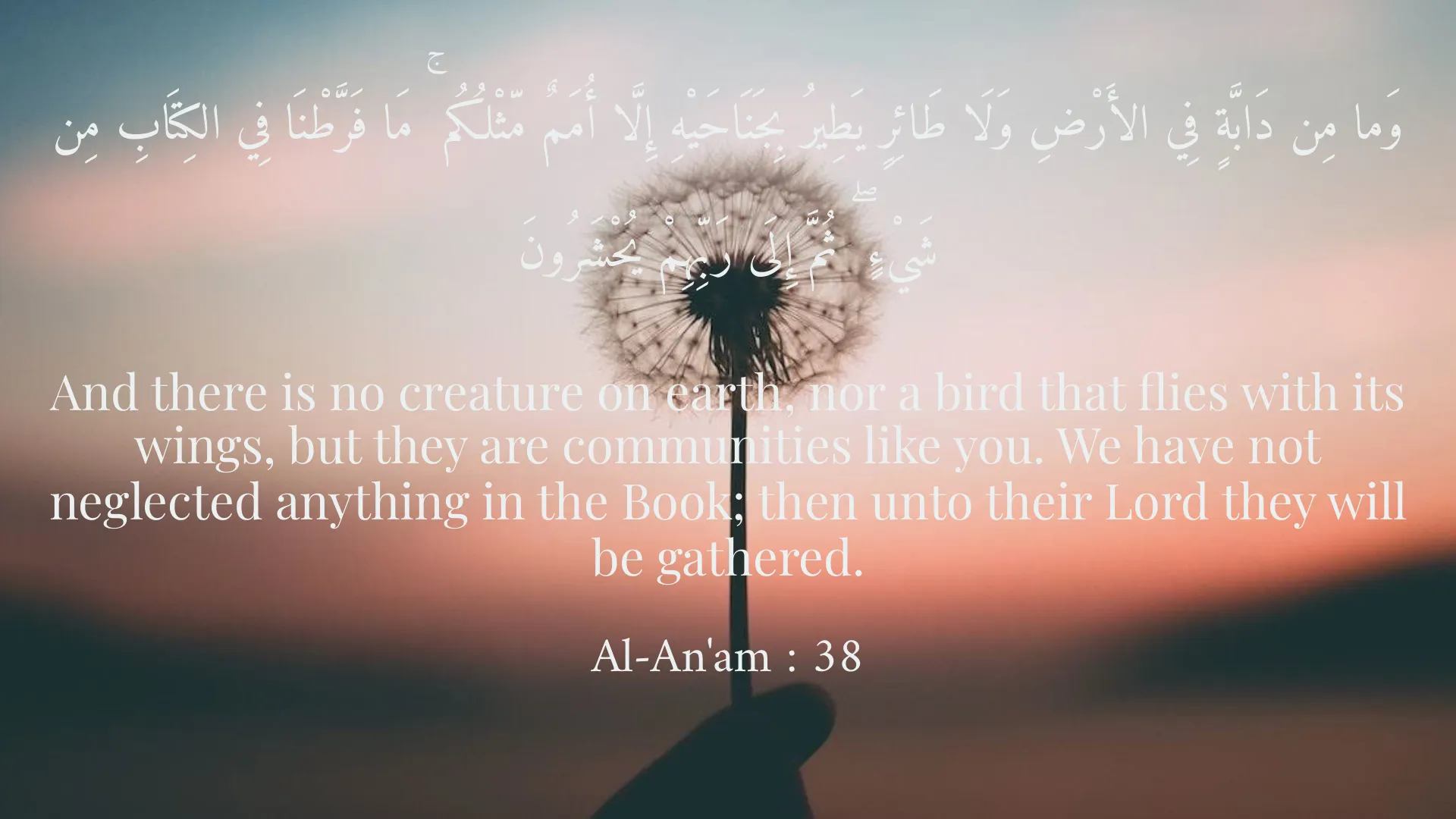
The Holy Quran, regarded as the word of God by millions around the world, offers profound insights into the relationship between mankind and the natural world. Within its pages, we find a richly woven narrative that portrays nature not merely as a backdrop for human activity but as a living entity, one that is interconnected and balanced. This perspective encourages a deeper understanding of our responsibilities towards the environment, urging us to act with care and consideration for the world around us. This article explores how the Quran articulates the intricate relationship between man and nature and underscores the ethical obligations that come with it, drawing predominantly from the aforementioned verses in Surah Al-An'am, Surah Al-Baqarah, and Surah Al-A'raf. The Quran's assertion in Surah Al-An'am, verse 38, "And all the creatures on earth and the birds that fly with wings are communities like you," serves as a foundational statement for understanding the interconnectedness of all life. This verse profoundly implies that every living being has a role to play in the great tapestry of existence. Just as human beings form societies with their own unique structures and ethics, so do the myriad creatures that share our planet. Each species, from the humblest insect to the grandest mammal, contributes to the ecological balance necessary for life. Hence, it becomes crucial for humans to recognize ourselves as part of this community, rather than as its dominators. The implications of this awareness are significant. Not only does it affirm the intrinsic value of other forms of life, but it also positions humans within a broader ecological context where actions have repercussions beyond immediate self-interest. By recognizing that we are part of a cohesive community of life on Earth, we foster a sense of respect and responsibility towards the environment. The idea of interconnected communities obligates mankind to engage in practices that safeguard the health of the planet, ensuring the survival and flourishing of all forms of life, including our own. Moreover, in Surah Al-Baqarah, verse 164, the Quran encourages self-reflection through observation. The verse states, "In the creation of the heavens and the earth and the alternation of night and day are signs for those of understanding." This calls upon humanity to engage deeply with the natural world—to observe, reflect, and learn from the phenomena around us. The Quran suggests that the natural environment is replete with signs of divine majesty and wisdom, inviting humanity to uncover deeper meanings and lessons embedded within the cycles of nature. Understanding the natural world is not merely an academic exercise; rather, it serves as a spiritual endeavor that can deepen our connection with the Creator. The cycles of life, death, change, and renewal represented in nature reflect broader truths about existence itself. By observing and learning from nature, humans can better grasp the principles of sustainability and harmony required to coexist peacefully with the environment. It urges a shift from exploitation to stewardship—a call to be mindful of the delicate balance of our ecosystems. Further emphasizing this idea of responsible consumption, Surah Al-A'raf, verse 31, contains a clear directive concerning resource management. The verse instructs people not to be extravagant in consuming resources and to be mindful, echoing the theme of moderation throughout Islamic teachings. The Quran cautions against excess, warning that it leads to mischief and corruption within the earth. This is particularly relevant in an age where overconsumption and waste prevail. Excessive consumption fosters environmental degradation, depletes natural resources, and threatens biodiversity. In contrast, moderation resonates with the principles of sustainability, urging individuals and societies to balance their needs with those of the planet. By living within our means and valuing the earth’s resources, we not only honor the gifts of Allah but also contribute to the health and longevity of our ecosystems. The teachings of the Quran regarding man’s relationship with nature culminate in a powerful message: a call to action for environmental protection rooted in respect, compassion, and collaboration. Humans are encouraged to live harmoniously with the environment, promoting practices that support sustainability and acknowledging the interdependence of all life forms. Such a worldview fosters global citizenship, where the well-being of the planet is viewed as a collective responsibility. Ultimately, the Quran’s perspective challenges us to rethink our relationship with the natural world, inviting an ethical framework that prioritizes ecological balance and environmental stewardship. In a time of unprecedented environmental challenges such as climate change, deforestation, and loss of biodiversity, the call from these sacred texts resonates more deeply than ever. By embracing the interconnectedness of all beings, respecting the signs of nature, and practicing moderation in consumption, humanity can set forth on a transformative journey toward sustainable living. In doing so, we not only fulfill our responsibilities as stewards of the earth but also reap the abundant blessings promised by Allah for those who care for His creation. In conclusion, the Holy Quran provides a comprehensive guide for understanding the relationship between man and nature. The intertwined ethos of respect, observation, and moderation serves as a powerful principle for environmental action. Through these teachings, we are reminded that safeguarding our natural world is not merely a duty but an intrinsic aspect of our faith and existence, reflecting a divine order that seeks harmony within creation. Thus, our journey forward must be one of cooperation and reverence towards all beings, ensuring a balanced and flourishing planet for generations to come.
Related Verses
وَما مِن دَابَّةٍ فِي الأَرْضِ وَلَا طَائِرٍ يَطِيرُ بِجَنَاحَيْهِ إِلَّا أُمَمٌ مّثْلُكُم ۚ مَا فَرَّطْنَا فِي الكِتَابِ مِن شَيْءٍ ۖ ثُمَّ إِلَى رَبِّهِمْ يُحْشَرُونَ
And there is no creature on earth, nor a bird that flies with its wings, but they are communities like you. We have not neglected anything in the Book; then unto their Lord they will be gathered.
Al-An'am : 38
إِنَّ فِي خَلْقِ السَّمَاوَاتِ وَالْأَرْضِ وَاخْتِلافِ اللَّيْلِ وَالنَّهَارِ لَأَيَاتٍ لِّأُوْلِي الْأَلْبَابِ
Indeed, in the creation of the heavens and the earth, and the alternation of night and day are signs for those of understanding.
Al-Baqarah : 164
وَكُلُوا وَاشْرَبُوا وَلَا تُسْرِفُوا إِنَّهُ لَا يُحِبُّ الْمُسْرِفِينَ
And eat and drink, but be not excessive. Indeed, He likes not those who commit excess.
Al-A'raf : 31
Short Story
One day, in a beautiful natural area, a young man named Ali was sitting and enjoying the beauty of nature. He recalled the Quranic verses and realized that as humans, we must protect these blessings and be responsible. Ali decided that not only would he utilize nature, but he would also educate others about preserving it and using natural resources wisely.