Quranic Answer
Knowledge and learning hold a profound and highly valued status in the Quran. As a guidance book, the Quran emphasizes the importance of knowledge and presents it as a necessary tool for understanding the truth and recognizing God. The pursuit of knowledge is not merely a recommendation in Islamic teachings but a commanding duty for every Muslim. This perspective on knowledge is deeply rooted in the fundamental tenets of Islam, emphasizing not just the acquisition of information but also the development of wisdom and understanding. To understand the exalted status of knowledge in the Quran, it is paramount to examine specific verses that serve as guiding principles. In Surah Al-Alaq, often considered the first revelation received by the Prophet Muhammad, the very first command from God to humanity is, 'Read in the name of your Lord who created.' This pivotal verse establishes reading and knowledge acquisition as essential acts of worship. The command to 'read' signifies the importance of literacy and engagement with the world around us. It emphasizes that knowledge is the key to enlightenment and that seeking education leads to deeper understanding and spiritual growth. This verse not only refers to knowledge through reading but also serves as an invitation to seek knowledge and gain necessary awareness through various means, whether that be through education, contemplation, or personal experience. Furthermore, the Quran consistently elevates the status of scholars, underscoring their vital role in society. In Surah Al-Mujadila, verse 11, it states, 'Allah will raise those who have believed among you and those who were given knowledge by degrees.' This verse clearly indicates that the rank of those with knowledge is higher than others. It is a powerful reminder that knowledge is seen as a means of elevation in both this world and the Hereafter. Those who are endowed with knowledge are charged with the responsibility of using it to guide others, demonstrating the interconnectedness of education and moral stewardship in the Islamic worldview. The Quran also reinforces the idea that knowledge brings forth a greater understanding of God and His creation. In Surah Az-Zumar, verse 9, the virtue of knowledge is highlighted: 'Is one who is devoutly obedient during periods of the night, prostrating and standing, afraid of the Hereafter and hoping for the mercy of his Lord, say, 'Are those who know equal to those who do not know?'' This rhetorical question underscores the distinction between the aware and the unaware, directly linking knowledge with piety and righteousness. It illustrates that understanding the divine complexities leads to a more profound sense of duty towards God. Consequently, those who undertake the journey of knowledge find themselves better equipped to fulfill their spiritual obligations and engage with the world meaningfully. One might ponder the practical implications of these verses in contemporary society. The Quranic injunctions regarding knowledge advocate for a lifelong commitment to learning. Education plays a pivotal role in overcoming ignorance and fostering a culture of reflective thought and inquiry. In this sense, the Quran encourages both formal education, like seeking knowledge in schools and universities, and informal learning, such as discussions with knowledgeable individuals and reflective practice in daily life. This holistic approach to education nurtures a curious mind and an open heart, embodying the Islamic spirit of inquiry and respect for all forms of knowledge. The idea of knowledge in Islam transcends academic learning and encompasses ethical and spiritual dimensions. The pursuit of knowledge must be tied to ethical behavior; it is not solely about accumulating facts but about utilizing that knowledge for the betterment of oneself and society. The Quranic perspective insists that knowledge should serve justice, truth, and compassion, echoing the belief that the noblest pursuit of knowledge is one that leads to the betterment of humankind. Scholars are urged to share their knowledge generously, cultivate an atmosphere of respect and discussion, and guide the community toward a deeper understanding of faith and existence. Moreover, the Quran emphasizes the needs for critical thinking and contemplation as part of the learning process. The verses of the Quran often implore readers to observe nature, reflect on the signs of God, and question preconceived notions. This call for reflection encourages Muslims to engage deeply with their faith, to not merely accept doctrines but to understand them thoughtfully. Critical thinking emerges as a crucial skill, enabling individuals to discern truth from falsehood and to navigate the complexities of life effectively. In essence, the Quran's advocacy for knowledge fosters a comprehensive and nuanced understanding of existence. It is a vital aspect of the Islamic faith, and its significance extends beyond mere facts or concepts. The scholarship held in high esteem is not limited to religious studies but is inclusive of all beneficial knowledge that contributes to human development. This promotes a balanced approach to education, encouraging individuals to explore various fields, be they science, arts, or humanities, and to apply this knowledge in ways that enhance their understanding of God and fulfill their responsibilities towards society. As we delve deeper into the Islamic texts and teachings, we come to realize that the pursuit of knowledge is not solely a personal endeavor but a communal responsibility. The Quran champions the idea of collaborative learning and knowledge dissemination, where those who possess knowledge are encouraged to guide others, creating a knowledgeable community. This communal focus on education aligns seamlessly with the overarching aim of Islam: to promote human flourishing, ethical behavior, and social justice. In conclusion, the Quran’s profound respect for knowledge as a cornerstone of faith and ethics serves as a powerful reminder of its importance in human life. The verses that advocate for learning compel believers to engage actively in the pursuit of knowledge, recognizing its necessity for spiritual growth, ethical behavior, and societal development. From the very first revelation to the end of the Quran, the emphasis on knowledge remains unwavering, compelling individuals to strive for understanding, justice, and connection with the divine. Ultimately, the journey of knowledge is both a personal and collective undertaking; a sacred path leading humanity toward enlightenment and fulfillment.
Related Verses
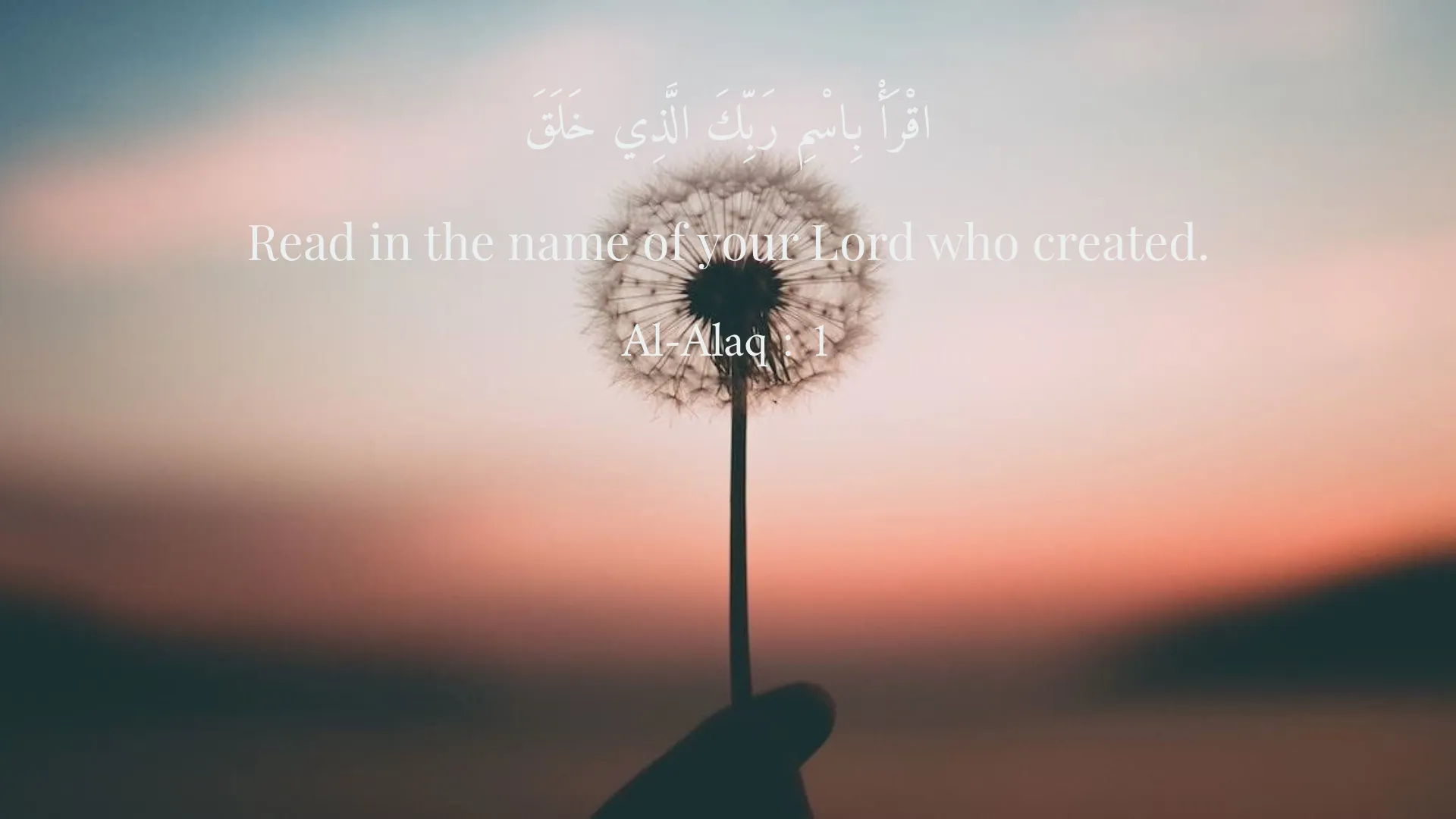
اقْرَأْ بِاسْمِ رَبِّكَ الَّذِي خَلَقَ
Read in the name of your Lord who created.
Al-Alaq : 1
يَرْفَعِ اللَّهُ الَّذِينَ آمَنُوا مِنكُمْ وَالَّذِينَ أُوتُوا الْعِلْمَ دَرَجَاتٍ
Allah will raise those who have believed among you and those who were given knowledge by degrees.
Al-Mujadila : 11
أَمَّنْ هُوَ قَانِتٌ آنَاءَ اللَّيْلِ سَاجِدًا وَقَائِمًا يَحْذَرُ الْآخِرَةَ وَيَرْجُو رَحْمَةَ رَبِّهِ، قُلْ هَلْ يَسْتَوِي الَّذِينَ يَعْلَمُونَ وَالَّذِينَ لَا يَعْلَمُونَ
Is one who is devoutly obedient during periods of the night, prostrating and standing, afraid of the Hereafter and hoping for the mercy of his Lord, say, 'Are those who know equal to those who do not know?'
Az-Zumar : 9
Short Story
One day, a merchant was sitting in the market, busy with his customers. A young man approached him and said, 'Seek knowledge, for nothing can destroy knowledge, and it remains in the heart of a person.' The merchant paid great attention to this young man's words and decided to attend schools to increase his knowledge. He enthusiastically started reading books and led his life towards enlightenment and awareness.