Quranic Answer
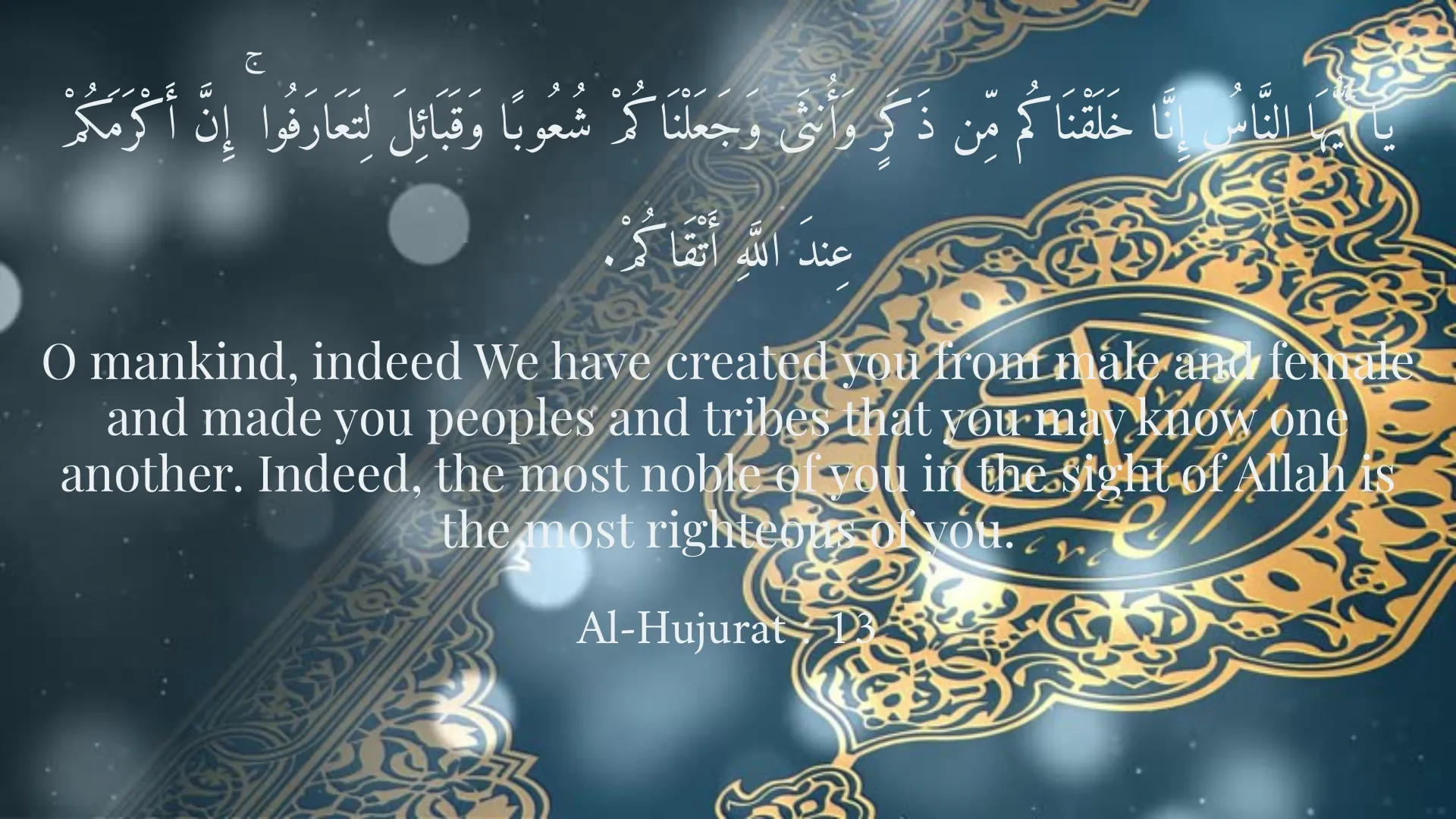
Respect for others holds a significant position in the Quran, serving as a cornerstone of ethical and moral behavior within the framework of Islam. It is a principle that influences interpersonal relationships, societal norms, and spiritual life, urging individuals to maintain a high standard of conduct towards one another. In a world that often grapples with division and conflict, the teachings of the Quran on respect offer timeless guidance that transcends cultural and temporal boundaries. By examining various verses and themes, we can glean how essential respect is not only in the Muslim community but also in the broader context of human interaction. The Holy Quran vividly reaffirms the significance of respect in Surah Al-Hujurat, verse 13, where Allah states, 'O mankind, indeed We have created you from male and female and made you peoples and tribes that you may know one another. Indeed, the most noble of you in the sight of Allah is the most righteous of you.' This verse is profoundly democratic, emphasizing that all humans are created equal regardless of their race or ethnicity. We are called to celebrate our diversity rather than let it be a source of division, enabling us to learn from one another. The crux of this teaching is a reminder that individual worth is not measured by social status, race, or lineage but by one's piety and righteousness before God. Here, respect becomes intrinsically linked with a person's moral and spiritual values. Moreover, respect extends beyond mere acknowledgment of equality; it deepens into active kindness and goodwill towards others. In Surah An-Nisa, verse 36, Allah commands believers to treat their parents, relatives, orphans, and the needy with goodness and compassion. This directive not only highlights the importance of respecting family and community relationships but also positions respect as a vital act of service. Observing these instructions invites individuals to reflect on their responsibilities towards others, reminding them that kindness is not optional, but a divine obligation. Thus, the Quran sets high standards for social interactions, urging believers to extend acts of respect and helpfulness to every segment of society, especially the vulnerable. Furthermore, the Quran firmly discourages mockery and humiliation among individuals, indicating that such behaviors are antithetical to the values of respect and dignity. In verse 8 of Surah Al-Hujurat, Allah instructs, 'And do not insult one another.' This verse not only serves as a prohibition against verbal abuse but reinforces the broader ethical mandate that one should uplift rather than belittle others. The harsh realities of bullying, mockery, and contempt are acknowledged and addressed within these teachings, emphasizing the need to foster environments where individuals feel valued and respected. Respect in the Quran is not merely a guideline for interpersonal relationships but extends into the critical realms of justice and equity. The notion of social justice, underscored by respect for others, forms the backbone of communal wellbeing. Discrimination in all forms—be it based on ethnicity, gender, or socioeconomic status—stands condemned within Islamic teachings. The Quran calls for Muslims to stand for justice, even if it means standing against oneself or one's kin, thus founder a society based on mutual respect and equity. The ethical principle of respect is also crucial when addressing the dynamics of conflict resolution. In a world rife with disputes and misunderstandings, the Quran advocates for a respectful approach to disagreements. It teaches that dialogue, patience, and mutual understanding should guide human interactions, staying clear from hostility and aggression. In Surah Al-Anfal, verse 61, Allah advises Muslims to adopt a stance of peace, showing that reconciliation is a preferred path over conflict. Here, respect emerges as a crucial mediator, enabling constructive dialogue and peaceful resolutions to conflicts. Respect and dignity in Islam also extend towards the broader environment and creation as a whole. The Quran encourages believers to treat all aspects of creation with respect and care, establishing a relationship between humans and nature that is interdependent. By respecting the environment, believers embody the principle of stewardship ('khalifah'), which promotes a sustainable approach to resource consumption and conservation efforts. This holistic view of respect helps build a more compassionate and sustainable world, aligning human conduct with moral and ethical guidelines imbued in the Quran. In conclusion, respect for others is more than an ethical directive in Islam; it is an integral aspect that shapes every element of human interaction and community life. Through the various verses explored, we find a call for respect that is multifaceted—addressing issues of equality, kindness, justice, conflict resolution, and environmental stewardship. As believers navigate their daily lives, the principles gleaned from the Quran serve as a nurturing guide, fostering a respectful atmosphere that allows individuals to thrive and contribute positively to their communities. Therefore, respect for others is not merely a teaching to be acknowledged but a fundamental practice that should permeate every aspect of an individual's life, ultimately echoing the divine wisdom of the Holy Quran.
Related Verses
يَا أَيُّهَا النَّاسُ إِنَّا خَلَقْنَاكُم مِّن ذَكَرٍ وَأُنثَى وَجَعَلْنَاكُمْ شُعُوبًا وَقَبَائِلَ لِتَعَارَفُوا ۚ إِنَّ أَكْرَمَكُمْ عِندَ اللَّهِ أَتْقَاكُمْ.
O mankind, indeed We have created you from male and female and made you peoples and tribes that you may know one another. Indeed, the most noble of you in the sight of Allah is the most righteous of you.
Al-Hujurat : 13
اعبدوا الله ولا تشركوا به شيئًا وبالوالدين إحسانًا.
Worship Allah and associate nothing with Him, and to parents, do good.
An-Nisa : 36
يَا أَيُّهَا الَّذِينَ آمَنُوا لَا يَسْتَهْزِئُ قَوْمٌ مِّن قَوْمٍ عَسَى أَن يَكُونُوا خَيْرًا مِّنْهُمْ.
O you who have believed, let not a people ridicule [another] people; perhaps they may be better than them.
Al-Hujurat : 11
Short Story
One day, a teacher focused on the topic of respect for others in his class. He shared a story from his life; one day he encountered an elderly woman on the street. He decided to open the way for her and assist her. The teacher said with a smile, 'It was just a simple gesture, yet that woman thanked me with eyes full of gratitude. It showed me that the greatest respect is establishing human connections.'