Quranic Answer
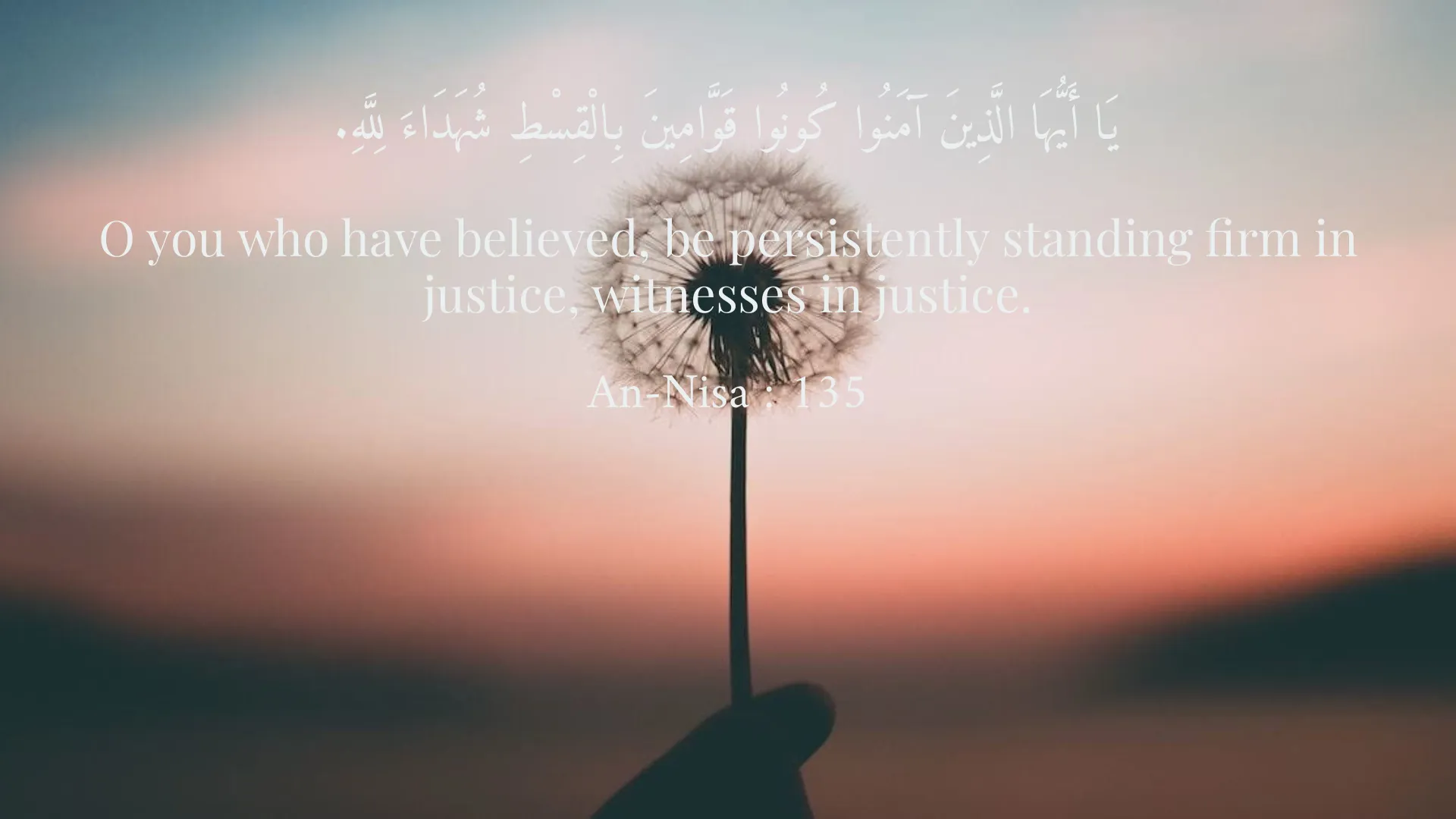
Justice in the Quran is one of the fundamental principles of Islam, characterized by the meanings of balance and placing everything in its rightful place. This virtue is not merely a guideline for individual interactions but also serves as the bedrock for social relations at large. It is through justice that harmony is maintained, and social fabric is woven tightly together. The divine call for justice is echoed in various verses throughout the Quran, illustrating its paramount importance in the life of a believer and the community at large. In this extensive analysis, we will delve into the concept of justice in the Quran, explore its implications on both personal and societal levels, and reflect on its enduring relevance in today's world. One of the key verses that encapsulate the essence of justice in Islam is found in Surah An-Nisa, verse 135, where Allah commands, 'O you who have believed, be persistently standing firm in justice, witnesses in justice, even if it be against yourselves.' This profound directive emphasizes the moral obligation of believers to uphold justice unreservedly, even when it conflicts with their interests or biases. It indicates that justice transcends subjective inclinations, urging individuals to act with integrity and fairness regardless of personal stakes involved. In this sense, the moral imperative of justice takes precedence over self-interest, highlighting that true believers must actively champion truth and fairness, embodying the very essence of justice in all facets of their lives. Justice in the Quran is far-reaching and multifaceted. It is not confined to legal matters or courtroom disputes but encompasses various dimensions, including familial ties, social interactions, and even economic dealings. Allah’s command to act justly is echoed throughout the Quran, manifesting the expectation that an individual must consistently uphold justice in every aspect, whether in private or public spheres. This is a compelling reminder of the interconnectedness of human relationships and the significance of fairness within each one. Moreover, in Surah Al-Ma'idah, verse 8, Allah states, 'And do not let the hatred of a people prevent you from being just. Be just; that is nearer to righteousness.' This verse deeply resonates by asserting that personal animosities or historical tensions should not diminish one’s commitment to justice. This is particularly significant in today’s polarized world, where biases can often cloud our judgment. It reinforces the belief that justice should prevail over feelings of hatred or resentment, reminding us that it is aligned with righteousness. Justice is depicted not simply as a legal obligation but as a moral compass guiding individuals toward ethical behavior, ultimately facilitating harmony and peace among communities. Furthermore, the emphasis on justice as a vehicle for peace is reaffirmed in Surah Al-Hujurat, verse 9, where Allah instructs, 'And if two factions of believers should fight, reconcile between them; but if one of them oppresses the other, then fight against the one that oppresses until it returns to the ordinance of Allah.' This directive highlights the imperative for believers to engage in mediation, conflict resolution, and justice. It acknowledges that disputes may arise within communities but underscores the critical importance of addressing injustices through reconciliation and restoring peace. Thus, justice in the Quran is not a static concept but a dynamic process that calls for active engagement in establishing peace and harmony. In the broader Islamic tradition, justice is not solely a religious obligation but has also been a guiding principle for governance and public policy. Islamic history provides numerous examples of leaders who embodied this principle, demonstrating how justice functions as a fundamental pillar in ensuring societal stability and welfare. The concept of justice is integral to the functioning of an Islamic state, as it seeks to create a balanced society where all individuals have access to their rights, and grievances are addressed fairly. The ethical expectation is thus for leaders and rulers to be just in their decree and equitable in their treatment of all people, serving as an example for their constituents. Justice goes hand-in-hand with accountability in Islam. The believers are reminded of their ultimate accountability to Allah, which further enhances their commitment to justice. This divine accountability fosters a sense of responsibility not only to oneself but also to the larger community. It encourages individuals to be mindful of their actions and their implications on those around them. This heightened awareness cultivates a culture of justice, where individuals strive to ensure fairness in their interactions, leading to the blossoming of stronger, more resilient communities. In light of contemporary issues facing societies, the principles of justice outlined in the Quran serve as a guiding light for communities grappling with inequality, discrimination, and injustice. The Quran's emphasis on equitable treatment can provoke introspection and action within societies plagued by systemic inequality. It calls upon individuals to critically assess their societal structures and advocate for reforms that promote justice, fairness, and equity. In conclusion, justice in the Quran represents a fundamental concept that transcends time and context, encompassing both individual responsibilities and societal obligations. The Quran repeatedly underscores that justice must be the cornerstone of all human interactions, urging believers to embody fairness in every aspect of life. This transcendent value highlights the importance of standing firm in justice, irrespective of personal biases or social disparities. In a world where division and discord often prevail, the Quran's call for justice remains not only relevant but essential, encouraging individuals and communities to aspire toward balance, harmony, and righteousness. As the world continues to evolve, the timeless principles of justice present in the Quran advocate not just for a better religious or moral framework but for a more just society, paving the way for future generations to build upon these values.
Related Verses
يَا أَيُّهَا الَّذِينَ آمَنُوا كُونُوا قَوَّامِينَ بِالْقِسْطِ شُهَدَاءَ لِلَّهِ.
O you who have believed, be persistently standing firm in justice, witnesses in justice.
An-Nisa : 135
وَلَا يَجْرِمَنَّكُمْ شَنَآنُ قَوْمٍ عَلَى أَلَّا تَعْدِلُوا.
And do not let the hatred of a people prevent you from being just.
Al-Ma'idah : 8
وَإِن طَائِفَتَانِ مِن الْمُؤْمِنِينَ اقَتَتَلُوا فَأَصْلِحُوا بَيْنَهُمَا.
And if two factions of believers should fight, then make settlement between them.
Al-Hujurat : 9
Short Story
One day, a man named Saeed was walking through the market, reflecting on his life. He noticed that fairness and justice were diminishing in his community. He decided that he must lead by example in establishing justice. Days went by as Saeed made efforts to uphold fairness in his trades and became a role model for others. Gradually, others joined him, and the market began to shift towards justice. Saeed realized that one individual could make a significant impact on the community.