Quranic Answer
The Holy Quran, far beyond being merely a book of worship, serves as a comprehensive and holistic roadmap for achieving a 'healthy life' in all its dimensions. From the Quranic perspective, a healthy life extends beyond mere physical well-being to encompass spiritual, mental, moral, and social health, offering a comprehensive and holistic approach to human prosperity. This divine scripture introduces fundamental and universal values, the implementation and adherence to which can guide humanity towards success in both this world and the hereafter. These values are, in essence, the foundational pillars of a wholesome and balanced existence, ensuring the well-being of both the individual and society. Spiritual and Mental Health: The Root of Inner Peace The cornerstone of any healthy life in the Quran is Tawhid, or the deep belief in the One God. The Quran repeatedly emphasizes that true tranquility and assurance of the heart are found only in the remembrance of Allah (Surah Ar-Ra'd, verse 28). Knowing God, trusting in Him, and relying on His infinite power eradicates the roots of anxiety and worries, providing the individual with unparalleled stability, hope, and certainty. This monotheistic perspective helps a person to be patient in the face of adversity and grateful in times of prosperity. A life without connection to the source of existence and the Creator of the universe is like a ship without an anchor in the fierce storms of life, constantly fearing shipwreck. 'Taqwa' (God-consciousness or piety) is another crucial value that significantly contributes to an individual's spiritual and moral well-being. Taqwa not only keeps the person on the right path but also assists them in critical life decisions and shows them the way out of difficulties and dead ends (Surah At-Talaq, verses 2-3). A person with Taqwa possesses an awakened conscience and inner peace because they know they are constantly under the watchful eye of the Almighty and will not deviate from the path of truth. This inner state prevents worries and regrets stemming from undesirable actions and significantly contributes to mental health and overall quality of life. 'Sabr' (patience) in the face of calamities and 'Shukr' (gratitude) for blessings are also fundamental principles for a healthy life in the Quran. These two qualities form the basis of psychological resilience and life satisfaction. Patience enhances an individual's ability to endure hardships, failures, and adversities, preventing despair and hopelessness. Gratitude, on the other hand, shifts a person's perspective towards the positive aspects of life, fostering a deep inner contentment, even in challenging circumstances. A healthy and balanced life, without these two wings of patience and gratitude, cannot truly take flight and reach its peak of perfection. Moral and Social Health: The Foundation for Growth and Excellence The Quran strongly emphasizes the establishment of 'Justice' (Adl) and 'Benevolence' (Ihsan) in all human interactions (Surah An-Nahl, verse 90). Justice is the basis of social order, and benevolence is the source of love, solidarity, and empathy. A society where injustice, oppression, and transgression against the rights of others prevail can never be healthy and sustainable, and it will eventually collapse. This value requires individuals not only to be just towards others but also to be fair to themselves, prioritizing their physical and spiritual health and avoiding extremes in all aspects of life. 'Truthfulness' (Sidq) in speech and action and 'Trustworthiness' (Amanah) are other fundamental values that lead to healthy social relationships and the strengthening of society. A society built on lies, betrayal, and distrust will inevitably disintegrate, and chaos will reign. These values not only increase mutual trust and create strong bonds but also give individuals a sense of self-worth, integrity, and inner peace, which are essential for mental health. The Quran repeatedly emphasizes the importance of maintaining 'family ties' (Silat al-Rahim), especially kindness to parents (Surah Al-Isra, verse 23). The family is the core and fundamental unit of society, and its health leads to the health and stability of the entire community. These relationships provide invaluable emotional, psychological, and social support, which is crucial for individual mental health and the stability of social life. 'Forgiveness' and 'Pardon' are other ethical teachings of the Quran (Surah Ash-Shura, verse 43). Resentment, anger, revenge, and envy are poisons for the human soul and mind that rob one of peace. Forgiveness frees an individual from the heavy burden of these negative emotions, allowing them to continue life with peace, tranquility, and blessings. Physical and Material Health: Caring for a Divine Trust The Quran explicitly mentions 'moderation in eating and drinking' and avoiding extravagance (Surah Al-A'raf, verse 31). This principle not only contributes to physical health and prevents many diseases caused by overeating and excess but also signifies proper resource management and a balanced lifestyle. The body is a divine trust, and caring for it is the duty of every Muslim. 'Cleanliness' (Taharah) and purity are also very important principles in Islam. From ritual ablutions (Ghusl and Wudu) to the cleanliness of clothes, body, and living environment, all emphasize the importance of purity for both physical and spiritual health. The famous Hadith, 'Cleanliness is half of faith' (An-Nadhafatu min al-Iman), clearly demonstrates the deep connection between physical and spiritual hygiene in Islam. 1. The Quran emphasizes 'earning a lawful livelihood' and avoiding what is harmful or forbidden (Surah Al-Baqarah, verse 168). This not only contributes to the economic well-being of the individual and society and prevents corruption and decay but also brings peace of conscience and blessings to life, strengthening the foundations of a healthy and wholesome existence. Conclusion: The Quranic values for a healthy life present a comprehensive and holistic system that addresses all dimensions of human physical, psychological, moral, and social well-being. These values teach us that true life is a delicate balance between this world and the hereafter, the individual and society, and the body and soul. Adhering to these principles not only helps us lead a high-quality, peaceful, and contented life in this world but also prepares us for eternal life and ultimate success. The Quran is a divine guide, and by acting upon its teachings, we can experience a blessed, balanced, and serene life. These teachings are a beacon for anyone seeking a meaningful and healthy life. Above all, a healthy life in the Quran is one in which the heart is assured by the remembrance of God, one's actions are shaped by His pleasure, and one walks the path of goodness and righteousness. This comprehensive and exalted approach guarantees true human happiness in all its existential dimensions.
Related Verses
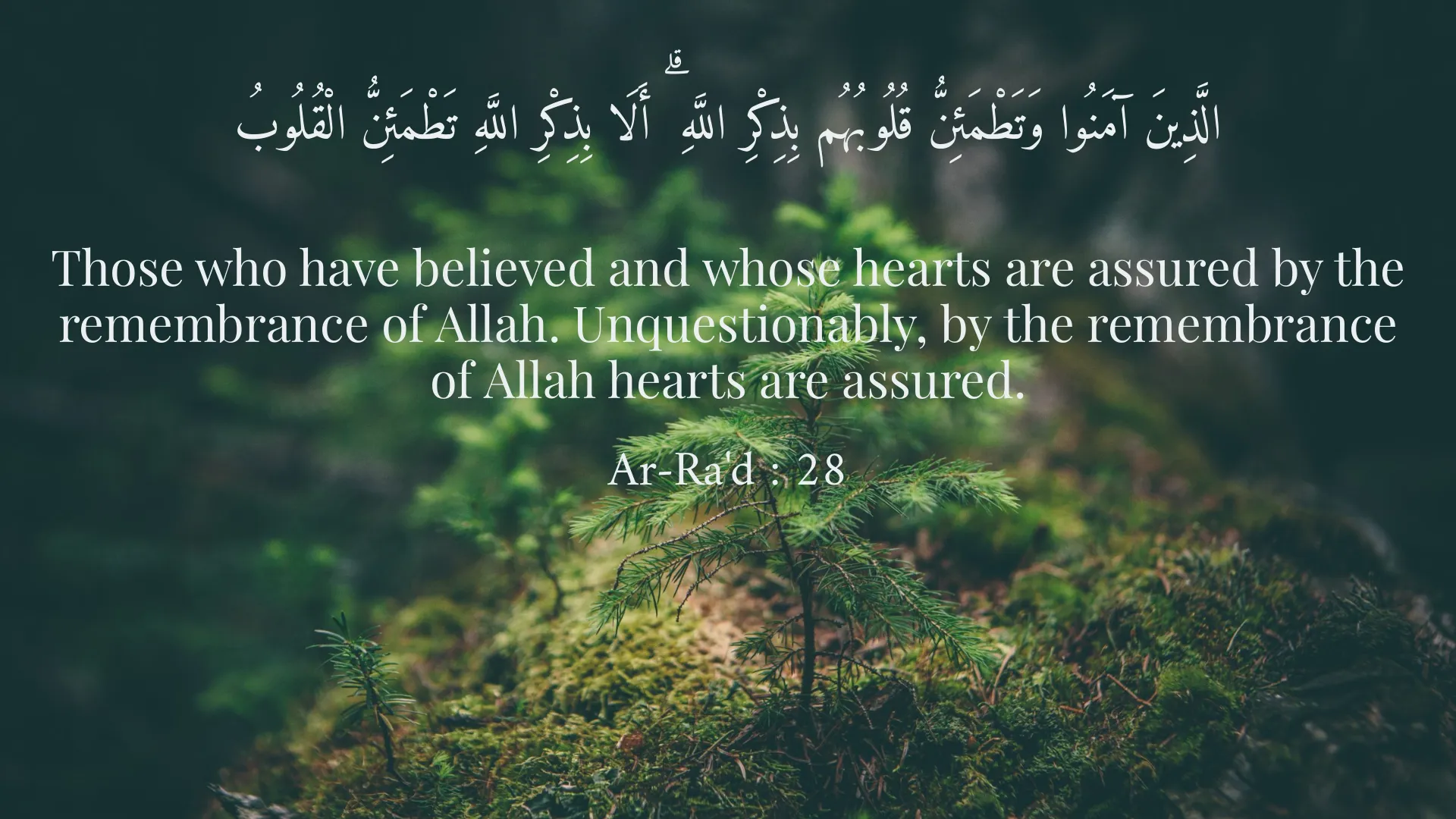
الَّذِينَ آمَنُوا وَتَطْمَئِنُّ قُلُوبُهُم بِذِكْرِ اللَّهِ ۗ أَلَا بِذِكْرِ اللَّهِ تَطْمَئِنُّ الْقُلُوبُ
Those who have believed and whose hearts are assured by the remembrance of Allah. Unquestionably, by the remembrance of Allah hearts are assured.
Ar-Ra'd : 28
إِنَّ اللَّهَ يَأْمُرُ بِالْعَدْلِ وَالْإِحْسَانِ وَإِيتَاءِ ذِي الْقُرْبَىٰ وَيَنْهَىٰ عَنِ الْفَحْشَاءِ وَالْمُنكَرِ وَالْبَغْيِ ۚ يَعِظُكُمْ لَعَلَّكُمْ تَذَكَّرُونَ
Indeed, Allah orders justice and good conduct and giving to relatives and forbids immorality and wrongdoing and oppression. He admonishes you that perhaps you will be reminded.
An-Nahl : 90
يَا بَنِي آدَمَ خُذُوا زِينَتَكُمْ عِندَ كُلِّ مَسْجِدٍ وَكُلُوا وَاشْرَبُوا وَلَا تُسْرِفُوا ۚ إِنَّهُ لَا يُحِبُّ الْمُسْرِفِينَ
O children of Adam, take your adornment at every masjid, and eat and drink, but be not excessive. Indeed, He likes not those who commit excess.
Al-A'raf : 31
Short Story
It is narrated that in ancient times, a king with a large retinue passed by a dervish who was sitting peacefully in a corner, enjoying a piece of dry bread. The king, seeing his own lavish feast spread out, mockingly asked the dervish, 'O dervish, do you not envy this grand feast and spread of ours?' The dervish, with a calm smile and a meaningful glance, replied, 'O King, I do not envy your situation, but rather I am amazed by your troubles. For you must endure day and night in toil and sorrow to preserve this feast and all your possessions, carrying the worries of the world in your heart. But I eat my piece of bread in peace and have no worries. True comfort and health in life lie in contentment, not in abundance.' This anecdote by Saadi teaches us that the real health of life is found not just in the abundance of blessings, but in peace of mind, contentment, and avoiding excess; values that the Quran also emphasizes.