Quranic Answer
The concept of forgiveness holds a very special place in Quranic teachings and is considered a prominent moral virtue that believers are strongly encouraged to adopt. The Holy Quran repeatedly emphasizes the importance of pardon (afw) and overlooking (safh), deeming them signs of piety and spiritual grandeur. In many instances, forgiveness benefits not only the wronged individual but also significantly contributes to the improvement of social relations and the attainment of divine pleasure. This virtue not only grants inner peace but also paves the way for spiritual growth and closeness to Allah. However, the act of forgiveness is not always straightforward; it must be exercised with wisdom and discernment to prevent the infringement of rights or the encouragement of further oppression by the oppressor. In the Holy Quran, pardon and overlooking (turning away from blame and punishment) are frequently recommended. For instance, in Surah Al-Imran, verse 134, Allah describes the righteous as: "...those who restrain anger and pardon people; and Allah loves the doers of good." This verse indicates that controlling one's anger and forgiving the faults of others are outstanding characteristics of those who do good and are beloved by Allah. This is not merely an individual virtue; it is considered one of the fundamental pillars for building a healthy and vibrant society. In an environment where individuals forgive each other and do not harbor grudges, growth, cooperation, and solidarity can flourish. Furthermore, in Surah An-Nur, verse 22, Allah instructs believers to forgive and overlook, stating: "...and let them pardon and overlook. Would you not like that Allah should forgive you?" This is a rhetorical question that expresses the profound importance of forgiveness; if we expect forgiveness from Allah, then we ourselves must be forgiving towards others. This reciprocal perspective forms the cornerstone of divine mercy and its inclusivity towards His servants. Forgiveness within this framework is a bilateral transaction with Allah, whose reward is the remission of sins and the attainment of His pleasure. This is especially crucial in family and friendly relationships, where minor and major mistakes can occur. Forgiveness in these relationships not only prevents their dissolution but also deepens and strengthens them. However, when should one ponder or refrain from forgiveness? While encouraging forgiveness, the Quran also emphasizes the importance of justice and upholding rights. Islam is not a religion that promotes submission to oppression or allows the rights of individuals to be trampled upon. Verse 40 of Surah Ash-Shura states: "And the retribution for an evil act is an evil act equivalent to it, but whoever pardons and makes reconciliation – his reward is with Allah. Indeed, He does not like wrongdoers." This verse introduces two aspects: the right to retaliation and punishment proportionate to the crime, and the virtue of forgiveness. The latter part of the verse indicates that forgiveness is desirable when it leads to "reconciliation" (islah). Reconciliation can mean the reform of the wrongdoer, the mending of a relationship, or the improvement of a social situation. If forgiveness does not lead to reconciliation and encourages the oppressor to continue their tyranny, or jeopardizes the rights of others, then one should act with greater caution. For example, if an individual commits a crime that violates public rights or the rights of other innocent people (such as theft, murder, or social corruption), personal forgiveness in these cases cannot replace the implementation of judicial justice. In such instances, justice and the enforcement of laws are necessary to maintain social order and prevent the recurrence of crime. The important point is that forgiveness should not mean disregarding rights or absolving the oppressor from accountability. In cases where forgiveness emboldens the oppressor and allows them to continue their injustice, or if it infringes upon the rights of others, Islam recommends upholding justice instead of forgiveness. Similarly, in cases where withholding forgiveness is aimed at preventing greater injustice or protecting society, it is justifiable from a Quranic perspective. For example, if an individual repeatedly and unrepentantly commits an offense, and continuous forgiveness only emboldens them, then legal action and punishment become necessary to prevent recurrence and protect others from harm. In the case of crimes that have a public dimension, forgiveness by affected individuals cannot prevent the execution of divine or legal decrees, as these crimes harm not just a specific individual but the entire society. Therefore, the Islamic ruler or judicial system has a responsibility to establish justice, even if the complaining party has personally agreed to forgive. This distinction between individual rights (Huquq al-Nas) and public rights or the rights of Allah (Huquq Allah) is extremely important. Ultimately, Islam is a balanced religion that values both mercy and compassion, as well as justice and upholding rights. The general principle is that forgiveness is highly recommended for peace, inner tranquility, and divine reward, but it must be accompanied by insight and wisdom. Forgiveness should lead to good and righteousness, not contribute to injustice or the perpetuation of oppression. The main criterion for forgiveness is the willingness for reform (of the wrongdoer or the situation) and the prevention of further harm. If forgiveness contributes to these goals, it is highly virtuous. If it undermines these goals, then justice and the upholding of rights take precedence over forgiveness. In any case, the principle is that a believing person should practice the attribute of pardon and forgiveness as long as it does not harm themselves or others, because this attribute is among the attributes of Allah and leads to closeness to Him and His pleasure.
Related Verses
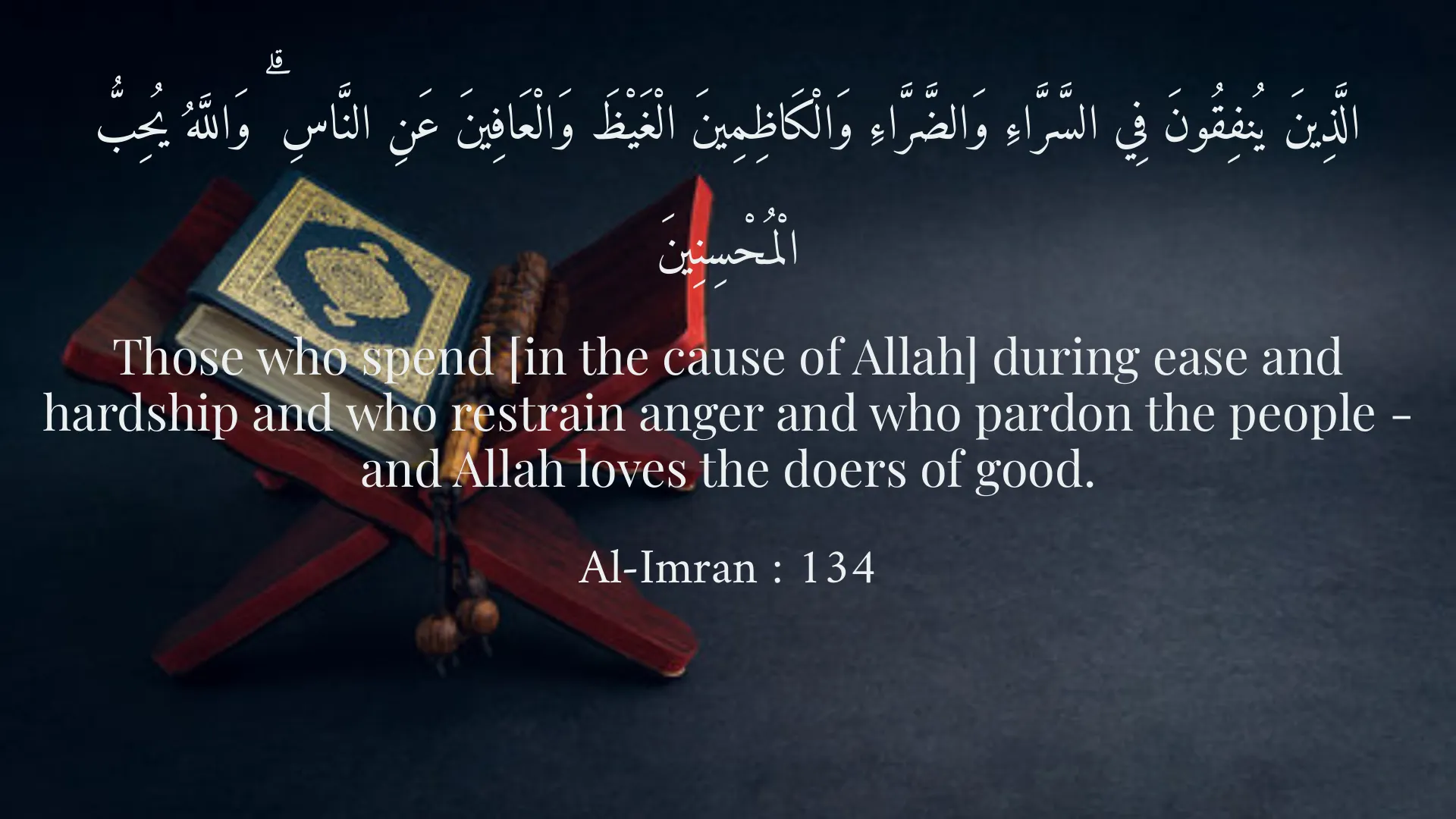
الَّذِينَ يُنفِقُونَ فِي السَّرَّاءِ وَالضَّرَّاءِ وَالْكَاظِمِينَ الْغَيْظَ وَالْعَافِينَ عَنِ النَّاسِ ۗ وَاللَّهُ يُحِبُّ الْمُحْسِنِينَ
Those who spend [in the cause of Allah] during ease and hardship and who restrain anger and who pardon the people - and Allah loves the doers of good.
Al-Imran : 134
وَلَا يَأْتَلِ أُولُو الْفَضْلِ مِنكُمْ وَالسَّعَةِ أَن يُؤْتُوا أُولِي الْقُرْبَىٰ وَالْمَسَاكِينَ وَالْمُهَاجِرِينَ فِي سَبِيلِ اللَّهِ ۖ وَلْيَعْفُوا وَلْيَصْفَحُوا ۗ أَلَا تُحِبُّونَ أَن يَغْفِرَ اللَّهُ لَكُمْ ۗ وَاللَّهُ غَفُورٌ رَّحِيمٌ
And let not those among you who are blessed with grace and abundance swear not to give [aid] to their relatives and the needy and the emigrants for the cause of Allah. Let them pardon and overlook. Would you not like that Allah should forgive you? And Allah is Forgiving and Merciful.
An-Nur : 22
وَجَزَاءُ سَيِّئَةٍ سَيِّئَةٌ مِّثْلُهَا ۖ فَمَنْ عَفَا وَأَصْلَحَ فَأَجْرُهُ عَلَى اللَّهِ ۚ إِنَّهُ لَا يُحِبُّ الظَّالِمِينَ
And the retribution for an evil act is an evil act equivalent to it, but whoever pardons and makes reconciliation - his reward is with Allah. Indeed, He does not like wrongdoers.
Ash-Shura : 40
Short Story
It is narrated that in ancient times, a just and wise king ruled over a land. One day, one of his subordinates betrayed him and attempted to usurp his throne. After the plot was discovered, the traitor was apprehended, and the king ordered him to be brought before him. Everyone expected a harsh and merciless retribution. The king, with a piercing gaze, asked the traitor: “If you were in my place and I in yours, what would you do?” The traitor, having no hope of survival, boldly replied: “I would kill you and uproot you completely, so no trace of you remains.” The king smiled and, in a calm tone, said: “I shall do better than you.” He then ordered his guards to set the traitor free and escort him respectfully out of the court. The ministers and courtiers were astonished by this act of forgiveness. The king explained: “If I were to kill him, I would only be rid of an enemy who wronged me once. But by forgiving him, I have won a heart, and perhaps he will regret his actions and return to the right path, and the reward of this forgiveness is greater with the Lord. Forgiveness brought me peace and showed others that even an enemy can be treated with magnanimity, unless the continuation of their oppression shakes the foundations of justice and deprives people of their peace.” And so, with his insight, the king not only showed mercy but also, by emphasizing the conditions of forgiveness, taught a great lesson about justice and expediency.