Quranic Answer
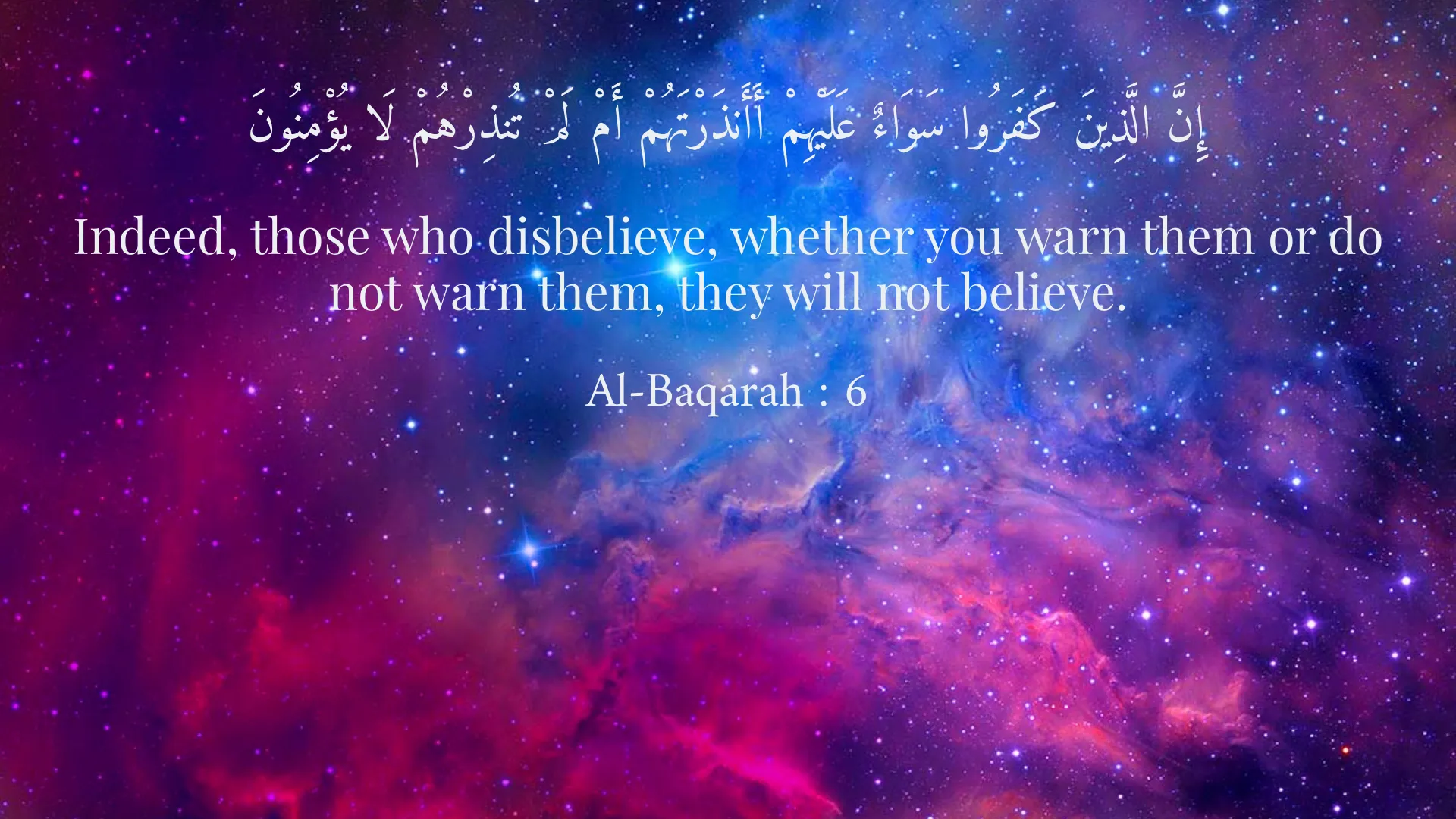
In the Holy Quran, the dichotomy of loss and achievement in this life and the Hereafter is elaborately discussed, allowing believers and non-believers alike to understand the consequences of their actions and beliefs. A significant focus is placed on those who suffer losses, and they are clearly outlined through various verses that convey profound meanings. Among these, one of the primary groups identified comprises those who disbelieve in the Divine signs, who reject the essential truths presented to them, and thus, seal their own fates. In Surah Al-Baqarah, verses 6 and 7, Allah states: 'Indeed, those who disbelieve, whether you warn them or do not warn them, they will not believe. Allah has set a seal upon their hearts and upon their hearing, and there is a veil over their eyes.' This declaration profoundly emphasizes that the lack of belief is not merely a surface-level rejection of faith; rather, it is an innate condition that deprives these individuals of insight and guidance. The seal on their hearts suggests a divine decree that prevents them from recognizing the truth, and that results in their ultimate loss in the Hereafter. The implications here are grave: the denial of faith leads not only to a lack of spiritual fulfillment but also to a consequential doom in the afterlife, illustrating that those who choose to turn their backs on Divine signs are, in essence, constructing their own barriers to redemption and salvation. Further, the Quran does not limit its discourse on loss to mere disbelief; it broadly includes the actions of those who commit injustice and corruption. In Surah Al-Imran, verse 117, Allah emphasizes the fleeting nature of worldly gains obtained through wrongdoing: 'The example of what they spend in this worldly life is like a wind which brings a burning cold that destroys the harvest of a people who have wronged themselves.' This metaphor signifies that the material wealth and resources amassed through unjust means do not result in true prosperity; instead, they are likened to a destructive wind that obliterates the fruits of one's labor. This could imply that ingratitude towards Divine blessings and engaging in unethical behavior ultimately leads to devastation—not only in this life but also as a precursor to their downfall in the Hereafter. The Quran further delves into the psychology of non-believers, particularly noting in Surah Al-Mu'minun, verse 117, that: 'Indeed, those who do not believe in the Hereafter, their deeds have been made appealing to them.' This profound statement reveals a dual layer of tragedy; not only do these individuals lack faith, but they are also enchanted by their evil deeds. The allure of sin can cloud reason and moral judgment, creating a vicious cycle that perpetuates their state of denial and leads them further astray, compounding their losses. Hence, the allure of wrongdoing can often be an impediment to recognizing the eventual repercussions of their actions, intertwining the concepts of belief and action in the larger framework of moral accountability. It is imperative to reflect on the broader implications of these Quranic verses not just as religious exhortations but as timeless principles of accountability that resonate across cultures and societies. The Quran invites humanity to ponder the nature of belief, the significance of ethical living, and the real consequences that arise from choices made, both in this world and in the sight of Allah. The emphasis on justice, integrity, and faith serves as a moral compass that guides individuals toward fostering a life of peace and prosperity, devoid of the anguishing regrets associated with disbelief and wrongdoing. In conclusion, it can be cogently asserted that the loss experienced by both disbelievers and corrupt individuals is a multifaceted phenomenon encapsulated in the teachings of the Quran. The rejection of Divine signs engenders profound spiritual losses, while actions defined by injustice and immorality invite inevitable consequences, both temporally and eternally. Thus, the Quran invites us to reflect: Are we merely followers of faith, or are we actively shaping a life that embodies not just belief, but a commitment to righteousness, thus ensuring our ultimate success in this world and the Hereafter? The clarity provided in these verses serves as both a warning and an invitation for self-awareness, urging each individual to seek genuine enlightenment and strive for deeds that will bear fruit in both realms. Understanding the Quran's messages is paramount, illustrating that safeguarding one's belief and practicing justice is fundamental to divine approval and the elimination of inevitable loss.
Related Verses
إِنَّ الَّذِينَ كَفَرُوا سَوَاءٌ عَلَيْهِمْ أَأَنذَرْتَهُمْ أَمْ لَمْ تُنذِرْهُمْ لَا يُؤْمِنُونَ
Indeed, those who disbelieve, whether you warn them or do not warn them, they will not believe.
Al-Baqarah : 6
مَثَلُ مَا يُنفِقُونَ فِي هَذِهِ الْحَيَاةِ الدُّنْيَا كَمَثَلِ رِيحٍ فِيهَا صِرٌّ أَحْرَقَتْ حَرْثَ قَوْمٍ ظَلَمُوا أَنفُسَهُمْ
The example of what they spend in this worldly life is like a wind which brings a burning cold that destroys the harvest of a people who have wronged themselves.
Al-Imran : 117
إِنَّ الَّذِينَ لَا يُؤْمِنُونَ بِالْآخِرَةِ زَيَّنَ لَهُمْ سُوءَ أَعْمَالِهِمْ
Indeed, those who do not believe in the Hereafter, their deeds have been made appealing to them.
Al-Mu'minun : 117
Short Story
One day, a man named Hossein visited a religious scholar and asked, 'Are there those who will suffer loss in this world and the Hereafter?' The scholar began to explain and talked about the verses of the Quran. Hossein said, 'I want to stay away from those individuals and manage my life well.' The scholar smiled and replied, 'That is a wise decision. With heartfelt faith in God and performing good deeds, you can avoid loss.' From that day, Hossein made an effort to manage his life in the best way and never forgot that with faith and good actions, he could stay away from the losses of this world and the Hereafter.