Quranic Answer
The question, "Why are some bad people successful?", is one of the most profound and frequently asked inquiries that has occupied human minds and been debated across various societies for centuries. The Holy Quran, with its divine and comprehensive perspective, addresses this issue and unveils its hidden wisdoms. To understand this phenomenon, we must first grasp the distinction between "worldly success" and "success in the Hereafter," and then delve into the divine wisdom behind granting blessings to individuals, irrespective of their apparent deeds. The Quran explicitly states that the worldly life is merely a passage and a field for the eternal life of the Hereafter. Worldly success, whether it be wealth, power, fame, or any material achievement, is not necessarily an indicator of God's pleasure or the individual's ultimate well-being. In numerous verses, the world is described as a fleeting and deceptive commodity. For instance, in Surah Al-Hadid, verse 20, Allah says: "Know that the life of this world is only play and amusement, pomp and mutual boasting in [multiplication of] wealth and children – like the example of a rain whose [resulting] plant growth pleases the tillers; then it dries and you see it turned yellow; then it becomes [scattered] debris. And in the Hereafter is severe punishment and forgiveness from Allah and approval. And what is the worldly life except the enjoyment of delusion." This verse clearly illustrates that the nature of this world is transient and unstable, and any success within it is merely a superficial and temporary aspect. One of the crucial wisdoms that the Quran presents in this context is the concept of "Istidraj" (gradual enticement). Istidraj means that Allah grants certain individuals who have deviated from the path of truth more blessings and success in this world, allowing them to become engrossed in heedlessness and sin. With each moment, their burden of sins increases, without them realizing that these blessings are not a reward, but rather an opportunity for their intensified downfall and ultimate punishment. It is akin to someone being gradually led towards a precipice without feeling danger until they suddenly fall. In Surah Al-A'raf, verse 182, Allah says: "And those who deny Our verses - We will progressively lead them [to punishment] from where they perceive not." This verse clearly explains that the worldly successes of wrongdoers can be a form of test and respite, so that they may eventually receive their due punishment. This respite does not signify God's approval of their actions but is an opportunity for their accountability to be fully established and their record of deeds completed. Furthermore, it must be considered that Allah has established a system of cause and effect in this world. This means that anyone who strives to achieve worldly goals and adheres to the laws and traditions governing the material world, whether a believer or a disbeliever, can attain material successes. If someone achieves wealth through diligence, planning, intelligence, and adherence to business principles, or attains success in a sport or scientific field through practice and perseverance, this is a direct result of their actions and efforts within the framework of divine laws. This does not necessarily imply approval of their ethics or beliefs. The Quran addresses this in Surah Ash-Shura, verse 20: "Whoever desires the harvest of the Hereafter - We increase for him in his harvest. And whoever desires the harvest of this world - We give him thereof, but there is no share for him in the Hereafter." This verse indicates that whoever makes the world their goal and strives for it can gain a share from it, but this comes at the cost of losing their share in the Hereafter. Moreover, worldly successes can be a test for the successful individual themselves and for others. For the successful person, these successes are a test of whether they will be grateful or ungrateful, whether they will use their wealth for good or for corruption. For others, it is also a test to see if they doubt divine justice or if they believe in God's wisdom and exercise patience. Ultimately, divine measures differ from human measures. What humans perceive as "success" might be considered "failure" in the sight of Allah if it comes at the cost of deviation from truth and the Hereafter. Imam Ali (peace be upon him) said: "How many are led astray by divine blessing, and how many are deceived by their faults being covered, and how many are praised with good words that are not true." True success in the Quranic view is salvation in the Hereafter, entry into Paradise, and gaining the pleasure of the Lord. This success is achieved only through faith, righteous deeds, piety, and good morals, and has no relation to the amount of worldly wealth or power. Therefore, believers should not be disheartened by the apparent successes of wrongdoers or deviate from the path of truth. Rather, they should know that the promise of Allah is true, and the good end is for the righteous, and divine justice will be fully established on the Day of Judgment.
Related Verses
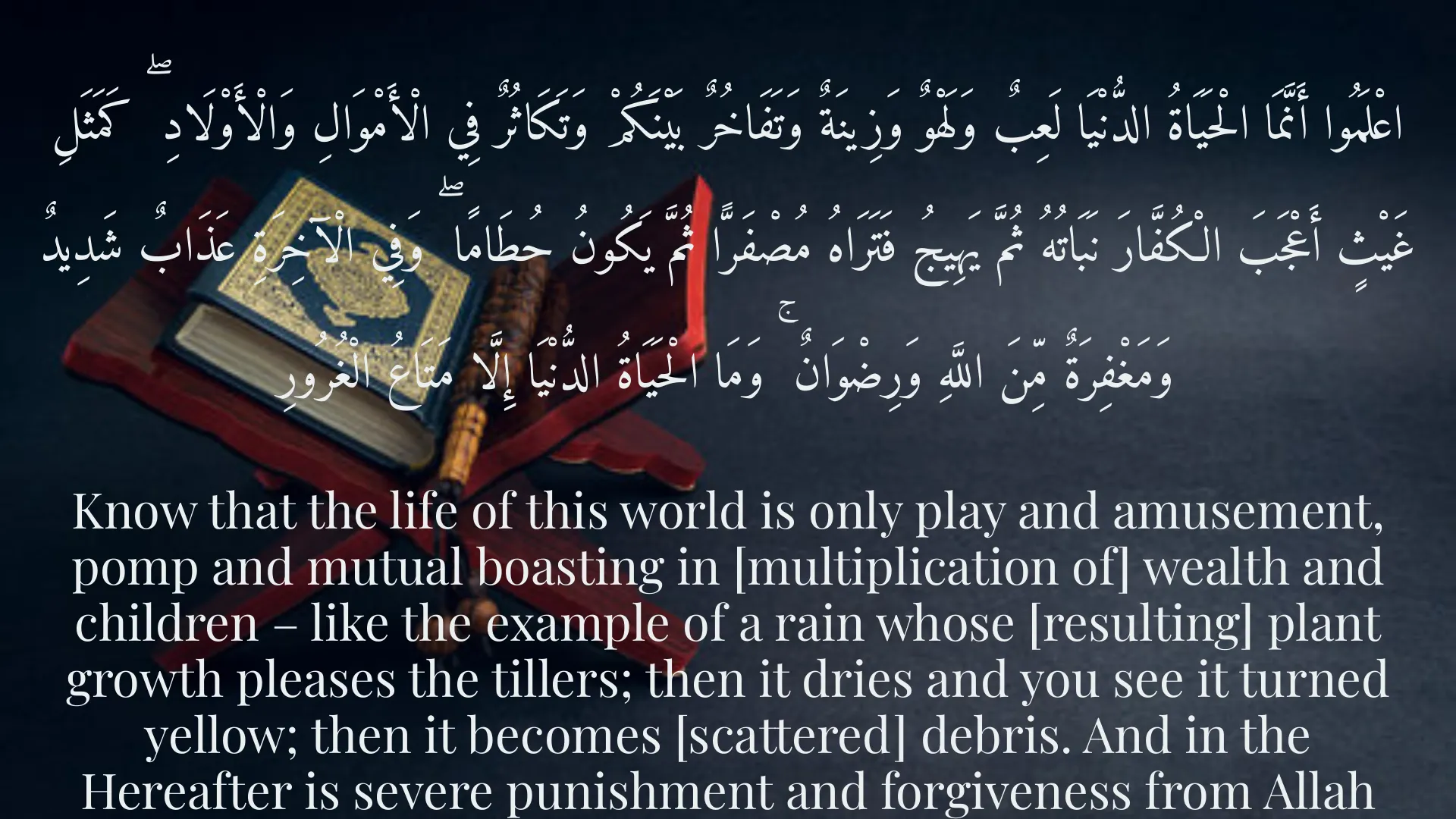
اعْلَمُوا أَنَّمَا الْحَيَاةُ الدُّنْيَا لَعِبٌ وَلَهْوٌ وَزِينَةٌ وَتَفَاخُرٌ بَيْنَكُمْ وَتَكَاثُرٌ فِي الْأَمْوَالِ وَالْأَوْلَادِ ۖ كَمَثَلِ غَيْثٍ أَعْجَبَ الْكُفَّارَ نَبَاتُهُ ثُمَّ يَهِيجُ فَتَرَاهُ مُصْفَرًّا ثُمَّ يَكُونُ حُطَامًا ۖ وَفِي الْآخِرَةِ عَذَابٌ شَدِيدٌ وَمَغْفِرَةٌ مِّنَ اللَّهِ وَرِضْوَانٌ ۚ وَمَا الْحَيَاةُ الدُّنْيَا إِلَّا مَتَاعُ الْغُرُورِ
Know that the life of this world is only play and amusement, pomp and mutual boasting in [multiplication of] wealth and children – like the example of a rain whose [resulting] plant growth pleases the tillers; then it dries and you see it turned yellow; then it becomes [scattered] debris. And in the Hereafter is severe punishment and forgiveness from Allah and approval. And what is the worldly life except the enjoyment of delusion.
Al-Hadid : 20
وَالَّذِينَ كَذَّبُوا بِآيَاتِنَا سَنَسْتَدْرِجُهُم مِّنْ حَيْثُ لَا يَعْلَمُونَ
And those who deny Our verses - We will progressively lead them [to punishment] from where they perceive not.
Al-A'raf : 182
مَن كَانَ يُرِيدُ حَرْثَ الْآخِرَةِ نَزِدْ لَهُ فِي حَرْثِهِ ۖ وَمَن كَانَ يُرِيدُ حَرْثَ الدُّنْيَا نُؤْتِهِ مِنْهَا وَمَا لَهُ فِي الْآخِرَةِ مِن نَّصِيبٍ
Whoever desires the harvest of the Hereafter - We increase for him in his harvest. And whoever desires the harvest of this world - We give him thereof, but there is no share for him in the Hereafter.
Ash-Shura : 20
كُلُّ نَفْسٍ ذَائِقَةُ الْمَوْتِ ۗ وَنَبْلُوكُم بِالشَّرِّ وَالْخَيْرِ فِتْنَةً ۖ وَإِلَيْنَا تُرْجَعُونَ
Every soul will taste death. And We test you with evil and with good as a trial; and to Us you will be returned.
Al-Anbiya : 35
Short Story
In Saadi's "Bustan" it is recounted that there was a powerful and wealthy king who ruled over a vast land. He always lived at the peak of success and prosperity, but his heart was hard and merciless, and he did not shy away from tyranny and oppression over his subjects. People feared him and never dared to protest. One day, a wise vizier said to him: "O King! Your power and wealth are exemplary, but I fear that this worldly success may blind your eyes and distance you from justice and fairness. Remember that the world is fleeting, and only good deeds will remain for you." The king paid no heed to the vizier's advice, saying: "As long as I wear the crown and my treasury is full, what concern do I have for fate?" Time passed, and suddenly a rebellion arose. The king, who was proud of his power, was caught by surprise and lost his throne and crown. He, who had relied on his wealth and power his entire life, found himself alone and helpless in the moment of calamity, realizing that worldly success without virtue and justice is like a bubble that suddenly bursts, leaving nothing behind. Saadi thus reminds us that true superiority lies in human perfections, not in fleeting gold and power.