Quranic Answer
Generosity and benevolence are virtues that have been extolled across cultures and religions for centuries. In the Holy Quran, these traits are emphasized as essential characteristics of true believers. These qualities not only enrich human character but also serve as fundamental components for attaining spiritual peace and fulfilling one's purpose in life. The Quran, as a divine guide, provides insights into the essence of generosity and the vital role it plays in our spiritual journey and communal relationships. One of the most compelling verses that highlight the significance of generosity is found in Surah Al-Imran, verse 92, which states: "You will never attain righteousness until you spend in the way of that which you love. And whatever you spend, indeed, Allah is Knowing of it." This powerful declaration points to the notion that true righteousness is inherently linked with acts of generosity. It urges believers to give not only from their surplus, but also from the very things they hold dear—be it wealth, time, or effort. The implication here is profound; generosity is not merely a moral obligation, but a means to deepen one's relationship with Allah and to embody the virtues that He cherishes. Yet, despite the beauty and importance of generosity, many individuals struggle with selflessness. One contributing factor to this reluctance to give can be traced to the fear of poverty. The anxiety surrounding financial security often leads individuals to cling tightly to their resources, fearing that if they give, they themselves will face hardship. This fear stands in stark contrast to the faith that Allah has promised to sustain everyone’s livelihood. In this context, the inability to trust in divine providence can severely limit one's capacity for generosity. Furthermore, competition and jealousy can also hinder the acts of giving. In a materialistic society where comparisons are frequently made, individuals may become envious of the fortunes and possessions of others. This envy breeds a mindset that is less inclined to share what one has. This theme is beautifully illustrated in Surah Al-Baqarah, verse 261, which likens the act of spending in Allah's way to a seed that yields seven ears with grain in each ear. The metaphor captures the abundance that can come from giving and highlights the exponential rewards that generosity can bring, both in this world and the Hereafter. However, the feelings of jealousy or inadequacy may overshadow this understanding, leading to a cycle of stinginess rather than abundant giving. This not only affects the individual but can also create a ripple effect within communities. When fear of poverty and feelings of competition dominate, it can lead to a culture of isolation and hoarding rather than one of support and interdependence. Acts of generosity are vital for fostering community bonds and building a sense of belonging among individuals. In this sense, the lack of generosity can result in a fragmented society where individuals are focused solely on personal gain rather than the collective well-being. To counteract the barriers to generosity, self-reflection and a deeper understanding of the importance of giving are essential. It is crucial for individuals to cultivate an awareness of their own resources and appreciate the blessings they possess. Recognizing that what one has is, in essence, a trust from Allah can shift a person's perspective. The act of giving can then be seen not as a loss, but as an investment in one's spiritual future. The Quran consistently reminds believers that true wealth lies in sharing and caring for others. As it states, those who give to others will find that their own needs are addressed, often in ways they could not have anticipated. Moreover, communal support plays an essential role in encouraging a culture of generosity. By creating environments where sharing and caring for one another is prioritized, families and communities can help alleviate individual anxieties about poverty. Initiatives that promote collective giving, such as charity drives or community service projects, can mitigate feelings of jealousy and competition by uniting people under a common cause. This solidarity fosters a sense of empathy, reminding individuals that they are all part of a greater whole and that their contributions—no matter how small—are invaluable. In conclusion, generosity and benevolence are foundational to the character of believers as outlined in the Holy Quran. Acts of giving have spiritual implications that transcend mere economic transactions; they draw one closer to Allah and reinforce community ties. The fears of poverty, jealousy, and competition can create barriers to the practice of generosity; however, these can be overcome through faith, self-awareness, and communal support. Generosity is an antidote to the anxieties of life and a key to achieving profound happiness and fulfillment. By embracing a life rooted in generosity, individuals can not only fulfill their moral obligations but can also contribute to a more compassionate and loving society.
Related Verses
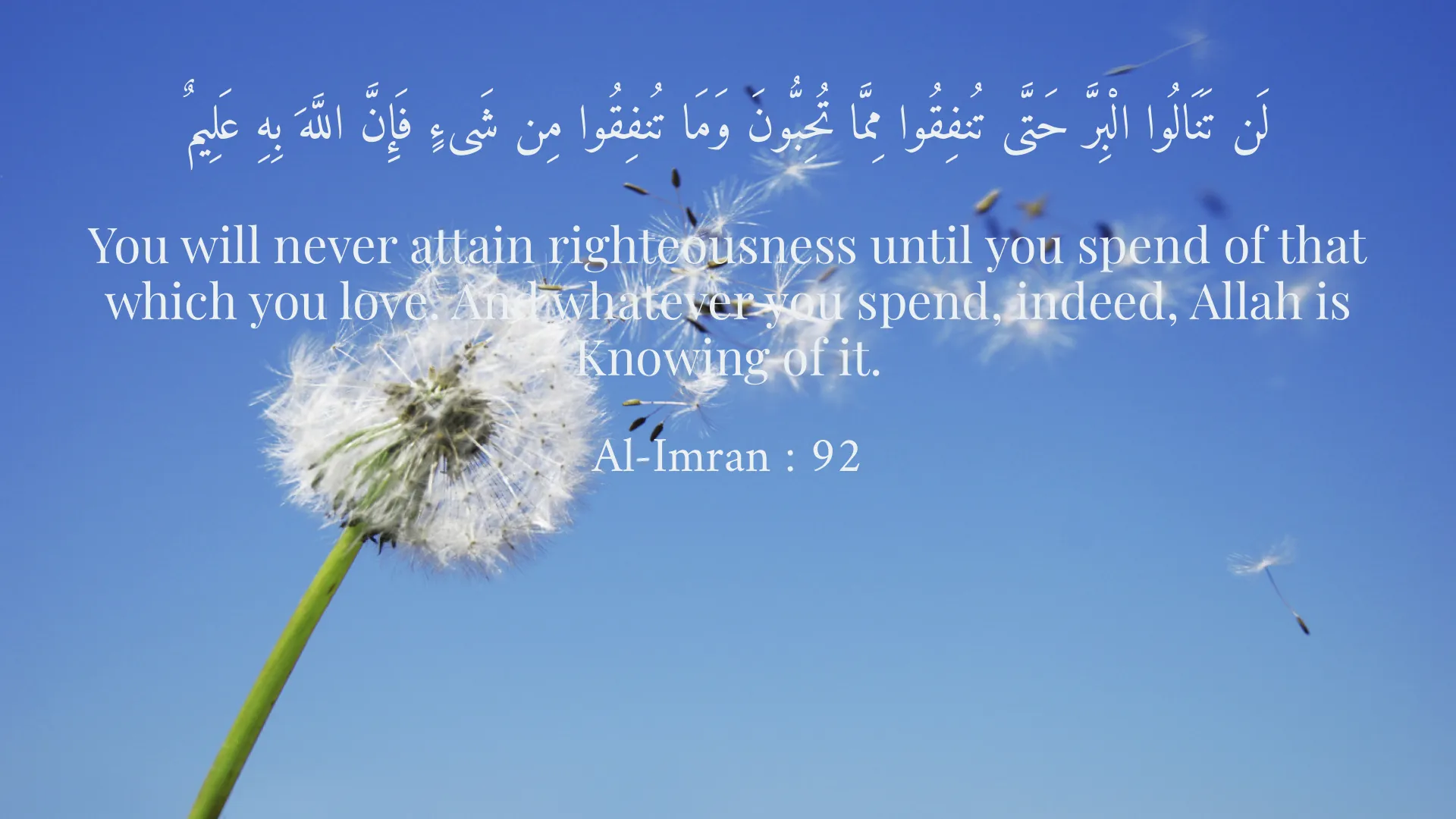
لَن تَنَالُوا الْبِرَّ حَتَّى تُنفِقُوا مِمَّا تُحِبُّونَ وَمَا تُنفِقُوا مِن شَیءٍ فَإِنَّ اللَّهَ بِهِ عَلِيمٌ
You will never attain righteousness until you spend of that which you love. And whatever you spend, indeed, Allah is Knowing of it.
Al-Imran : 92
مَثَلُ الَّذِينَ يُنفِقُونَ أَمْوَالَهُمْ فِي سَبِيلِ اللَّهِ كَمَثَلِ حَبَّةٍ أَنبَتَتْ سَبْعَ سُنبُلَاتٍ ۖ فِي كُلِّ سُنبُلَةٍ مِئَةُ حَبَّةٍ ۗ وَاللَّهُ يُضاعِفُ لِمَن يَشاءُ ۗ وَاللَّهُ سَمِيعٌ عَلِيمٌ
The example of those who spend their wealth in the way of Allah is like a seed of grain that sprouts seven ears; in every ear is a hundred grains. And Allah multiplies [His reward] for whom He wills. And Allah is All-Hearing and Knowing.
Al-Baqarah : 261
Short Story
One day, a man named Ali decided to help others more. He realized that there was a lack of love in his life and felt distanced from his friends. By showing love and kindness to those around him, he gradually gained more self-confidence and realized that generosity brought joy not only to others but also to his own life.