Quranic Answer
The Holy Quran, revered by millions around the world, stands as the divine guide for Muslims, advocating principles of moral conduct, faithfulness, and purity from sins. It serves as both a spiritual compass and a societal framework, encouraging individuals to seek repentance, embody righteousness, and strive for the collective good of the community. One of the recurring themes in the Quran is its firm condemnation of various sins, which are viewed not only as personal failings but also as detrimental actions that threaten the fabric of society and human relationships. Understanding these sins and their consequences is imperative for fostering a peaceful and harmonious community. At the forefront of sin is the act of associating partners with Allah, known in Arabic as shirk. This act is recognized as one of the gravest sins in the Islamic faith. In Surah Al-Baqarah, verse 22, Allah proclaims: "It is He who made for you the earth a bed and the heaven a canopy. So believe in Allah, your Lord, and do not attribute to Allah any equals." This verse emphasizes the unique oneness of God, urging believers to embrace monotheism. Shirk, as depicted in the Quran, is more than a theological error; it is perceived as a fundamental breach of trust that undermines the very essence of faith. By placing associates alongside Allah, individuals divert their devotion and allegiance from the sole Creator, thus harming their spiritual connection and failing to acknowledge the divine wisdom that governs the universe. The implications of shirk extend beyond individual belief; they ripple throughout society, undermining communal cohesiveness and moral integrity. When individuals engage in acts that compromise their relationship with Allah through shirk, they also weaken the bonds of trust and responsibility that bind communities together. The Quranic perspective highlights that a society built on the foundation of unwavering faith and commitment to the oneness of God bears the potential for peace and stability. This collective faith influences communal relationships, fostering an environment conducive to mutual respect, understanding, and cooperation. Furthermore, in Surah Al-Maidah, verse 90, Allah warns believers against engaging in various sins, stating: "O you who have believed, indeed, intoxicants, gambling, [sacrificing on] stone alters [to other than Allah], and divining arrows are but defilement from the work of Satan, so avoid it that you may be successful." Through this verse, the Quran categorizes certain actions as impure and harmful, identifying them as manifestations of immoral behavior that stems from the influence of Satan. Engaging in intoxicants and gambling not only leads to personal degradation but also has far-reaching consequences on the community. These practices can erode trust between individuals, lead to economic instability, and foster an environment ripe for conflict and division. The Quran’s message is clear: to achieve success, both on an individual and collective level, one must avoid actions that compromise integrity and morality. Sins such as theft, murder, and cheating are also severely condemned within its pages. The repercussions of these actions are detrimental, leading to the fracturing of relationships, the loss of life, and a pervasive sense of insecurity within communities. Theft violates the trust that is foundational to human interactions, while murder extinguishes the potential for growth, love, and companionship. The moral fabric of any society is woven together by the actions and values of its members. When individuals engage in harmful behaviors such as theft and murder, they plant seeds of fear and mistrust among their peers. The Quran serves as a reminder that through the guidance of divine principles, individuals can transcend personal desires and work towards cultivating a harmonious society. Allah desires for humanity to thrive in an atmosphere of peace, devoid of fear, where individuals can coexist and support one another, fostering an environment rich with love, kindness, and mutual aid. It is important to recognize that the guidance provided in the Quran is not merely a list of prohibitions but rather a blueprint for living a meaningful life in accordance with divine will. Each verse encapsulates wisdom that, when understood and applied, can lead to personal fulfillment and communal prosperity. The Quran continuously emphasizes the dual role of belief and righteous action, inviting Muslims to engage in both individual improvement and societal betterment. In summary, the Holy Quran provides a profound framework for understanding sins and their implications on personal and societal levels. It calls upon Muslims to shun grievous sins such as shirk, intoxicants, gambling, theft, and murder, defined by their potential to corrode individual character and dismantle societal structures. Instead, the Quran invites believers to embrace repentance, seek purity through obedience to Allah, and cultivate an environment where divine values reign supreme. By adhering to these principles, individuals can contribute to the establishment of a safe, healthy, and thriving society, marked by mutual respect, understanding, and peace. The call to righteousness, as highlighted in the Quran, serves as a beacon of hope for humanity, guiding the way towards a brighter future, enriched by the values of faith, compassion, and unity.
Related Verses
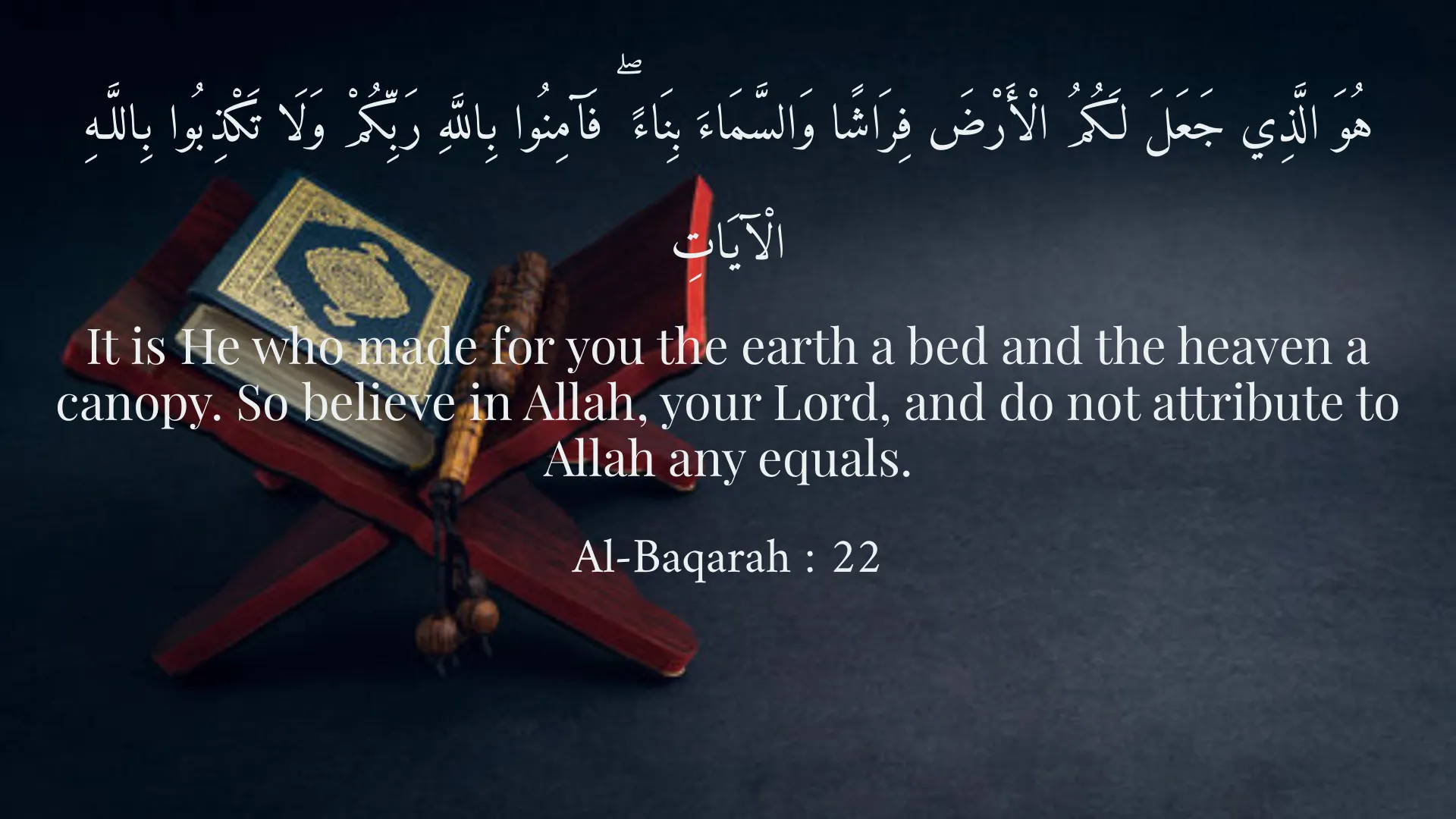
هُوَ الَّذِي جَعَلَ لَكُمُ الْأَرْضَ فِرَاشًا وَالسَّمَاءَ بِنَاءً ۖ فَآمِنُوا بِاللَّهِ رَبِّكُمْ وَلَا تَكْذِبُوا بِاللَّـهِ الْآيَاتِ
It is He who made for you the earth a bed and the heaven a canopy. So believe in Allah, your Lord, and do not attribute to Allah any equals.
Al-Baqarah : 22
يَا أَيُّهَا الَّذِينَ آمَنُوا إِنَّمَا الْخَمْرُ وَالْمَيْسِرُ وَالْأَصْنَامُ وَأَقْلَامُ الْأَزْلَامِ رِجْسٌ مِّنْ عَمَلِ الشَّيْطَانِ فَاجْتَنِبُوهُ لَعَلَّكُمْ تُفْلِحُونَ
O you who have believed, indeed, intoxicants, gambling, [sacrificing on] stone alters [to other than Allah], and divining arrows are but defilement from the work of Satan, so avoid it that you may be successful.
Al-Maidah : 90
Short Story
Once upon a time, there was a man named Ahmad who had committed numerous sins. Gradually, he was losing his life and felt unsatisfied every day. One day, he went to the mosque and listened to the verses of the Quran. Hearing the verses and their interpretations, he realized that his sins were harming not only himself but also others. After that, he decided to repent and distance himself from sins, embarking on a new life filled with peace and tranquility.