Quranic Answer
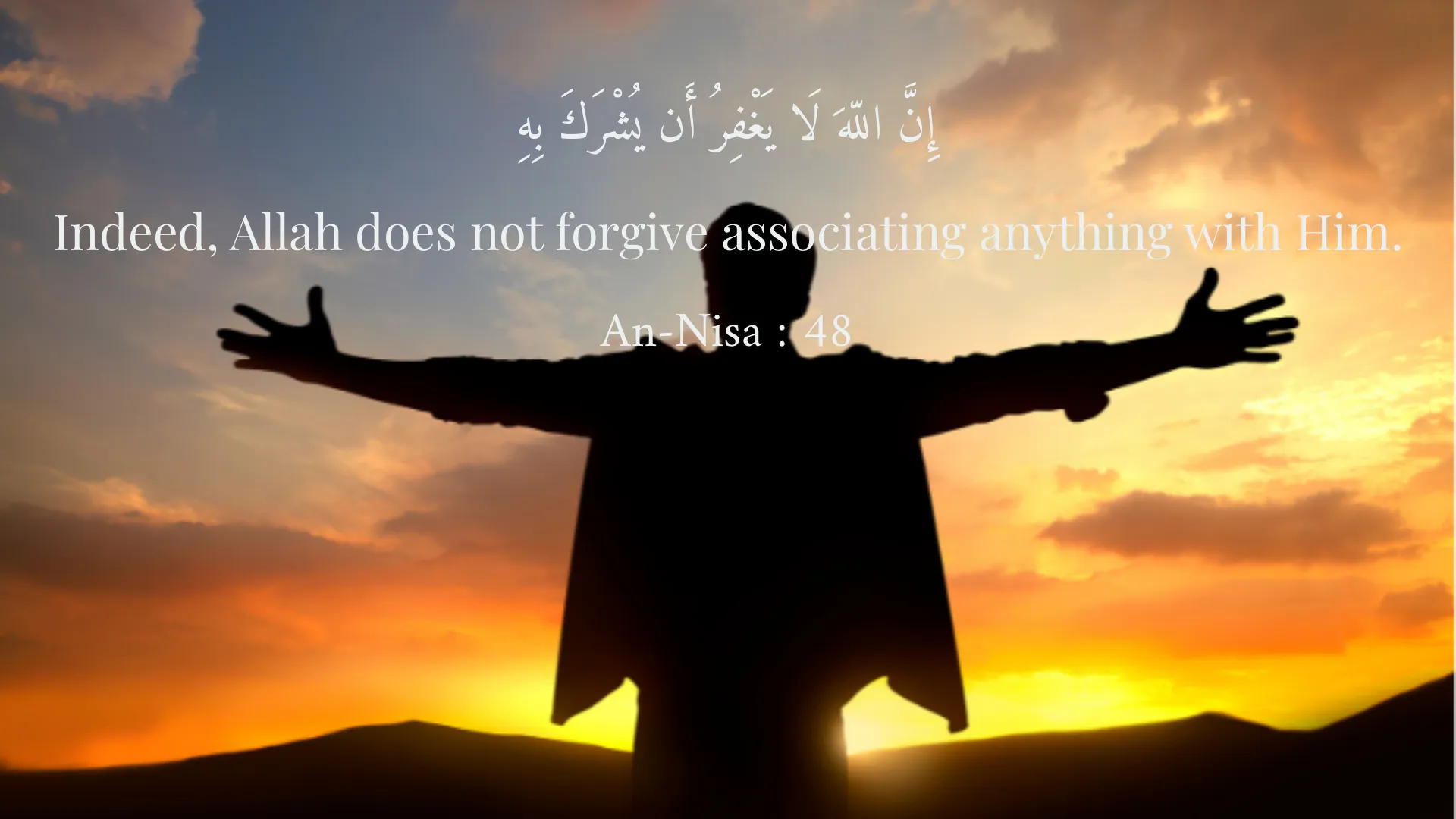
The concept of sin serves as a fundamental aspect of the moral and ethical framework within which individuals navigate their lives. In the context of Islam, the Holy Quran provides clear guidance on the repercussions of sin, particularly highlighting the notion of unforgivable sins. Among these, the act of associating partners with Allah, known as 'shirk', stands out as one of the gravest offenses one can commit. This essay will delve into the Quranic verses that address this critical sin, elucidate the implications of shirk, and underscore the importance of adherence to monotheism within the Islamic faith. In the Holy Quran, explicitly outlined in Surah An-Nisa, verse 48, Allah makes a unequivocal statement regarding the unforgivable nature of shirk: “Indeed, Allah does not forgive associating anything with Him.” This verse lays the foundation for understanding why associating partners with Allah is deemed so severe. It signifies not only a rejection of divine authority but also a profound misunderstanding of Allah's greatness and uniqueness. The essence of monotheism - 'Tawheed' - serves as a pillar of the Islamic faith, and while other sins may be forgiven through sincere repentance, shirk stands alone in its irredeemability. Additionally, a further emphasis on the severity of this sin is found in Surah Al-Ma'idah, verse 72, where it is stated: “They have certainly disbelieved who say, 'Allah is the third of three.'” This verse highlights the idiocy of polytheism and the futility in attempting to construe Allah with partners or equals. It underscores a fundamental tenet of the Islamic belief system, which is the assertion of Allah's singularity and supremacy. The expression 'the third of three' is a direct reference to the Christian Trinity, but the Quran refutes this notion and categorically aligns with monotheism, thereby establishing a clear distinction between Islam and other belief systems that do not adhere to this principle. The ramifications of shirk extend beyond mere theological implications; they also dynamically shape an individual's ethical and moral outlook. Those who engage in shirk are warned that they essentially jeopardize their spiritual well-being and risk placing themselves beyond the bounds of Allah's mercy. In essence, the act of worship—central to a Muslim's life and spiritual journey—must only be directed towards Allah. Any deviation from this sacred practice threatens to undermine the very foundation upon which faith is built. Moreover, the Quran does not limit its warnings to shirk alone. In Surah Al-Furqan, verse 68, Allah delineates other sinful behaviors that attract serious consequences: “And those who do not invoke with Allah another deity or kill the souled which Allah has forbidden, except by right, and do not commit unlawful sexual intercourse.” This verse fleshes out a broader spectrum of conduct that is strenuously advised against in Islamic teachings. It establishes a framework for understanding what constitutes not only a sin against Allah but also violations of the sanctity of life and the moral decay associated with illicit sexual relations. Each of these actions can disrupt society's moral fabric and integrity, which is why the Quran holds them in a grave perspective. A crucial aspect of the discussion on unforgivable sins is the necessity for Muslims to adhere strictly to the tenets of monotheism. The belief in Tawheed extends beyond mere acknowledgment; it requires a commitment to live a life reflective of this core principle. This involves treating others with justice, refraining from actions that are harmful to society, and fostering an Islamic ethos that promotes righteousness, compassion, and humility. Believers must actively engage in self-examination to ensure their actions align with the will of Allah, constantly seeking to strengthen their faith and practice. The importance of recognizing the gravitas of shirk cannot be overstated, especially in contemporary society, where various ideologies compete for the hearts and minds of individuals. The complexities of modern life often lead many to stray into polytheistic tendencies, whether explicitly or implicitly. In various forms, individuals may attribute divine power and authority to their desires, possessions, or societal norms, ultimately leading them away from the truth of monotheism. Thus, the Quran serves as a clarion call for Muslims everywhere to be astutely aware of their beliefs and practices, guarding against such inclinations. The role of community in reinforcing the avoidance of shirk is also paramount. Islamic communities can provide an essential framework to encourage mutual respect for the core tenets of faith. By fostering environments where knowledge is shared, and moral support is offered, the challenges posed by modernity can be navigated with collective fortitude. Educational initiatives aimed at teaching the nuances of Tawheed, as well as moral conduct, can demolish the ignorance that often breeds misunderstandings regarding the enormity of shirk. In conclusion, the teachings of the Holy Quran set a clear path for Muslims regarding the nature of unforgivable sins, most notably the grievous offense of shirk. By emphasizing the supreme position of Allah and warning against the dangers of idolatry, the Quran calls believers to remain steadfast in their worship and adherence to monotheism. The growth of faith involves constant vigilance, adherence to ethical conduct, and a commitment to living as conscious Muslims. The society at large also plays a vital role in reinforcing these values, serving as a reminder that beyond the need for individual faith, there lies a collective responsibility to uphold the tenets of Islam. Ultimately, it is through a profound understanding and respect for the sanctity of monotheism that believers can seek to navigate their spiritual journeys, fortified against the scourge of unforgivable sins.
Related Verses
إِنَّ اللّهَ لَا يَغْفِرُ أَن يُشْرَكَ بِهِ
Indeed, Allah does not forgive associating anything with Him.
An-Nisa : 48
لَقَدْ كَفَرَ الَّذِينَ قَالُوا إِنَّ اللّهَ ثَالِثُ ثَلاثَةٍ
They have certainly disbelieved who say, 'Allah is the third of three.'
Al-Ma'idah : 72
وَالَّذِينَ لَا يَدْعُونَ مَعَ اللّهِ إِلَهًا آخَرَ وَلَا يَقْتُلُونَ النَّفْسَ الَّتِي حَرَّمَ اللّهُ إِلَّا بِالْحَقِّ وَلَا يَزْنُونَ
And those who do not invoke with Allah another deity or kill the souled which Allah has forbidden, except by right, and do not commit unlawful sexual intercourse.
Al-Furqan : 68
Short Story
One day, a man named Hasan was walking when he stumbled upon a large gathering. He became curious and approached them. He realized they were discussing Quranic verses and the concept of unforgivable sins. Hasan remembered hearing in one of the sermons that associating partners with God is one of the gravest sins. This inspired him to deepen his faith and steer clear of major sins.