Quranic Answer
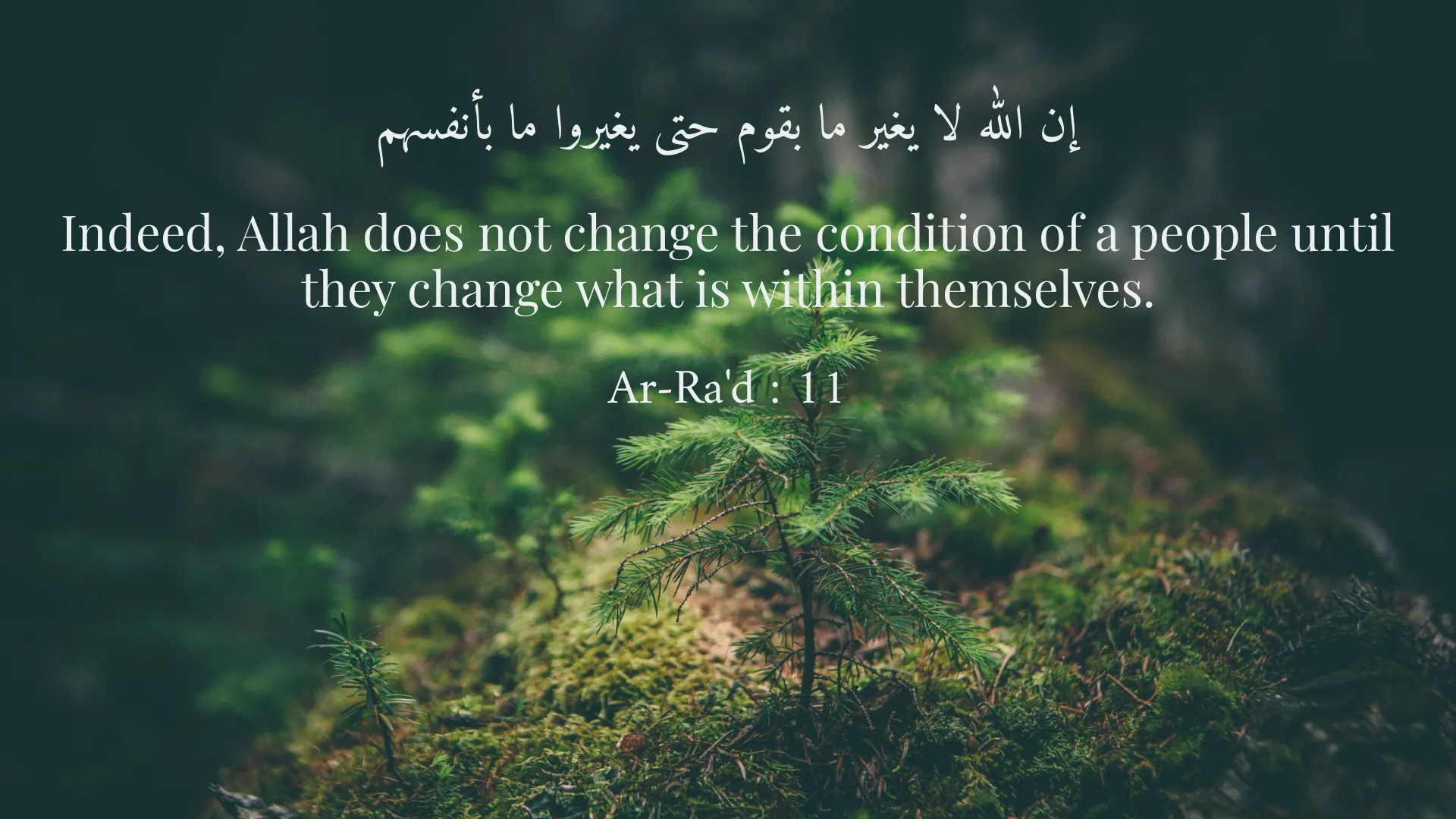
Change is an inherent part of life, yet many people fear it. This fear relates to a deep-seated human instinct; uncertainty about the unknown can evoke feelings of anxiety and trepidation. The anticipation of altering circumstances can be daunting, as it forces individuals to confront their limitations and confront the unpredictability of the future. Within this context, we can turn to spiritual texts, like the Quran, which provides insights into the nature of change and the human response to it. In various verses, the Quran emphasizes that many people lack trust—both in themselves and in Allah's power over their lives. This lack of trust inevitably leads to feelings of doubt and insecurity, particularly when confronted with changes. For instance, in Surah Ar-Ra'd, verse 11, it states, 'Indeed, Allah does not change the condition of a people until they change what is within themselves.' This profound verse explicitly reminds us that the power to change begins within us. The Quran suggests that personal transformation is a prerequisite for external changes to manifest. The lessons to be gleaned from this verse underscore the importance of self-trust and confidence in navigating life’s transitions. By fostering an inner belief in our capacities, we can face the challenges presented by change with optimism rather than fear. Furthermore, anxiety regarding the consequences of change is a common human experience. Many individuals fear the unknown outcomes of their decisions and the path that change might lead them down. This fear often leads to a preference for remaining within the safe confines of familiar boundaries and situations. The proverbial 'comfort zone' may feel secure, but it often stifles individual growth and development. The Quran teaches us that our material desires and earthly worries should not overshadow our faith and spiritual growth. In Surah Al-Anfal, verse 28, Allah articulates the importance of prioritizing the spirit over the material. This perspective challenges the ordinary view of change by nudging us to perceive it as an opportunity for growth and advancement. To achieve personal development, it is crucial for us to embrace change rather than resist it. Accepting change allows us to come closer to our authentic selves and leads us toward truth. In doing so, we open ourselves up to new possibilities and experiences, ultimately enriching our lives. Many would argue that change fosters resilience and adaptability. People who learn to navigate change with grace become better equipped to handle life's challenges. They develop coping strategies that are essential in an ever-evolving world. The human experience is marked by constant transformation—from childhood to adulthood, from singlehood to parenthood, and even through career changes. Each transition brings lessons that contribute to our personal narrative, molding us into the individuals we are destined to become. The examples provided by individuals who have faced significant changes in their lives serve as inspirations for others. Consider, for example, the stories of eminent personalities who transformed their lives in the face of adversity—many of whom overcame seemingly insurmountable obstacles to achieve greatness. Their narratives often echo the same lesson: change, though scary, can be a powerful catalyst for personal growth and success. Additionally, the act of reflecting on past experiences can empower us to embrace future changes. When we examine previous changes we have faced—whether they resulted in success or failure—we gain valuable insight. Through reflection, we can identify the skills and strengths we utilized in overcoming challenges and understand that we possess the capability to navigate future transformations. It becomes a cycle in which past successes breed confidence for future endeavors. Moreover, the process of change often requires us to lean on our support systems. Friends, family, and communities serve as vital pillars to fortify our journey through change. Engaging in open dialogues concerning our fears and doubts can alleviate anxiety and provide new perspectives. This communal approach to facing change garners strength from collective experiences, which further mitigates the fears that often accompany transitions. It reminds us that we are not alone in our journey and that seeking help and guidance is not a sign of weakness, but rather a strength. The fear of change, while natural, can become a barrier to living life to its fullest. As we transition through chapters of our lives, it becomes essential to confront and dismantle the barriers erected by our fear. The Quran emphasizes that life is a series of passages; embracing change is a step toward spiritual enlightenment and personal development. In a world that is always in motion, adaptability has become a necessary skill for survival and success. Ultimately, the fear of change can serve as a teacher, illuminating pathways to self-discovery and growth. By cultivating a mindset that welcomes change, we not only honor Allah's will but also empower ourselves to rise above life's challenges. As we trust ourselves and our abilities, we allow growth to flourish in our lives—leading us toward success, enhanced understanding of ourselves, and a deeper connection to our faith. Through this lens, we learn that to embrace change is to embrace life itself—by moving forward with trust in Allah, we heighten our potential for success and personal advancement.
Related Verses
إن الله لا يغير ما بقوم حتى يغيروا ما بأنفسهم
Indeed, Allah does not change the condition of a people until they change what is within themselves.
Ar-Ra'd : 11
وَاعْلَمُوا أَنَّمَا أَمْوَالُكُمْ وَأَوْلَادُكُمْ فِتْنَةٌ ۖ وَأَنَّ اللَّهَ عِندَهُ أَجْرٌ عَظِيمٌ
And know that your properties and your children are but a trial, and Allah has with Him a great reward.
Al-Anfal : 28
Short Story
Once upon a time, there was a young boy named Ali who always feared the changes happening in his life. One day, his teacher shared a verse from the Quran with him, saying, 'If you change yourself, your world will change too.' Ali contemplated this and decided to embrace changes as opportunities for learning and growth. From that moment on, he accepted change as a natural part of his life instead of fearing it, and his life transformed.