Quranic Answer
In the Holy Quran, the concept of sin and its ramifications on individuals is a recurrent theme that resonates deeply with believers. Not only does the Quran provide a moral framework, but it also sheds light on the psychological and spiritual aspects of sinning. One of the profound insights shared within its verses relates to the concept of forgetfulness of God—an act that can lead individuals down the dark path of sin. The Quran captures this notion succinctly in Surah Al-Imran, verse 28, which states: 'Muḥṣeerīna lā yašʿurūna bial-khaṭāyā.' This translates to 'They become trapped and feel the guilt of sins not.' This verse points toward an intrinsic connection between the awareness of God and the consciousness of sin. It signifies that when individuals become neglectful of God's presence, they may find themselves ensnared in a web of their own misdeeds, ultimately losing touch with their moral compass. The process of becoming desensitized to sin is gradual. Initially, an act of wrongdoing might spark feelings of guilt and remorse; however, as individuals continue to engage in sinful behaviors without repenting or seeking forgiveness, these feelings begin to dissipate. Consequently, their hearts become increasingly insulated from the light of faith, and they begin to experience doubt and confusion. The indulgence in sin can create a vicious cycle where the heart hardens, making it difficult to return to a state of piety and righteousness. Furthermore, the impact of one’s social environment cannot be understated. The company one keeps significantly influences a person's moral choices. The Quran addresses this concern in Surah Al-Furqan, verse 65, which emphasizes the need for righteous companionship. Allah underscores the importance of associating with individuals who steer one away from sin, highlighting the dangers of being in the company of those who engage in sinful behavior. The verse states: 'And those who do not invoke with Allah another deity or kill the soul which Allah has forbidden, except by right, and do not commit unlawful sexual intercourse.' This clearly delineates the importance of surrounding oneself with good influences, as the propensity to sin escalates in environments where immoral actions are condoned or accepted. Sin has a cascading effect not only on the sinner but also on the people in their immediate vicinity. Engaging in sinful activities can corrupt one’s character and alter perceptions. As established in various scholarly interpretations of Quranic teachings, when people continually associate with wrongdoers, they become desensitized to the consequences of sinning. The community's norms begin to shape their understanding of right and wrong, often leading them away from the path of righteousness. A critical aspect of the discussion surrounding sin is the absence of guilt. When individuals refrain from feeling remorse, they are likely to persist in their sinful habits. This insensitivity to wrongdoing can create a pathway for habitual sinning, leading individuals to a sense of normalization concerning immoral acts. The Quran advises believers to remain vigilant and self-aware to prevent the dulling of their conscience. This entails an active and constant remembrance of God, which serves as a strong preventive measure against sin. By engaging in regular acts of worship, individuals can cultivate a close-knit relationship with their Creator, fostering an environment where repentance and forgiveness are constantly available. Prayer is another vital tool in this spiritual journey; it acts as a channel through which believers can communicate with God, express their vulnerabilities, and seek guidance. The power of supplication is immense, as it not only serves as a means of seeking forgiveness but also strengthens one’s resolve to avoid sin altogether. The Prophet Muhammad (peace be upon him) has emphasized the importance of prayer in cleansing the soul, stating that prayers are a fortress against evil deeds. In essence, prayer offers both protection and reassurance. In addition to personal preventative measures, educating oneself about the teachings of Islam regarding sin is fundamental in fostering a community that discourages wrongful acts. Learning about the repercussions of sin can reinforce the fear of incurring God’s displeasure, thus encouraging individuals to tread cautiously. Engaging with the Quran, attending lectures, and discussing moral teachings can all create a culture of awareness that helps propagate righteousness in a community. Moreover, in the larger context of societal values, collective reform against sin hinges on activism for righteousness. When communities advocate for moralistic principles through dialogues and actions, it creates a ripple effect that can inspire individuals to change behaviors that might otherwise go unchecked. The Quran emphasizes communal responsibility when it comes to upholding virtue and discouraging vice. Therefore, fostering a collective consciousness regarding sin and righteousness can facilitate an environment conducive to spiritual growth. In conclusion, the discussion of sin in the Holy Quran offers profound insights into not just the nature of wrongdoing but also the psychological, spiritual, and social dimensions tied to it. By understanding the reasons individuals may fall into the traps of sin, notably the forgetfulness of God, the influence of one's environment, and the absence of guilt, believers can take proactive measures to safeguard themselves against moral decline. Prayer and supplication serve as essential tools in cultivating a strong faith, and the importance of righteous companionship cannot be overemphasized. Ultimately, regular reflection on the teachings of the Quran fosters not only personal growth but also strengthens communal ties, creating an interactive culture that prioritizes righteousness over sin.
Related Verses
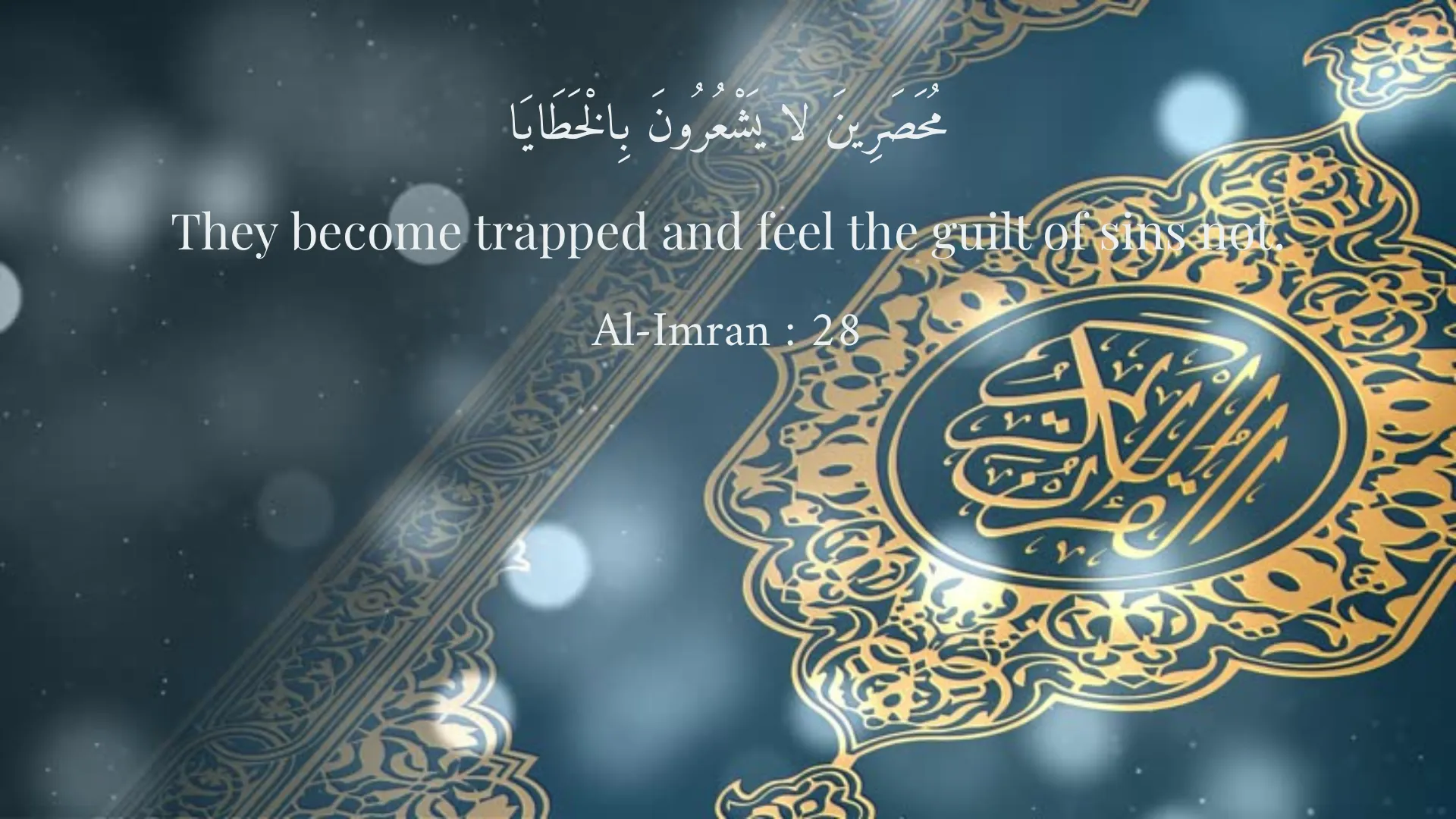
مُحَصَرِينَ لا يَشْعُرُونَ بِالْخَطَايَا
They become trapped and feel the guilt of sins not.
Al-Imran : 28
وَالَّذِينَ لَا يَدْعُونَ مَعَ اللَّهِ إِلٰهًا آخَرَ وَلَا يَقتُلُونَ النَّفْسَ الَّتِي حَرَّمَ اللَّهُ إِلَّا بِالْحَقِّ وَلَا يَزْنُونَ
And those who do not invoke with Allah another deity or kill the soul which Allah has forbidden, except by right, and do not commit unlawful sexual intercourse.
Al-Furqan : 65
Short Story
One day, one of Adel's friends confided that he struggled to stay away from sin. Adel replied, 'Dear friend, don't forget the remembrance of God and the company of the righteous. If you surround yourself with good people, gradually, goodness will manifest within you, and you'll find it easier to distance yourself from sins.' Following this conversation, that friend made a serious decision to choose better companions.