Quranic Answer
The Holy Quran, revered as the divine scripture of Islam, encompasses a multitude of significant teachings, among which are lessons on emotions—specifically, the management and control of anger. Anger, though a natural human emotion, can lead to destructive thoughts and actions if not properly regulated. The Quran, through its profound verses, provides guidance on how to navigate this complex emotion and highlights its importance in leading a harmonious life. In Surah Al-Imran (3:134), the Quran articulates that the qualities of a true believer include the ability to suppress anger and forgive the faults of others. The verse states: "Those who spend in the cause of Allah during ease and hardship and who restrain anger and who pardon the people - and Allah loves the doers of good." This verse reinforces the notion that a significant aspect of spiritual maturity involves the cultivation of patience and forgiveness. Inflated anger can cloud judgment and lead to irrational behaviors, ultimately steering individuals away from the path of righteousness that the Quran advocates. Moreover, the underlying message in this verse elucidates that those who successfully manage their anger not only foster their personal growth but also contribute positively to their communities. By recognizing the detrimental impact of uncontrolled anger, believers are encouraged to respond to provocation with calmness and rationality, thus exemplifying the character of a true follower of faith. Several factors contribute to why some individuals react with anger more readily than others. Psychological pressures, life adversities, and a mere lack of emotional regulation can significantly increase susceptibility to anger. For instance, an individual might be under immense stress due to various life challenges, including financial hardships or personal relationships, leading to heightened sensitivity and impulsive reactions. This lack of emotional control can culminate in harmful outbursts, which not only damage social bonds but also affect one’s mental health. In Surah Al-Mu’minun (23:96), the Quran addresses the importance of responding to adversity with goodwill and sincerity, further expanding on the narrative of anger management. The verse states: "Repel evil with that which is best. And We are most knowing of what they describe." This powerful message serves as a reminder that quick and thoughtless reactions to challenging situations can lead to unforeseen harm and distress, both to oneself and to others. Filtering one’s thoughts and responses through the lens of patience and understanding can mean the difference between escalating a conflict and resolving it amicably. The Quran encourages believers to take a step back in moments of intense anger. This moment of reflection not only allows for the processing of emotions but also provides an opportunity to respond constructively. The teachings in these verses suggest that maintaining composure in the face of adversity is a sign of spiritual strength and maturity. Engaging in honest communication, and extending forgiveness, not only promotes peace within oneself but also fosters an environment where relationships can thrive. It's essential to recognize the challenges of emotional regulation. In environments where individuals are frequently exposed to stressors, the capacity to manage feelings of anger becomes crucial. Emotional intelligence, a property that enables one to assess and manage their emotions effectively, can significantly influence one’s ability to interact positively with others. For example, fostering self-awareness by understanding personal triggers and feelings can help preempt emotional outbursts. By engaging in self-reflection and establishing healthy coping mechanisms—such as deep breathing, taking breaks, or seeking help from mentors or counselors—individuals can develop the tools necessary to navigate their feelings more effectively. Moreover, maintaining mental well-being is a continuous journey of self-improvement that often requires deliberate efforts. The Quran reminds its followers of the richness of patience and perseverance through trials, illustrating that true satisfaction comes not from external sources but from within. This ongoing process of growth underscores the importance of resilience when faced with anger-inducing situations. By nurturing personal capacity for patience and acquiring skills to overcome negative emotions, individuals can create a positive feedback loop that enhances their mental health and enriches their interactions. In essence, the message of the Holy Quran concerning anger is multi-faceted. It urges believers to cultivate restraint, patience, and understanding as vital tools in pushing against the tide of anger and hostility. Through these teachings, the Quran positions anger management as a critical aspect of a believer’s spiritual development and emotional well-being. The emphasis on forgiveness, coupled with the notion of responding to adversity with kindness, shapes an individual’s character and their relationships with those around them. In conclusion, the exploration of anger and its control as expressed in the Quran encourages a holistic approach to emotional regulation. Believers are reminded that their reactions define not only their character but also their spiritual presence in the world. The principles laid out in Surah Al-Imran and Surah Al-Mu’minun serve as indispensable guidelines toward achieving mastery over one’s emotions. In practicing the virtues of patience, forgiveness, and goodwill, individuals can navigate their lives with grace, nurturing deeper connections with themselves and with others while contributing positively to society.
Related Verses
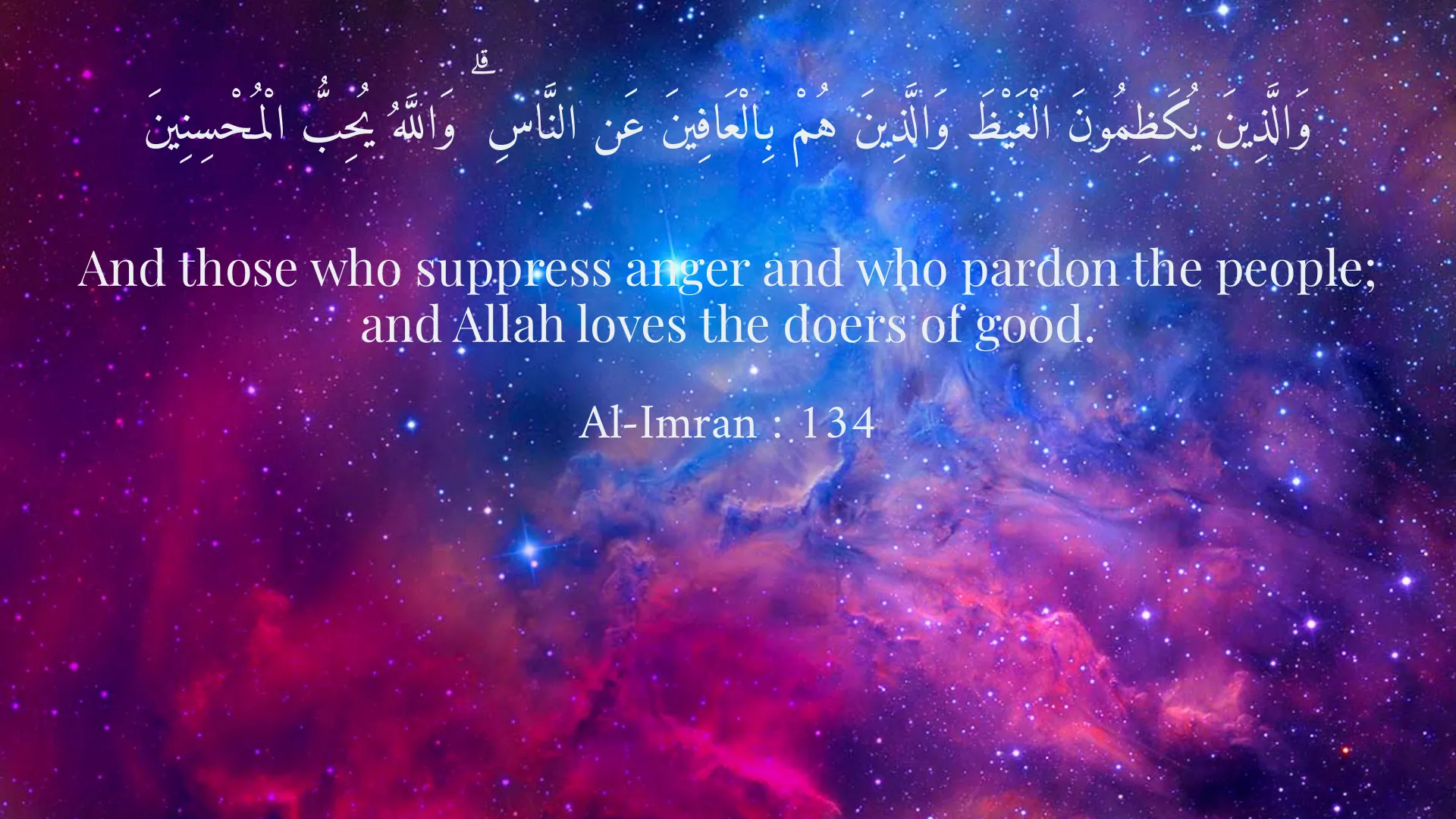
وَالَّذِينَ يُكَظِمُونَ الْغَيْظَ وَالَّذِينَ هُمْ بِالْعَافِينَ عَن النَّاسِ ۗ وَاللَّهُ يُحِبُّ الْمُحْسِنِينَ
And those who suppress anger and who pardon the people; and Allah loves the doers of good.
Al-Imran : 134
فَاسْتَعِدُوا لِلَّهِ وَلِلَّذِينَ تُؤْمِنُوا بِهِمْ وَادْفَعُوا بِالَّتِي هِيَ أَحْسَنُ ۖ وَإنّ الشَّيْطَانَ يَنْزَعُ بَيْنَهُمْ
But respond to evil with that which is best. And the evil one will cause dissension among them.
Al-Mu'minun : 96
Short Story
Once upon a time, a man named Hassan struggled with the pressures of life. He would often become angry quickly, causing distress in his relationships. One day, while reading the Quran, he came across a verse about controlling anger. This verse amazed him, and he decided to focus on managing his emotions. He learned to handle every situation with patience and reason, leading to a remarkable transformation in his life.