Quranic Answer
In the Holy Quran, human emotions, particularly those related to hatred and animosity, are examined with great care. Various verses within the Quran shed light on the reasons these negative feelings arise, providing insights that remain pertinent in today's world. Among the primary reasons that fuel hatred toward others, ignorance and a lack of awareness stand out. In many instances, people harbor resentment or dislike for others due to misunderstandings, misconceptions, or a limited comprehension of differing perspectives. This article seeks to explore these themes in depth, analyzing relevant verses from the Quran and their implications on human emotions and social behaviors. One significant reference regarding the concept of true religion is found in Surah Al-Imran, verse 19, where Allah asserts, "Indeed, the religion in the sight of Allah is Islam." This verse underlines the belief that adherence to the true religion is vital for spiritual enlightenment and harmony among individuals. Those who subscribe to beliefs other than Islam are described as being in "confusion and misguidance." This passage suggests that a lack of understanding or awareness of the core tenets of Islam can lead to hatred against those perceived as outsiders or adversaries. When individuals fail to appreciate the foundational aspects of their own faith, it can breed misunderstanding. This often results in harboring negative feelings directed toward others who may not share the same religious beliefs. Additionally, the Quran addresses how differences in beliefs and opinions can foster animosity among people. Surah Al-Mu’minun, verse 53 states, "But they have divided their religion among them into sects, each faction rejoicing in what it has." This verse highlights the perils of sectarianism and the fragmentation of faith that leads groups to focus on their differences rather than commonalities. Such divisions can deepen societal rifts, leading to hatred because of an inability or unwillingness to accept diverse viewpoints and beliefs. It is crucial to recognize that hatred often stems from a failure to engage in constructive dialogue about differing beliefs. A simple lack of curiosity or willingness to learn about others’ perspectives can lead individuals down the path of enmity. Moreover, morality plays a critical role in shaping human emotions. Surah Al-Hujurat, verse 11 cautions individuals against disparaging one another, emphasizing that "no tribe or race is superior to another." This verse is significant in its plea for ethical consideration and a reminder that God's guidance calls for mutual respect and dignity among all human beings. By warning against disparagement, the Quran encourages individuals to reflect on their attitudes toward others and promotes a culture of empathy. Hostility can easily arise in environments where people feel marginalized or disrespected, underscoring the vital need for a sound ethical framework in social interactions. Furthermore, the emotional landscape of hatred can also be influenced by socio-economic conditions, political scenarios, and cultural factors. People often harbor grievances not only due to religious differences but also because of social injustices or perceived inequalities. Hatred may arise as a reaction to being disenfranchised or treated unfairly. The Quran’s teachings promote justice, balance, and compassion, urging believers to rise above materialistic resentments and strive toward ethical living. The teachings of the Quran encourage individuals to seek knowledge and develop their understanding. Ignorance is one of the most potent seeds of hatred. When people are unaware of the fundamental principles of unity, respect, and faith, they are more likely to harbor negative feelings toward those they perceive as different. The Quran emphasizes the examination of one's beliefs, encourages education, and promotes awareness as vital tools for overcoming ignorance. By cultivating knowledge, individuals can dismantle misconceptions leading to hatred and instead foster an environment centered around understanding and compassion. In the current global landscape, filled with discord, wars, and social unrest, the messages conveyed in the Quran resonate deeply. It is crucial to recognize the influences of ignorance, ideological differences, and a lack of moral values on the emergence of hatred. Promoting intercultural dialogue, embracing diversity, and educating believers about inclusivity is essential steps toward a more harmonious society. As such, the Quran provides guidance on how to navigate human emotions, advocating for understanding and love over hatred. In conclusion, the Quran offers profound insights into the complex emotional dynamics of humanity. By emphasizing the detrimental consequences of ignorance, sectarian divides, and ethical negligence, it challenges individuals to rise above hatred. The path to reconciliation and understanding necessitates spiritual growth, education, and continued self-reflection. As believers, embracing these Quranic teachings can pave the way for a more compassionate and inclusive world, ultimately dissipating animosities bred by misunderstanding. We are called to foster an environment shaped by love and togetherness, ensuring that ignorance and hatred do not overshadow our shared humanity.
Related Verses
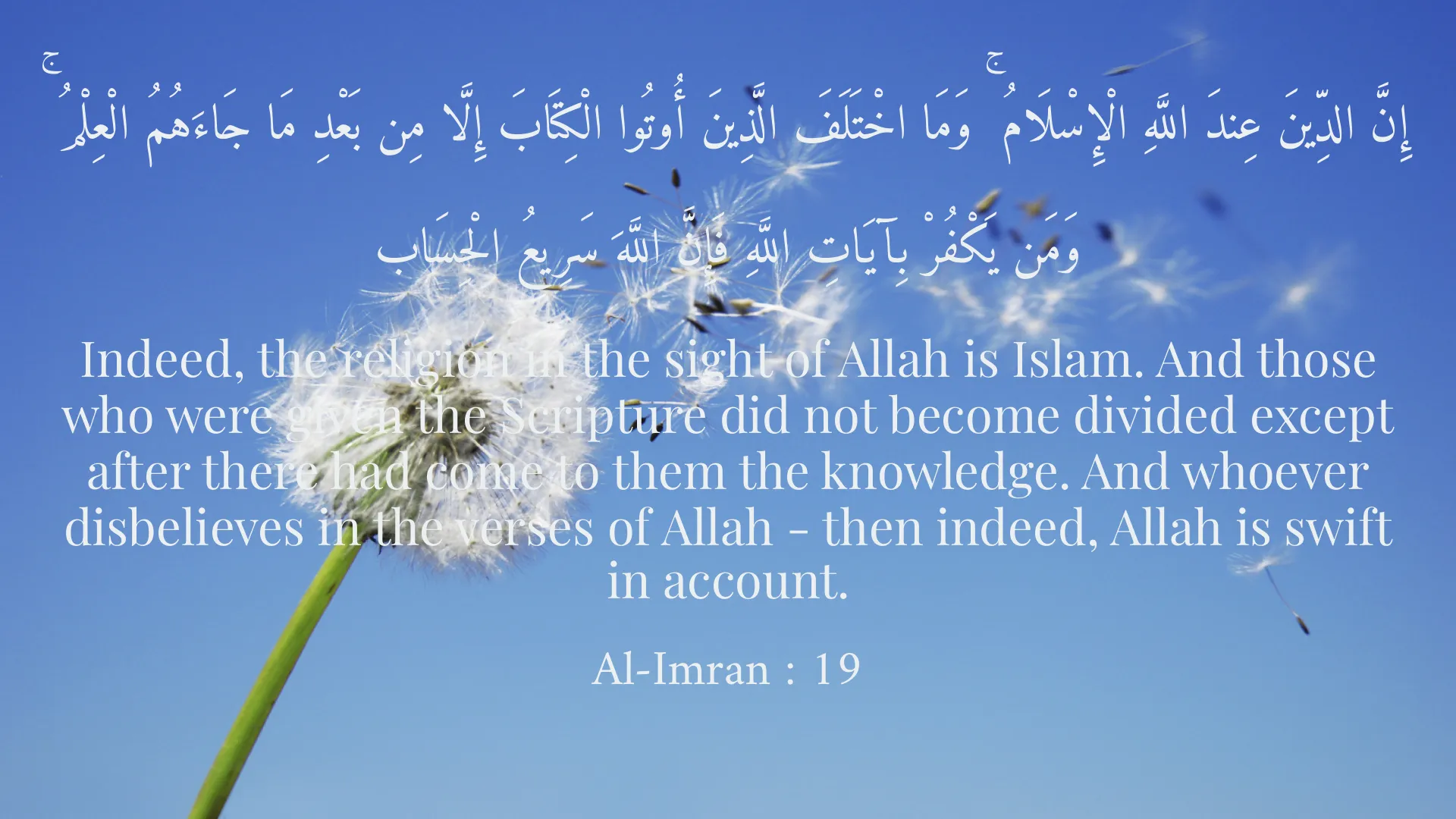
إِنَّ الدِّينَ عِندَ اللَّهِ الْإِسْلَامُ ۚ وَمَا اخْتَلَفَ الَّذِينَ أُوتُوا الْكِتَابَ إِلَّا مِن بَعْدِ مَا جَاءَهُمُ الْعِلْمُ ۚ وَمَن يَكْفُرْ بِآيَاتِ اللَّهِ فَإِنَّ اللَّهَ سَرِيعُ الْحِسَاب
Indeed, the religion in the sight of Allah is Islam. And those who were given the Scripture did not become divided except after there had come to them the knowledge. And whoever disbelieves in the verses of Allah - then indeed, Allah is swift in account.
Al-Imran : 19
وَلا يَزَالُونَ مُخْتَلِفِينَ، إِلَّا مَنْ رَحِمَ رَبُّكَ ۖ وَلِذَٰلِكَ خَلَقَهُمْ
And they will continue to differ, except for the one upon whom your Lord has mercy. And for that He created them.
Al-Mu’minun : 53
يَاأَيُّهَا الَّذِينَ آمَنُوا لَا يَسْتَهْزِئْ قَوْمٌ مِّن قَوْمٍ عَسَى أَن يَكُونُوا خَيْرًا مِّنْهُمْ ۖ وَلَا تَجَسَّسُوا وَلَا يَغْتَب بَّعْضُكُمْ بَعْضًا ۚ أَيُحِبُّ أَحَدُكُمْ أَن يَأْكُلَ لَحْمَ أَخِيهِ مَيِّتًا فَكَرِهْتُمُوهُ ۚ وَاتَّقُوا اللَّهَ ۚ إِنَّ اللَّهَ تَوَّابٌ رَّحِيمٌ
O you who have believed, let not a people ridicule [another] people; perhaps they may be better than them. And do not insult one another and do not call each other by [offensive] nicknames. Wretched is the name of disobedience after [one's] faith. And whoever does not repent - then it is those who are the wrongdoers.
Al-Hujurat : 11
Short Story
One day, Ali decided to reflect on hatred and enmity towards others. He began to study the Quran and came across various verses that reminded him to focus on love and compassion. Over time, Ali realized that he needed to approach others with open arms and avoid hasty judgments. By making an effort to understand others and refraining from ideological differences, he was able to establish better relationships and felt that hatred was gradually replaced by a deeper love.